Being a technology enthusiast both personally and professionally, the year 2025 brought a mix of excitement and disappointment. On a personal level, I made some interesting tech purchases, from a simple coffee decanter to a high-end audiophile stereo system. However, when it came to the tech I typically write about, the year fell short.
There were some thrilling personal acquisitions, extending from the refreshingly simple (like my adoration for the Hario coffee decanter) to the extravagantly costly (finally delving into the world of audiophile stereo equipment). However, in terms of the technology that I usually focus on in my writing, the year 2025 left much to be desired.
The refined hardware of the Nintendo Switch 2 turned out to be somewhat underwhelming, to be frank. While the OLED display on the iPad Pro M4 that I purchased in March was a nice addition, it didn’t exactly revolutionize the industry.
My daily driver became the iPhone 17 Pro, not only for personal use but also as a reference point for flagship phone reviews. The vibrant orange color and exceptional selfie camera were highlights, but it still felt like just another iPhone.
This sense of tech ennui inevitably seeped into my professional life. It’s safe to say that 2025 was a lackluster year for smartphones.
Samsung and Google Struggle to Innovate
The main issue I encountered was that too many smartphone manufacturers seemed to be complacent or even regressing in terms of innovation over the past year.
Let’s take a look at the two major Android influencers, Samsung and Google. Their line-ups for 2025 were almost identical to their 2024 offerings.
The Google Pixel 10 series did introduce Qi2 support and a dedicated telephoto camera to the base model. However, the quality of the main sensor seemed to take a step back.
While some companies stuck to the same old hardware, others seemed to take a step backward. The OnePlus 15 received praise in several reviews, but both the camera and screen hardware were arguably inferior to their OnePlus 13 predecessors.
Nothing abandoned its Glyph system for the Nothing Phone (3), discarding one of the few genuinely intriguing smartphone innovations in recent years.
One could argue that smartphone design, in general, has become less captivating. Most of the phones mentioned above have adopted the current iPhone design, featuring flat edges and surfaces with rounded corners.
While some manufacturers stuck with familiar hardware, others seemed to regress in their innovations.
Although the Xiaomi 17 aims to introduce something unique with its secondary display, it still follows a design similar to the iPhone 17 Pro.
Looking towards Apple for a potential shift in smartphone design, reports suggest that a significant iPhone redesign is not expected until 2027, coinciding with the smartphone’s 20th anniversary.
Anticipating Progress in 2026
Heading into 2026, the smartphone landscape appears somewhat bleak, with the pervasive obsession with AI technologies overshadowing genuine innovation.
Despite these challenges, there were some promising advancements in smartphone technology in 2025, hinting at more exciting developments in the coming year.
Battery life in smartphones saw significant improvements in 2025, marking a crucial milestone in enhancing device endurance.
2025 witnessed a remarkable leap in smartphone battery life.
While I previously expressed disappointment with certain aspects of the OnePlus 15, its battery life stood out as a significant advancement. It was the first smartphone I used that could potentially last for a third day of usage, with more such innovations on the horizon.
Battery technology has been a key area where smartphones lagged behind their feature phone predecessors. The rapid advancements in processors and displays outpaced battery improvements, resulting in decreased battery life. However, the tide seems to be turning, with expectations of smartphones in 2026 lasting through extended usage without frequent recharging.
2026: The Rise of Foldable Phones
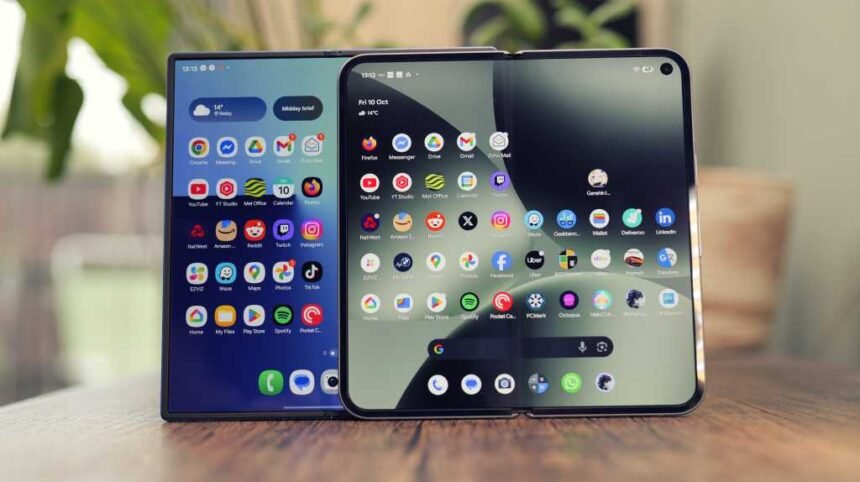
On another front, foldable smartphones are becoming increasingly viable options, if not already mainstream.
Samsung’s Galaxy Z Fold 7 emerged as one of the most intriguing phones of the year, featuring a notably slimmer design that was surprisingly portable.
The Google Pixel 10 Pro Fold showcased advancements in dust resistance, though the durability of these claims remains uncertain.
2026 holds the promise of foldable smartphones gaining widespread acceptance.
At the year’s end, a genuinely innovative product entered the market. The Samsung Galaxy Z TriFold introduced a foldable form factor that lived up to the promise of a ‘tablet in your pocket.’ While the Huawei Mate XT initially introduced this concept in China in late 2024, the Samsung Galaxy Z TriFold had global potential.
Rumors of Apple launching its foldable iPhone in late 2026 suggest that foldable phones could finally reach the mainstream. When a product category gains widespread acceptance, it often leads to improved hardware and more competitive pricing.
While 2025 might have been a lackluster year for consumer technology, there are promising signs that 2026 could usher in more substantial innovations beyond mere AI enhancements.