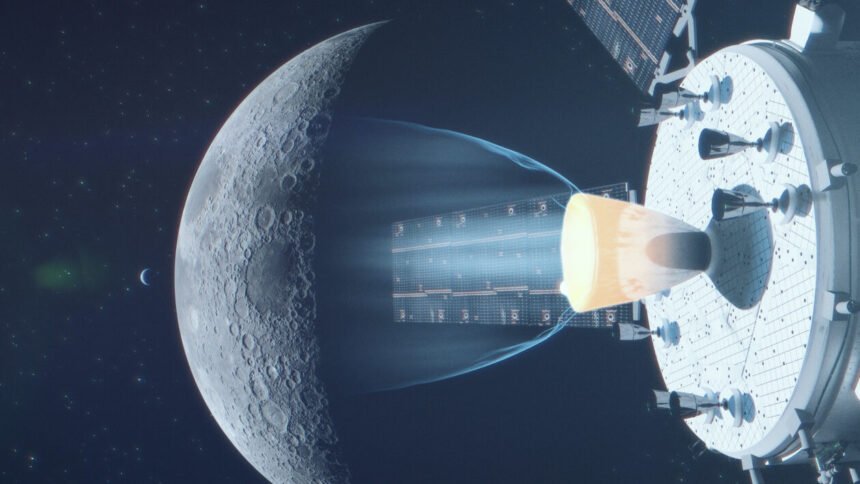
An upcoming lunar mission is set to captivate the world with its historic journey around the moon, reminiscent of the Apollo era. NASA’s highly anticipated Artemis 2 mission is scheduled to launch four astronauts on a round-the-moon voyage, marking a significant milestone in space exploration for 2026. The mission, led by NASA Administrator Jared Isaacman, promises to reignite excitement in space travel as American astronauts prepare to orbit the moon for the first time in over fifty years.
NASA’s Artemis 2 mission, which is due to launch four astronauts on a round-the-moon journey as a warmup for a future lunar landing, is shaping up as the spaceflight highlight of 2026. NASA Administrator Jared Isaacman, who took the agency’s helm this month after a tumultuous year, says it’s the top item on his must-see list.
“What’s not to be excited about?” he said last week on CNBC. “We’re sending American astronauts around the moon. It’s the first time we’ve done that in a half-century. … We’re weeks away, potentially a month or two away at most from sending American astronauts around the moon again.”
The Pacific Northwest plays a significant role in the back-to-moon campaign. For example, L3Harris Technologies’ team in Redmond, Wash., built thrusters for Artemis 2’s Orion crew vehicle. And Artemis 2 isn’t the only upcoming moon mission with Seattle-area connections: Jeff Bezos’ Blue Origin space venture, headquartered in Kent, plans to send an uncrewed Blue Moon Mark 1 lander to the lunar surface in 2026 to help NASA get set for future moon trips.
“We are taking our first steps to help open up the lunar frontier for all of humanity,” Paul Brower, Blue Origin’s director of lunar operations, said in a recent LinkedIn post.
2026 could also be the year when Seattle-based Interlune sends its first prospecting instrument to the lunar surface to hunt for signs of helium-3, a rare material the company aims to bring back to Earth for use in fusion reactors or quantum computers.
As we close out 2025, here’s a look back at five of the past year’s space milestones and five trends to watch in the year to come.