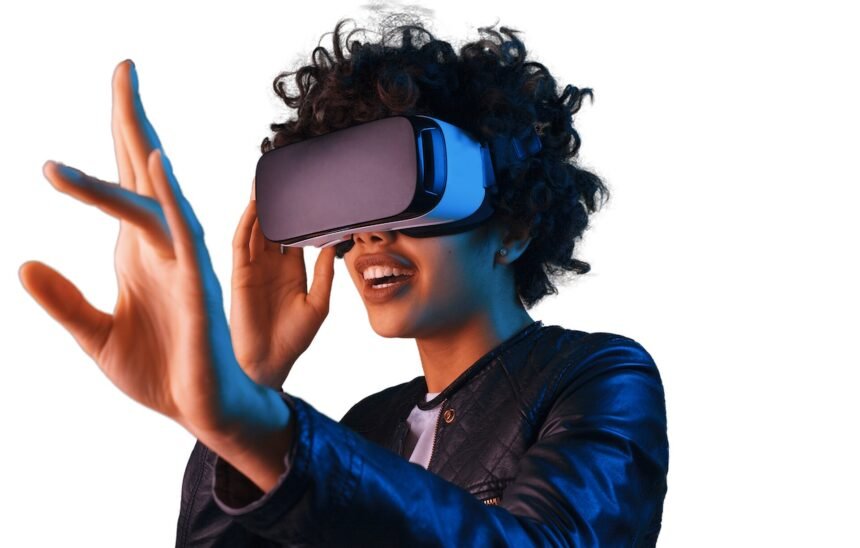
Workplaces today are increasingly turning to virtual reality (VR) technology to enhance training, improve safety measures, and reduce operational costs. This innovative approach is revolutionizing the way employees learn and engage with complex tasks across various industries. Researchers and companies are harnessing the power of VR to create realistic simulations that simulate real-world scenarios, providing employees with valuable hands-on experience without the risk of physical harm.
One such example is the University of Georgia’s VR Co-Lab, where recycling employees are trained to work alongside robots in safely disassembling electronics. The VR environment allows workers to practice intricate tasks without the fear of making mistakes or causing damage to materials. By tracking performance metrics and providing real-time feedback, VR training programs like VR Co-Lab are shaping the future of workforce development.
In addition to training programs, companies like Futurus are leveraging VR technology to design immersive training experiences for a range of industries. From healthcare facilities to manufacturing plants, VR simulations offer a cost-effective and efficient way to educate employees on critical safety protocols and operational procedures. By incorporating VR into their training curriculum, organizations can enhance retention rates, streamline training processes, and improve overall workplace safety.
As virtual reality continues to gain momentum in the corporate world, the benefits of VR-based training are becoming increasingly evident. Companies are seeing a significant reduction in training costs, improved decision-making based on data insights, and a more engaged workforce. With advancements in VR technology and a growing demand for innovative training solutions, the future of workplace training is undoubtedly virtual.
In conclusion, the adoption of virtual reality in workplace training is transforming the way employees learn and interact with their environment. By harnessing the power of VR technology, companies can create immersive training experiences that enhance safety, improve efficiency, and drive business success. As VR continues to evolve, organizations that embrace this cutting-edge technology will undoubtedly gain a competitive edge in the ever-changing business landscape.