Revolutionizing Cold Weather Clothing
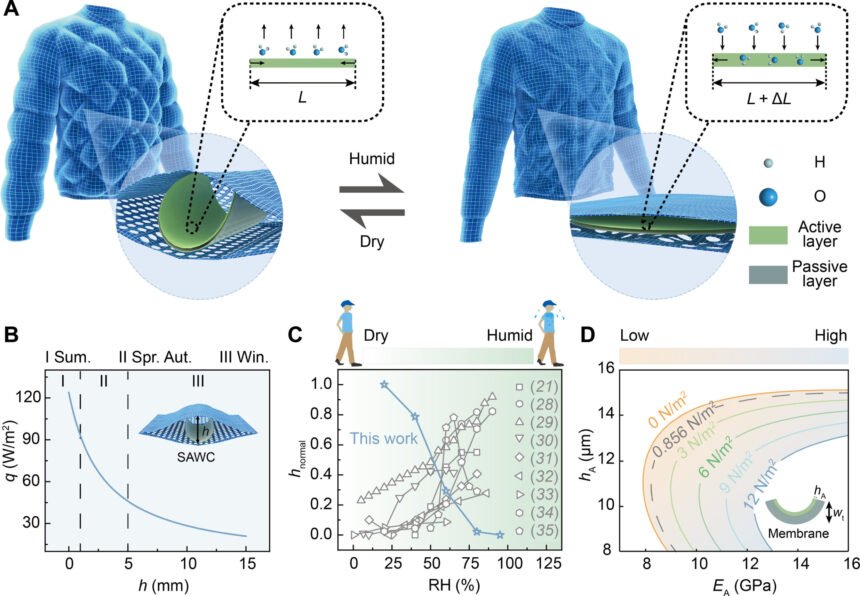
Xiuqiang Li and his team at Nanjing University of Aeronautics and Astronautics in China have developed a revolutionary jacket that responds to human sweat, adapting its thickness to keep you comfortable in changing conditions. The innovative membrane made from bacterial cellulose adjusts its thickness from 13 millimeters to 2 millimeters based on humidity levels, providing optimal thermal regulation.
Testing the jacket in controlled environments and real-world scenarios, the researchers found that the sweat-activated clothing outperformed traditional textiles in controlling body temperature. The technology extends the no-thermal stress zone by an average of 7.5 hours across 20 cities, showcasing its effectiveness in various climates.
Applications and Benefits
The potential applications of this new technology are vast, with possibilities to integrate the bacterial cellulose membrane into different types of clothing for various professions and climates. Outdoor workers, such as sanitation staff, couriers, and police, can benefit from extended comfort while reducing the risk of heat-related health issues.
While the sweat-sensitive adaptive warm clothing shows promising results, further research is needed to assess its performance in extreme weather conditions, durability over time, and effectiveness in different garment types. The future of clothing technology looks bright with innovations like this on the horizon.
Crafted by our writer Paul Arnold,
edited by Lisa Lock, and fact-checked by Robert Egan—this article reflects our commitment to independent science journalism.
Support our work by donating (especially monthly) for an ad-free account.
Further Reading: Xiaofeng Jiang et al, Sweat-sensitive adaptive warm clothing, Science Advances (2025). DOI: 10.1126/sciadv.adu3472
© 2025 Science X Network