
At a glance
Expert’s Rating
Pros
- A rare premium, compact Android phone
- Pixelsnap opens up access to a huge accessory ecosystem
- Some of the most capable AI functionality around
- Capable, more versatile camera than ever before
Cons
- The base 128GB storage should be avoided
- Lacklustre CPU & GPU performance for a flagship
- Minor upgrade on predecessor
- Overpriced
Our Verdict
With only minor hardware improvements, namely a focus on strengthening the Pixel line’s already capable on-device AI chops, it’s what Google has done the rest of the lineup around the Pixel 10 Pro, paired with new AI-backed features – like Magic Cue and Pro Res Zoom – that define whether the Google’s latest pocket powerhouse is a worthwhile buy for you.
Price When Reviewed
This value will show the geolocated pricing text for product undefined
Best Pricing Today
Price When Reviewed
$999
Best Prices Today: Google Pixel 10 Pro
Google played things a little differently when it unveiled the new Pixel 10 series in its entirety on August 20.
Instead of a pre-recorded product showcase, the company opted for a live event, pairing representatives from its various Pixel product teams with late-night TV host Jimmy Fallon, who was seemingly enthused by every facet of the new line of Google phones, from the jump to its latest Tensor G5 chipset, to the Pixel 10 Pro Fold’s (admittedly impressive) new IP68-rated ingress protection. It was, to say the least… different.
Intrigued (and a little confused) by this significant shift in tone for a Pixel launch, I was left wondering whether it would reflect the phones themselves also taking a different tack this year.
Jimmy Fallon in awe of an upside-down Google Pixel 10 Pro Fold
As with the brand’s 2024 Pixel line, the Pixel 10 family is made up of a quartet of devices: the base Pixel 10, the Pixel 10 Pro, the Pixel 10 Pro XL, and the aforementioned Fold.
That Tensor G5 chipset isn’t the only range-wide upgrade either; the base Pixel 10 arguably gained the most notable new hardware addition, in the form of a third camera – a 5x telephoto sensor – granting it imaging versatility more in line with its Pro-branded siblings. The 10 Pro XL, meanwhile, got a notable boost to charging speeds, while ditching the previous-generation’s lowest 128GB storage option.
And then we have the Pixel 10 Pro.
Google’s smaller top-tier phone benefitted from all the same upgrades as its siblings, but beyond that, looked like the most unaltered entry between generations.
Upfront, I’ll concede that Pixel 9 Pro users have next to zero reason to upgrade as a result, but with that new beefed-up standard Pixel 10, should those looking to move from an older Pixel to one of Google’s newest phones opt for this pint-sized powerhouse, or spend their money elsewhere within this latest Pixel line?
Design & Build
- Same dimensions as predecessor and Pixel 10
- New Pixelsnap magnetic accessory support
- 207g weight
Google made a marked change to the look of its phones with 2021’s Pixel 6 lineup, ditching the camera island for a camera bar. It’s become the defining design trait of the series, evolving with each subsequent iteration – until the Pixel 10 series, that is.
Like the 10 Pro XL and 10 Pro Fold, the smaller Pixel 10 Pro looks exactly like its predecessor. It’s 0.1mm thicker than the Pixel 9 Pro and the camera bar is a fraction taller, but beyond that, the phone’s hardware layout, materials, finish and silhouettes align perfectly.
This isn’t a criticism per se. The Pixel was always Google’s attempt at creating an Android phone that follows the iPhone formula, and a consistent, well-defined design language is fundamental to this approach.
With apparently nobody else leaning into a camera bar design, Pixels have become increasingly easy to spot in a crowd, perhaps more so than the likes of Samsung’s standard or Plus-sized Galaxy S phones (their vertical rear triple camera array is far more common among Android phones).
I was impressed with the step-up in fit and finish when handling last year’s Pixel 9 Pro, and that same level of polish persists in this generation. The Pixel 10 Pro looks and feels premium, its mirror-shine aluminium frame contrasted with a silky matt glass back.
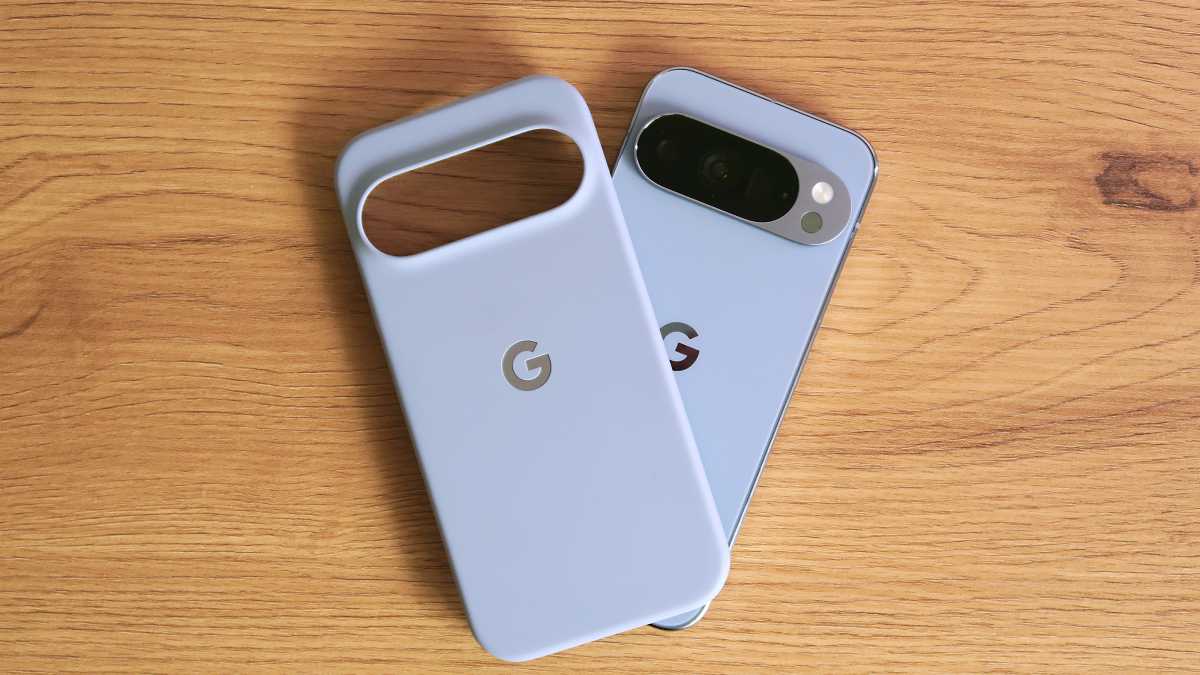
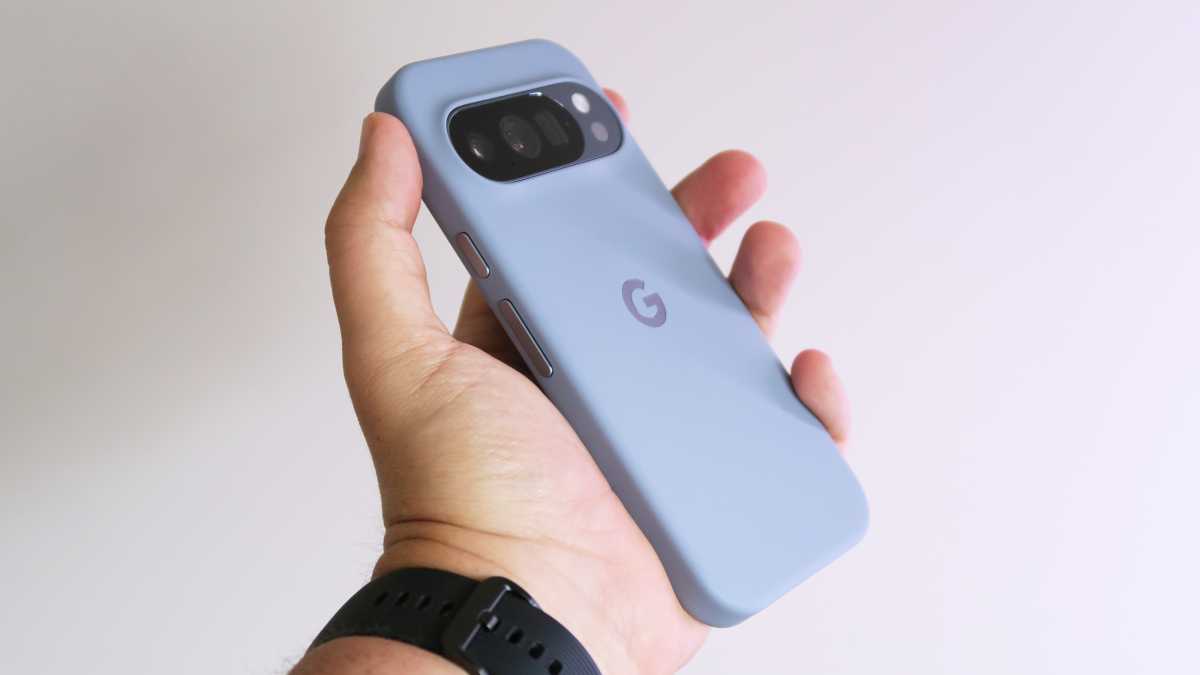
You’ve got four colourways to choose from, with two finishes persisting from last year: Porcelain and Obsidian (essentially white and black), plus two new accent colours: Jade and Moonstone (pictured). Just like Apple’s phones, the Pro-branded Pixels offer a more subdued color palette compared to the standard Pixel 10. The Moonstone finish of the review sample strikes a perfect balance with its titanium grey and touch of lavender, adding interest without being overwhelming.
The Pro-branded Pixels continue to provide IP68-certified protection against dust and water, along with Corning’s Gorilla Glass Victus 2 on both the front and back. The durability of the glass ensures that the phone maintains a fresh appearance over time.
Reflecting on the previous Pixel 9 Pro XL, the finish remained largely flawless, although grime could accumulate in the seam between the glass back and metal surround. This is an area that Google may have improved upon with their 2025 models.
One noteworthy addition across the Pixel 10 series is Pixelsnap. This feature, while not immediately apparent, offers compatibility with a wide range of magnetic accessories, similar to Apple’s MagSafe ecosystem. The inclusion of the Qi2 wireless charging standard with a magnetic ring opens up a world of accessories for the Pixel 10 Pro.
Pixelsnap is Google’s take on the Qi2 standard, allowing for a variety of MagSafe and Qi2 cross-compatible accessories such as chargers, stands, wallets, and mounts. Google has also introduced a limited line of its own-branded add-ons to complement the Pixelsnap feature.
The Pixel 10 Pro boasts a 6.3-inch Super Actua 1-120Hz LTPO AMOLED display, offering the sharpest display in the Pixel 10 series. The high-brightness mode and peak brightness for HDR content have been improved, making it a standout feature compared to its competitors.
The dynamic refresh rate of the display balances power consumption and visual fluidity, providing an excellent viewing experience. The display settings menu offers greater control over brightness and other settings, allowing users to customize their viewing experience.
Overall, the Pixel 10 Pro’s display, along with the Pixelsnap feature, make it a significant upgrade from its predecessor and a standout option in the Android market. For those seeking the ultimate viewing experience on the new Pixel 10 Pro, there is a simple solution – toggle on the ‘Max resolution’ option in the settings. This will ensure the sharpest display possible, although it may result in some additional battery drain.
Another standout feature of the Pixel 10 Pro is its ultrasonic fingerprint sensor. Google made the switch from optical in-display sensors with the Pixel 9 series, and the new ultrasonic sensor works even with damp fingers, adding an extra layer of convenience and security.
One of the lesser-known upgrades to the Pixel 10 Pro and Pro XL is the speaker arrangement. While both models feature a revised earpiece speaker, only the XL model boasts a bolstered down-firing speaker. Despite this, in side-by-side testing, the Pixel 10 Pro delivered a fuller and louder sound compared to the Pixel 9 Pro XL at the same volume level. The sound profile could benefit from more bass, but overall, the loudspeaker audio is decent.
Moving on to specs and performance, the Pixel 10 Pro is powered by a 3nm Google Tensor G5 chipset and comes with 16GB of RAM across all storage variants. The new Tensor G5 chip promises significant improvements in CPU and TPU (AI-based) performance, thanks to its 3nm manufacturing process.
Google has also introduced a new ZUFS (Zoned UFS) storage option for the Pixel 10 Pro, which is optimized for AI usage on mobile devices. However, the availability of this new storage standard varies depending on the storage capacity and region. While the top-tier 1TB model and the 512GB model in the US come with ZUFS storage, other variants may feature conventional UFS 4.0.
Despite these advancements, some may find it disappointing that not every version of the Pixel 10 Pro comes with the best available storage standard. The base 128GB capacity option, in particular, may feel lacking in storage capacity and speed compared to higher-tier models.
Overall, the Google Pixel 10 Pro offers impressive performance and features, with a focus on AI processing and an enhanced viewing experience. While there may be some trade-offs in terms of battery life and storage options, the Pixel 10 Pro is a solid choice for those looking for a high-quality smartphone. Google’s Pixel 10 Pro has been a topic of conversation in the tech world, with many focusing on its impressive features and capabilities. However, while the phone excels in certain areas, it falls short in others, particularly when it comes to benchmark scores.
In terms of performance, the Pixel 10 Pro’s G5 chipset is slightly behind Qualcomm’s current Snapdragon 8 Elite, scoring closer to the Snapdragon 8 Gen 3 from 2023. This means that the phone may struggle with demanding games, defaulting to low graphical settings and dropping frames when pushed to its limits.
One of the reasons for the Pixel 10 Pro’s lackluster gaming performance could be attributed to the shift from a Mali to a PowerVR GPU with the G5 chipset. Additionally, the phone may not be fully optimized to leverage its GPU’s capabilities, as it is not yet running on the latest Vulkan API.
Despite these performance issues, the Pixel 10 Pro still offers a premium user experience, similar to previous Pixel models. This raises a dilemma for potential buyers – is it worth paying a premium for Google’s Android experience, knowing that the hardware may not match up to the competition in terms of performance?
Moving on to the camera capabilities of the Pixel 10 Pro, the phone boasts a 50MP main sensor, 48MP ultrawide sensor, and a 48MP 5x telephoto sensor, along with a 42MP selfie camera. While Google’s Pixel phones have always been known for their excellent camera quality, the Pixel 10 Pro faces tough competition from other flagship devices such as Apple and Samsung.
To set itself apart, Google has introduced new features like Camera Coach, which provides step-by-step guidance for users to improve their photography skills. The phone also offers up to 100x Pro Res Zoom, a significant improvement from previous models, achieved through generative AI techniques.
Despite facing stiff competition in the camera phone market, the Pixel 10 Pro’s AI-driven camera features and impressive zoom capabilities make it a compelling choice for photography enthusiasts. Ultimately, the decision to choose the Pixel 10 Pro over its competitors will depend on whether the user values Google’s unique Android experience and camera features over raw performance metrics. The Pixel 10 Pro’s camera capabilities are truly impressive, especially when it comes to high-zoom images. The Super Res Zoom feature takes a software-centric approach to enhance zoomed-in images, using training data to generate detailed image elements that may be missing in the original shot. This eliminates the need for a detachable telephoto lens, providing users with more versatility in their photography experience.
Comparing the Pixel 10 Pro’s Super Res Zoom with competitors like Honor’s AI Super Zoom, Google’s technology generally delivers more consistent results. However, there are still instances where the image processing may falter, such as turning waves into unexpected shapes. Nevertheless, with time and improvements, this technology is expected to become even more refined.
For those seeking authenticity in their photos, the option to disable the Pro Res Zoom feature or shoot at closer distances is available, returning the zoom limit to 30x for still images. Additionally, the inclusion of the C2PA verification feature allows users to verify if an image has been edited and potentially determine if AI was used in its creation.
While the new features like Camera Coach and Pro Res Zoom do not extend to video capture yet, the Pixel 10 Pro excels in capturing high-quality images, particularly in low light conditions and macro photography. Selfies also showcase accurate colors and details, with improved portrait mode bokeh effects.
In terms of battery life and charging, the Pixel 10 Pro impresses with its 4870mAh battery capacity and efficient use of the Tensor G5 processor. The phone offers fast charging capabilities, with a 55% charge in 30 minutes using the recommended 30W USB-PD PPS power adapter. Real-world usage results in a day and a half of moderate use on a single charge, with impressive screen-on time.
Overall, the Pixel 10 Pro provides a top-notch camera experience and solid battery performance, making it a compelling choice for users looking for a reliable and versatile smartphone for their photography needs. When it comes to smartphone technology, it’s easy to get caught up in the latest offerings from the big players like Apple, Samsung, and Google. However, if you take a closer look at some of the lesser-known phone makers, you might find yourself feeling a bit envious of their battery capacities, charging speeds, and other innovative features.
For example, Motorola’s Edge 60 Pro and Xiaomi’s Poco F7 are two mid-range phones that are making waves in the industry right now. Both of these devices come with 90W wired charging capabilities, which means you can get a quick boost of power when you need it most.
But it’s not just about charging speeds – it’s also about the technology that these phones are using. For instance, Pixelsnap, a lesser-known brand, operates on the Qi2 standard, which allows for wireless charging speeds of up to 15W. While there are rivals out there with even faster wireless charging speeds, the open nature of Qi2 within Pixelsnap is something worth considering.
When it comes to the Google Pixel 10 Pro XL, you’ll find even more advanced charging capabilities. This device supports Qi2.2, which means you can enjoy wireless charging speeds of up to 25W – on par with the latest MagSafe speeds on iPhones. Additionally, you’ll also get quicker 45W wired charging, giving you even more flexibility when it comes to powering up your device.
One thing to note is that the smaller Pixel 10 Pro seems to be limited in terms of charging speeds compared to its larger counterpart. While the exact reasons for this limitation are unclear, it’s possible that the smaller size of the device may impact its thermal performance and overall safety.
In terms of software and apps, the Pixel 10 series is equipped with Android 16, featuring Material 3 Expressive. This latest version of Android offers greater personalization and more engaging UI elements, animations, and interactions. While the new look may be a bit divisive, it does offer a fresh take on the clean and minimalist design that Google is known for.
When it comes to AI features, the Pixel 10 Pro is powered by Google’s Tensor G5 chip, which enables the latest AI capabilities, including the Gemini Nano model. This model promises faster processing speeds and improved performance across various applications, such as the Pixel Screenshots app.
Google has also introduced a range of new first-party apps, including NotebookLM, a research app powered by AI, a dedicated Password Manager app, and the My Pixel app, which replaces the native Tips app and offers a more refined interface with feature highlights and quick access to support resources.
One standout app is the Journal app, designed for daily reflection and powered by AI. While the AI integration may raise some privacy concerns, the app offers helpful suggestions and insightful summaries to inspire your journal entries.
Overall, the Pixel 10 Pro offers a blend of innovative technology, advanced charging capabilities, and AI-powered features that set it apart from the competition. While it may not have the same brand recognition as some of its competitors, it’s certainly worth considering for those looking for a unique and feature-rich smartphone experience. Jumping into the Phone app to adjust a dinner reservation turned out to be a magical experience on the Pixel 10 Pro. As I navigated through the app, Magic Cue appeared with a special card on top of the dialer, displaying the current booking details and assisting me in making the necessary changes seamlessly. This feature is truly a defining Pixel exclusive, setting it apart from its rivals with its pervasive integration throughout the user experience.
While Samsung’s Now Brief and AI Select on the Galaxy S25 series offer some degree of context-awareness similar to Magic Cue, they require active initiation to leverage their dynamic functionality. In contrast, Magic Cue is passive, appearing as needed while using the phone, making it a convenient and intuitive tool.
However, to fully maximize Magic Cue’s potential, users must be committed to Google’s app suite and be willing to share more personal data for cross-app interaction. Google ensures that Magic Cue data and screen activity are protected in a secure environment and handled on-device.
The feature can be customized within the phone’s settings app, allowing users to tailor suggestions, select data sources from first-party apps like Calendar, Contacts, Gmail, Keep, Messages, and Pixel Screenshots. Magic Cue can surface relevant information and help complete tasks efficiently, such as displaying flight details from emails when discussing travel plans.
Another standout feature, currently exclusive to the US, is the reworked Photos editor, which allows users to verbally describe the desired edits using natural language. This feature caters to users who may not be familiar with photo editing tools, offering a seamless and user-friendly experience.
The Pixel 10 series, including the Pixel 10 Pro, is available for pre-order with a release date set for August 28 in the US and UK. The Pixel 10 Pro starts at £999 / $999 / €1099, with higher storage capacity models available at varying price points.
While the Pixel 10 Pro excels in design, camera quality, and software experience, its high price point may deter potential buyers, especially when comparable features are available on other high-end and mid-range devices at lower costs. Ultimately, the decision to purchase the Pixel 10 Pro will depend on the user’s preference for exclusive Pixel features and their willingness to invest in a premium device.
Specifications
- Operating System: Android 16 (initial release)
- Display: 6.3-inch 20:9 1-120Hz 1280 x 2856 LTPO OLED Super Actua display
- Build: Gorilla Glass Victus 2 front and back
- Security: Ultrasonic in-display fingerprint sensor
- Processor: 3nm Google Tensor G5 (manufactured by TSMC)
- RAM: 16GB
- Storage Options: 128GB (UFS 3.1), 256GB (UFS 4.0), 512GB (US = ZUFS | RoW = UFS 4.0), 1TB (ZUFS)
- Camera Setup:
- 50Mp 1/1.3-inch ƒ/1.68 main sensor with OIS and 82° FoV
- 48Mp 1/2.55-inch ƒ/1.7 ultrawide with autofocus and 123° FoV
- 48Mp 1/2.55-inch ƒ/2.8 5x telephoto with OIS and 22° FoV
- 42Mp ƒ/2.2 selfie camera with 103° FoV
- Audio: Stereo speakers
- SIM: Dual-SIM (US = eSIM-only)
- Connectivity: Wi-Fi 5/6/7, Bluetooth 6.0
- Battery: 4870mAh
- Additional Features: Pixelsnap magnetic accessory compatibility, 30W wired charging, 15W wireless charging (Qi2)
- Dimensions: 152.8 x 72 x 8.6mm
- Water and Dust Resistance: IP68 certified
- Weight: 207g
- Color Options: Obsidian, Porcelain, Jade, Moonstone
In conclusion, while the Pixel 10 Pro may not be the top choice among its competitors, its impressive specs and features make it a worthy contender in the flagship smartphone market. the following passage:
Original passage:
“The importance of good communication in the workplace cannot be overstated. Effective communication helps to foster a positive work environment, increases productivity, and enhances teamwork. It is essential for employees to be able to clearly express their thoughts and ideas, as well as listen actively to their colleagues. By improving communication skills, individuals can avoid misunderstandings, resolve conflicts, and collaborate more efficiently. Employers should prioritize communication training and create a culture that values open and honest dialogue.”
Rewritten article:
Effective communication is the cornerstone of a successful workplace, playing a crucial role in fostering a positive work environment, boosting productivity, and promoting teamwork. The ability to clearly articulate thoughts and ideas, as well as actively listen to colleagues, is essential for employees to thrive in any organization. By honing their communication skills, individuals can prevent misunderstandings, navigate conflicts, and collaborate more effectively with their peers. It is imperative for employers to prioritize communication training and cultivate a culture that values transparent and honest dialogue. When communication flows freely and efficiently within a workplace, the entire team benefits from improved morale, increased efficiency, and stronger relationships. Investing in communication skills is an investment in the success of the organization as a whole.