

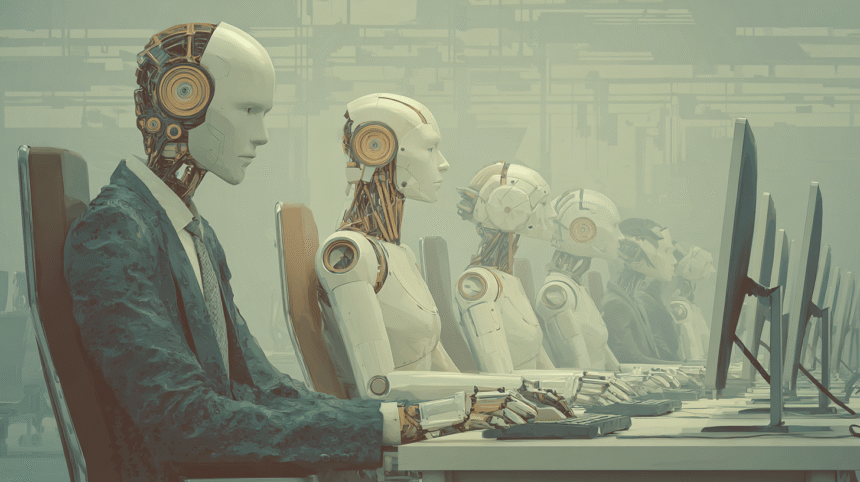
Summary:
1. AI is not yet capable of fully replacing humans in tech and business roles.
2. AI tools are limited by the data they have been trained on, making more complex tasks challenging.
3. While AI can offer efficiency gains for simpler tasks, it still requires oversight from experienced professionals.
Article:
In the current tech landscape, the allure of AI as a solution to automate tasks and reduce the need for human intervention is strong. However, the reality, as observed by a seasoned technologist working with major industry players, paints a different picture. Despite the hype surrounding AI’s potential to replace human developers and streamline processes, the author notes that this vision is still a distant goal.
Drawing from experience with companies like General Electric and The Walt Disney Company, it becomes evident that AI’s ability to replicate the expertise and intuition of experienced professionals is limited. While AI excels at tasks based on publicly available data or templates, it struggles with proprietary infrastructure code that drives tech giants like Google or Stripe. The unique, intricate code developed over years by experienced engineers remains beyond the grasp of current AI capabilities.
One key limitation of AI highlighted in the article is its inability to reason independently or possess instincts. Rather than making informed decisions, AI relies on pattern recognition and mimicking existing data. This places AI in the role of a junior team member, capable of handling simple tasks or providing a first draft but requiring oversight from senior professionals for more complex projects.
The author emphasizes the importance of maintaining a balance between AI and human expertise in the workplace. While AI can enhance efficiency and reduce costs for routine tasks, it falls short when faced with intricate, nuanced projects that demand human insight and experience. The future of AI in tech and business, according to the author, lies not in replacing humans but in empowering them to leverage AI as a tool for reinforcement and support.
Ultimately, the article advocates for a shift in mindset from viewing AI as a complete replacement for human professionals to recognizing its role as a complementary resource. By acknowledging the strengths and limitations of AI, businesses can harness its speed and efficiency while leveraging human intelligence for critical thinking and strategic decision-making.
