Helion Energy, a clean power innovator based in Everett, Washington, is on a mission to harness the power of fusion to provide electricity to the grid. With the construction of its seventh-generation fusion prototype underway, the company is also establishing a commercial power plant and manufacturing facility to support its ambitious goals. Led by CEO David Kirtley, Helion is focused on not just achieving fusion, but also delivering sustainable energy solutions for the future.
It’s a bold ambition to try and replicate on earth the physics that power the sun and the stars.
But clean power innovator Helion Energy is doing much more than that. It’s building its seventh-generation fusion prototype to prove that its technology will deliver energy to the grid while simultaneously constructing a commercial power plant in Central Washington and establishing manufacturing operations to assemble future facilities.
It all rides on Helion’s technology for smashing atoms to work as planned.
“Our goal is not just to do fusion, not just to make energy, but to make electricity,” said Helion CEO and co-founder David Kirtley.
Helion’s multi-track strategy — developing the prototype while standing up industrial-scale production — reflects the belief that speed will be key once fusion is proven viable.
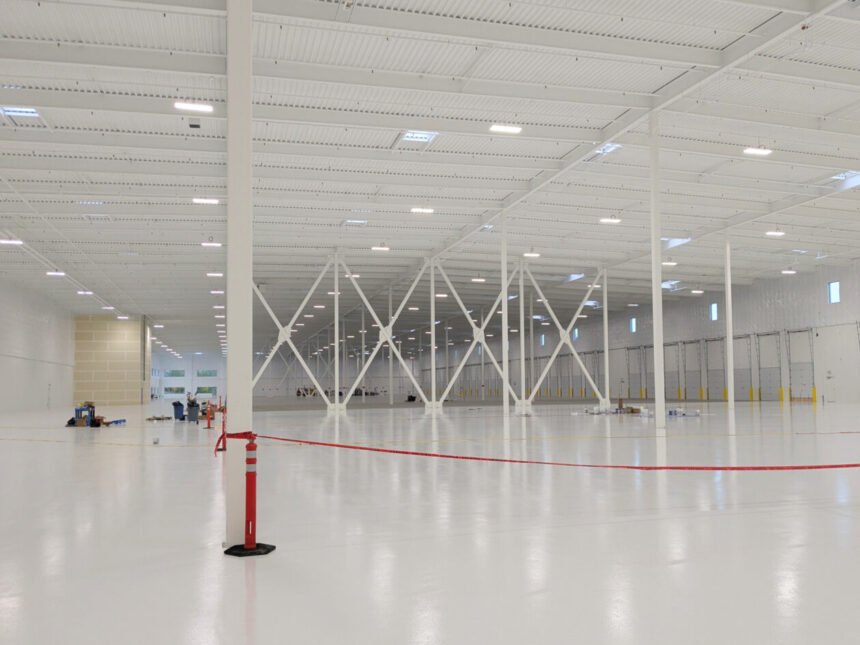
The company recently signed a lease near its Everett headquarters for a 166,000 square-foot space dubbed Omega where the company will install an assembly line to build the thousands of capacitors needed to deliver massive surges of electricity to its fusion generator and capture the energy it produces.
“Helion is a manufacturing company,” said Sofia Gizzi, Helion’s senior manager of production. “It’s not an R&D company. It’s not a science experiment. It’s very much a manufacturing company.”
To meet its lofty goals, Helion has charted rapid growth in recent years — landing huge investments, hitting a headcount of more than 500 employees, and spreading its footprint across an industrial region north of Seattle that’s also home to aviation titan Boeing.
All of that expansion is built on the promise of fusion — though no company or research institution has yet demonstrated it can create affordable electricity from fusion, the so-called Holy Grail of clean energy.
If it works, the demand is there. Data centers and AI expansion, plus economy-wide efforts to electrify transportation, building heating and cooling, and industrial operations are all hungry for clean power.
Microsoft, which is investing heavily in AI-related data center infrastructure, has agreed to buy the electricity produced by the 50-megawatt Orion plant.
“While the path to commercial fusion is still unfolding, we’re proud to support Helion’s pioneering work here in Washington state as part of our broader commitment to investing in sustainable energy,” said Melanie Nakagawa, Microsoft’s chief sustainability officer, when Orion broke ground in July.
Manufacturing strategies
Building fusion plants requires more than physics breakthroughs — it demands industrial muscle. That’s where Helion’s Omega facility comes in.
The company has long aimed to keep its manufacturing and assembly in-house. The approach avoided supply chain disruptions during the pandemic, could help skirt fluctuating tariffs and, perhaps most importantly, allows for quick adjustments as facility designs and operations are fine-tuned.
Standing inside Omega’s freshly painted, gleaming white space just minutes from headquarters, Gizzi explained that the proximity between engineering and manufacturing is strategic.
“If you want to scale quickly, and if you want to be able to build an intelligent manufacturing process, you have to have [manufacturing] engineers with a really good understanding of how the thing works,” Gizzi said. “And you have to have design engineers with a really good understanding of what’s hard about manufacturing.”
Helion’s manufacturing-first philosophy aligns with a broader push to restore American production capacity. Washington state congressional leaders Sen. Maria Cantwell and Rep. Suzan DelBene recently introduced the bipartisan Fusion Advanced Manufacturing Parity Act, which would provide large tax credits for fusion supply chain components.
“The state of Washington is the world’s leading hub for fusion energy, which one day soon could provide vast amounts of the type of power we need to keep electricity prices down and increase America’s economic competitiveness,” Cantwell said in announcing the bill last month.
Looking to 2030
Outside of public support, Helion raised $425 million in January specifically to finance its manufacturing build out in the Omega facility. Investors in the round included OpenAI CEO Sam Altman, Facebook co-founder Dustin Moskovitz, steel manufacturer Nucor, Mithril Capital, SoftBank and others.
The fusion company will begin installing assembly line equipment inside Omega early next year with production starting in late 2026.
The facility will help produce the roughly 2,500 capacitor units needed for the Orion power plant in Malaga, Wash., using both workers and robotics that include off-the-shelf and custom technology to significantly expedite the current processes.
With the scaled-up manufacturing capacity, Helion is focused on the future and what comes after the first plant is running.
“These high volume lines are not for our Orion machine, but for the next machine,” Gizzi said. “A factory operating at 50% of its design capacity or less can spit out Orion, no problem. But we’re really looking beyond that into 2030.”
The Benefits of Incorporating Mindfulness Practices into Daily Life
In today’s fast-paced world, it can be easy to feel overwhelmed and stressed out. With so many responsibilities and distractions vying for our attention, it’s important to find ways to center ourselves and stay present in the moment. One powerful tool that can help achieve this is mindfulness.
Mindfulness is the practice of being fully present and aware of one’s thoughts, feelings, and surroundings. It involves paying attention to the present moment without judgment, allowing us to experience life more fully and deeply. Incorporating mindfulness practices into our daily lives can have a myriad of benefits for our mental, emotional, and physical well-being.
One of the primary benefits of mindfulness is its ability to reduce stress and anxiety. By focusing on the present moment and letting go of worries about the past or future, we can calm our minds and bodies, leading to a greater sense of peace and relaxation. This can be especially helpful in today’s fast-paced world, where stress is a common and often debilitating issue.
In addition to reducing stress, mindfulness can also improve our overall mental health. By becoming more aware of our thoughts and emotions, we can develop a greater sense of self-awareness and emotional intelligence. This can help us better understand our own motivations and behaviors, as well as those of others, leading to healthier relationships and improved communication.
Furthermore, mindfulness has been shown to have physical benefits as well. By reducing stress and promoting relaxation, mindfulness can help lower blood pressure, improve immune function, and even reduce the risk of chronic diseases such as heart disease and diabetes. Additionally, mindfulness can improve sleep quality, increase energy levels, and enhance overall well-being.
Incorporating mindfulness practices into daily life doesn’t have to be complicated or time-consuming. Simple activities such as deep breathing, meditation, or mindful eating can be easily integrated into our routines, allowing us to reap the benefits of mindfulness without adding extra stress or pressure. By taking just a few minutes each day to focus on the present moment, we can experience greater peace, clarity, and fulfillment in our lives.
Overall, mindfulness is a powerful tool that can help us navigate the challenges of modern life with greater ease and resilience. By incorporating mindfulness practices into our daily routines, we can cultivate a greater sense of well-being, reduce stress and anxiety, and improve our mental, emotional, and physical health. So why not give mindfulness a try and see the positive impact it can have on your life?