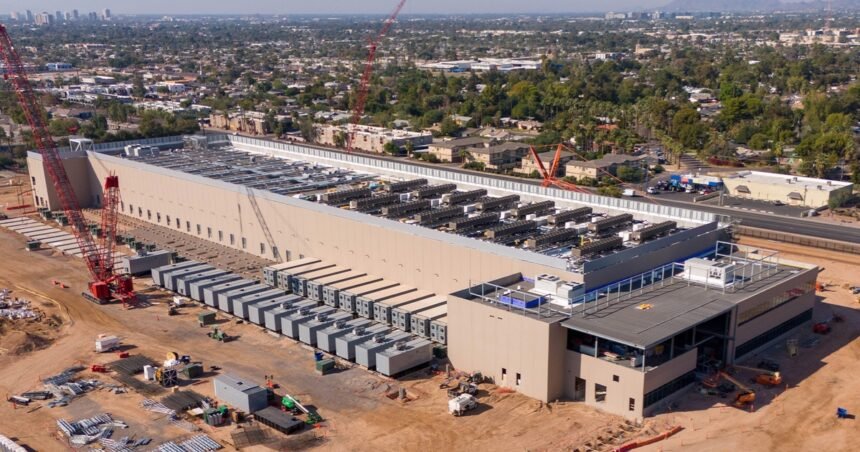
The data center industry experienced a year of rapid expansion in 2025, driven by advancements in AI, cloud computing, and substantial investments. This growth, however, came with its share of obstacles, pushing the sector to its limits in terms of energy supply, land utilization, and regulatory frameworks. As the industry grappled with these challenges, it also saw the emergence of innovative projects and solutions aimed at reshaping global infrastructure.
One of the most notable initiatives of the year was the $500 billion Stargate project, which promised to revolutionize the data center landscape on a global scale. This ambitious endeavor captured the industry’s attention, offering a glimpse into the future of digital infrastructure. However, it also shed light on the practical implications of accommodating AI workloads, managing power grids, and addressing the escalating costs of cooling and water consumption.
As the data center sector navigated through these transformative changes, it became increasingly clear that geopolitical factors, local regulations, and construction trends were shaping the industry as much as technological advancements. Architects and developers turned to AI to design the next generation of data centers, aiming to strike a balance between functionality, aesthetics, and sustainability in an evolving digital ecosystem.
The top data center construction stories of 2025 reflected a paradigm shift fueled by AI-driven growth, power constraints, and rapid innovation. Developers faced mounting challenges in energy management and zoning regulations while exploring novel approaches to design and construction to meet the escalating demands of the market.
The evolution of data center architecture from conventional structures to more integrated and sustainable designs underscored the industry’s transition towards a more environmentally conscious and community-oriented approach. With data centers becoming increasingly visible and scrutinized, developers and operators had to rethink their strategies to align with local regulations and garner support from stakeholders.
The rising prominence of AI workloads posed a new set of challenges for data center builders, particularly in terms of accommodating the substantial weight of AI compute equipment. This shift towards denser hardware necessitated reevaluations of construction methodologies, structural frameworks, and facility layouts to ensure safe and cost-effective hosting of AI infrastructure.
In response to the escalating demands for AI and cloud services, the industry explored innovative solutions such as nuclear-powered data centers and small modular reactors (SMRs) to address power and sustainability concerns. While these technologies held promise, their widespread commercial deployment remained a distant prospect, raising questions about their long-term impact on the digital infrastructure landscape.
The convergence of AI, data center design, and environmental sustainability was exemplified by Cove Architecture’s pioneering use of AI to create a sustainable data center design in Colorado. This groundbreaking project showcased the potential of AI in accelerating complex planning tasks and optimizing resource utilization, signaling a new era of AI-driven innovation in data center construction.
As the data center industry grappled with the implications of AI-driven growth and sustainability challenges, water consumption emerged as a critical issue, particularly in cooling systems. The industry’s response to water scarcity and environmental concerns highlighted the need for more water-efficient designs and alternative cooling technologies to mitigate operational risks and ensure long-term sustainability.
The forecast for data center construction in 2025 revealed a surge in new capacity development, driven by the escalating demand for digital infrastructure. However, external factors such as trade policies and energy constraints introduced uncertainties, reshaping the industry’s landscape and prompting developers to adapt to evolving market dynamics.
In conclusion, the data center industry in 2025 witnessed unprecedented growth, innovation, and challenges that reshaped its trajectory towards a more sustainable and technologically advanced future. As the sector continues to evolve, stakeholders must navigate through a complex web of regulatory, environmental, and technological considerations to ensure the seamless integration of AI and cloud technologies into the digital infrastructure landscape.