BlackRock senior portfolio managers emphasized that the realization of AI’s economic potential in the next five years hinges on overcoming challenges related to land and energy limitations. This was highlighted during their 2026 global outlook presentation, where they discussed the shift towards a capital-intensive environment driven by AI dominance. The need for heavy upfront investments in AI and energy infrastructure to fuel growth may be hampered by the strain on electricity grids and land permitting hurdles, potentially slowing down the pace of AI development.
Whether the economic potential of AI is realized over the next five years depends, in large part, on the limitations of land and energy, BlackRock senior portfolio managers said during their 2026 global outlook presentation this week.
The presentation on December 2 characterized a rapidly shifting global economy driven by the dominance of AI and just a handful of market drivers. That level of concentration has transformed a “capital-light” environment to a “capital-intensive” one, necessitating heavy upfront investment in AI and energy infrastructure to eventually yield commensurate growth.
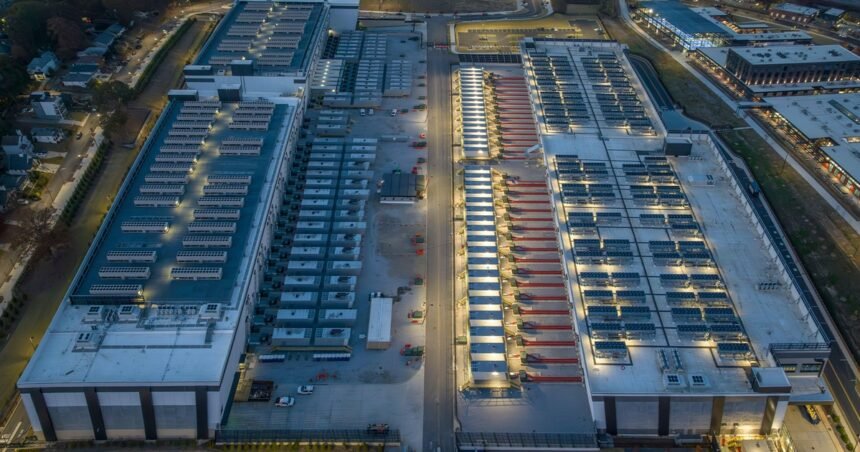
However, AI data centers are poised to consume 15-20% of current US electricity demand by 2030. This dynamic is already testing electric grids – and regulatory bodies – across the Western world, the panel noted. That need for energy, along with land permitting challenges, may threaten to constrain the speed and scale of the AI buildout.
“AI spending is at three-times historical levels, contributing to growth,” said BlackRock chief investment strategist Wei Li. “What does it mean for risk?”
High-Stakes AI Investment
Saying it was conceivable that macro revenues will someday justify the unprecedented level of AI capex spending – with some estimates reaching $5-8 trillion by 2030 – BlackRock’s deputy CIO Russ Brownback said that to achieve a positive ROI, AI would need to outpace the long-term US growth trend.
“That’s not a trivial thing to do,” Brownback said. “The steam engine, electricity, the internet – all this has been necessary to keep at 2% growth.”
But constraint is also an opportunity, with BlackRock sounding an optimistic note for private infrastructure investment. The investment firm notes in its 2026 Investment Outlook that current valuations don’t reflect the long-term potential of infrastructure and that listed infrastructure trades at a deep discount to public equities.
A Tale of Two Regions
The panel emphasized that while the AI buildout will have winners, it wasn’t clear yet who they would be. But one likely champion, according to the firm, is China, which contrasts with the US and Europe in the pace of its power generation and transmission.
In its outlook, BlackRock lists the country’s advantages as on-time and on-budget nuclear reactors, coal, hydropower and renewables as well as the strength of its solar and battery manufacturing.
Referring to DeepSeek, the panel observed that a more energy-efficient Chinese AI model could mitigate the type of energy constraints seen in the US and Europe.
BlackRock co-CIO Jeff Shen said the current phase of AI buildout would be defined by speed and scale.
Li put it another way. “This is a delicate and critical juncture,” she said.