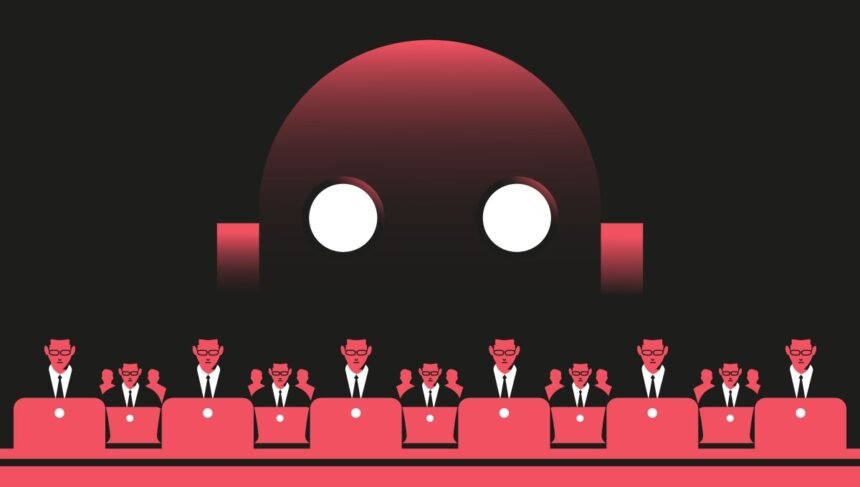
Concerns are on the rise regarding the impact of AI on the workforce as technological advancements promise automation and efficiency. The pace of these developments has sparked fears among workers about the potential consequences.
Evidence indicates that these concerns are not unfounded.
A study conducted by MIT in November revealed that approximately 11.7% of jobs could already be automated through the use of AI. Employers have begun eliminating entry-level positions due to the integration of this technology, attributing layoffs to AI.
With the increasing adoption of AI by enterprises, there is a growing emphasis on evaluating the necessity of current workforce numbers.
In a recent survey by TechCrunch, several enterprise VCs expressed their belief that AI will significantly impact the workforce in 2026, even though the survey did not specifically address this topic.
Eric Bahn, a co-founder and general partner at Hustle Fund, anticipates changes in labor dynamics in 2026, although the exact implications remain uncertain.
Techcrunch event
San Francisco
|
October 13-15, 2026
Marell Evans, founder and managing partner at Exceptional Capital, predicted that companies looking to boost AI investments would divert funds from labor expenses and hiring.
Rajeev Dham, managing director at Sapphire, concurred that budget allocations in 2026 would shift resources from labor to AI. Jason Mendel, a venture investor at Battery Ventures, added that AI would transcend its role as a mere efficiency tool for workers in 2026.
Antonia Dean, a partner at Black Operator Ventures, suggested that even if companies do not reallocate labor budgets to AI projects, they may still attribute layoffs or reduced labor costs to AI advancements.
While many AI companies argue that their technology enhances job roles by automating repetitive tasks and enabling workers to focus on deep work or higher-skilled tasks, concerns persist among individuals fearing job automation. VCs specializing in AI investments indicate that these concerns are unlikely to dissipate in 2026.