Summary:
- The rapid growth of data centers in the US is causing concerns about energy consumption and natural resource usage.
- Data centers consume a significant amount of electricity, leading to strain on energy supplies in various states.
- Efforts are being made to implement sustainable practices, reduce e-waste, and engage with partners to enhance sustainability in data center operations.
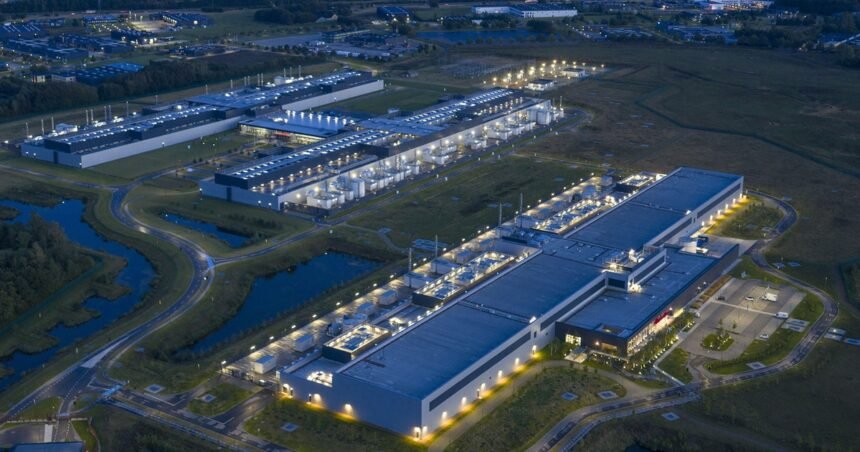
The increasing demand for data centers to support AI technologies is raising concerns about the environmental impact of these facilities. According to a report, over 1,200 data centers were either built or approved for construction in the US by the end of 2024, leading to debates on their energy consumption and resource utilization. The International Energy Agency (IEA) highlights that hyperscalers can consume as much electricity as 100,000 households, with larger data centers expected to use even more. States like Virginia, North Dakota, and Nebraska are experiencing significant strain on their energy grids due to data center operations.
To address these challenges, some states are introducing legislation to incentivize data centers to implement energy storage or generation solutions to reduce grid strain. For example, Illinois is targeting 15 GW of state energy storage and creating a virtual power plant program to support high-energy-demand data centers. California mandates data centers to adhere to energy efficiency standards, indirectly promoting the use of renewable energy sources.
In addition to energy consumption, data centers also contribute to the e-waste crisis when servers and GPUs are replaced every two to five years. Millions of tons of outdated equipment end up in landfills, posing environmental and health risks globally. Operators are urged to adopt circular data center models that prioritize reuse and refurbishment to reduce e-waste while maintaining data security.
Furthermore, engaging with third-party IT asset disposition (ITAD) companies can help data center operators implement sustainable end-of-life hardware asset policies. By choosing R2v3 or e-Stewards certified partners, operators can ensure responsible processing of drives and components, monetize used equipment, and enhance their brand appeal to environmentally conscious stakeholders.
In conclusion, data center operators must prioritize sustainability by implementing strategies to minimize energy consumption, reduce e-waste, and engage with partners to enhance eco-friendly practices. By leveraging AI-enabled lifecycle visibility, secure sanitization software, and circular design principles, data centers can reduce landfill waste, preserve critical materials, and strengthen their overall sustainability strategy in a rapidly evolving digital landscape.