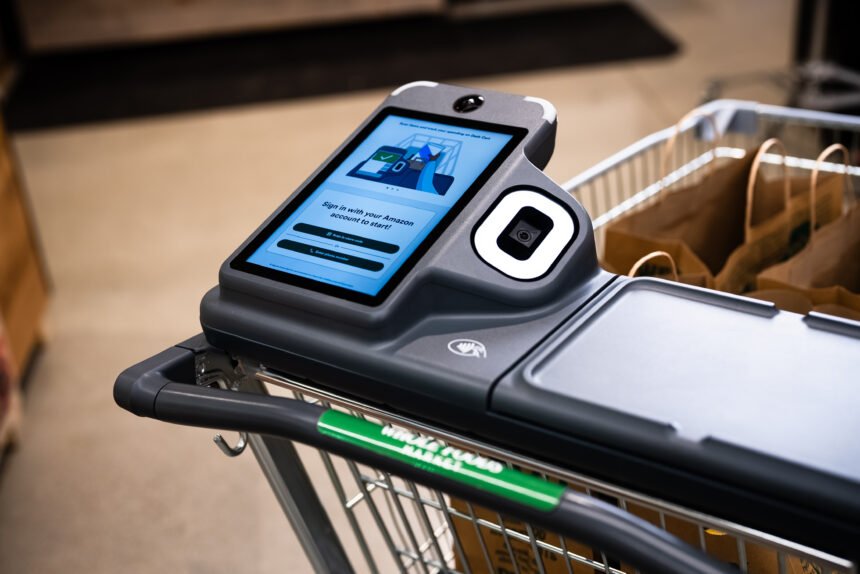
The revamped Dash Carts are currently being piloted at select Whole Foods Market locations, with plans for a wider rollout across the U.S. by the end of 2026. This latest iteration represents Amazon’s ongoing commitment to enhancing the shopping experience through innovative technology, aligning with the company’s evolving physical retail strategy.
In 2020, Amazon introduced the Dash Cart as an alternative to its cashierless stores, moving away from the “Just Walk Out” technology that relied on complex camera and sensor systems. While initial versions of the Dash Cart faced challenges, such as a learning curve, the updated model aims to address these issues and provide a more seamless shopping experience for customers.
Competitors like Instacart and Veeve have also entered the smart cart market, signaling a growing trend in retail technology. Amazon’s investment in the Dash Cart reflects a shift towards incremental tech enhancements in physical retail, complementing its existing offerings and services.
Furthermore, Amazon’s focus on integrating fresh grocery delivery with its online marketplace demonstrates the company’s multifaceted approach to capturing a larger share of the grocery and household essentials market. With over $100 billion in gross sales from groceries and essentials in 2024, Amazon continues to innovate and expand its presence in the retail sector.