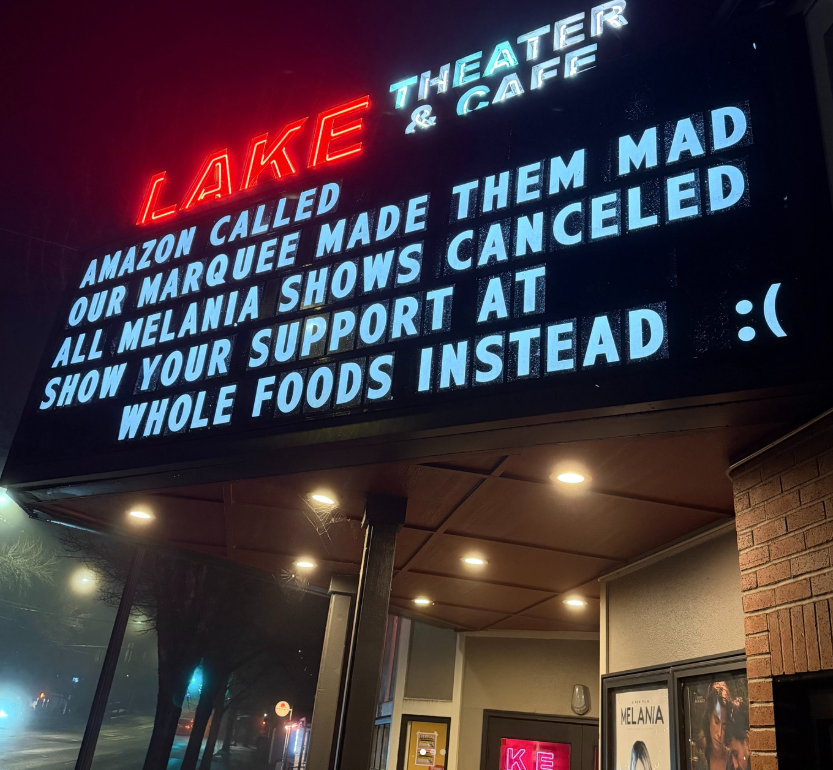
The manager of the Lake Theater & Cafe in Lake Oswego, Ore., just outside of Portland, shared that a marquee message he displayed for the screening of the film about First Lady Melania Trump led to Amazon pulling the movie from the theater lineup. The controversial message read, “To defeat your enemy, you must know them. Melania starts Friday,” sparking a reaction from Amazon executives. Following Amazon’s decision, the theater had to cancel all showings of “Melania,” much to the dismay of moviegoers.
In response to the situation, the Lake Theater & Cafe took to Instagram to share the news with their followers. They revealed that Amazon executives were displeased with the marquee message and expressed their frustration by canceling all screenings of the film. The theater humorously suggested that patrons show their support by visiting a nearby Amazon-owned Whole Foods Market instead. This turn of events showcases the influence of corporate partnerships and the repercussions of pushing boundaries in marketing.
Marquee messages have become a signature element of the Lake Theater’s identity, with past messages eliciting various reactions from the community. The theater’s decision to feature “Melania” was a deliberate choice to spark conversation and challenge conventional norms. Despite the controversy surrounding the film, the theater aimed to encourage open-mindedness and critical thinking among its audience.
As the “Melania” documentary garnered attention nationwide, it also faced criticism and backlash from critics and the public alike. The film’s portrayal of the former First Lady raised concerns about its political undertones and narrative bias. Despite the controversy, “Melania” managed to achieve a significant box office success, reflecting the public’s curiosity and intrigue surrounding the Trump family.
Overall, the incident at the Lake Theater & Cafe serves as a reminder of the power of storytelling and the impact of marketing strategies on audience perception. By pushing boundaries and challenging norms, the theater sparked a conversation that reverberated beyond its walls, highlighting the complex relationship between art, politics, and public opinion.