The European Processor Initiative and Its Mission
Established as a consortium known as the European Processor Initiative (EPI), industry and research partners came together to address the challenge of creating a world-class European High-Performance Computing ecosystem. The goal is to develop exascale computing machines that rank among the top three globally while also laying the foundation for future low-power microprocessor technologies in Europe. This strategic roadmap aims to foster the growth of European technology, particularly in the realm of low-power HPC chips.
The First Stage of Development
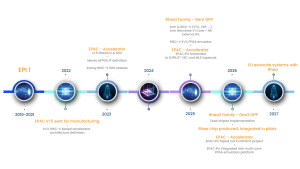
Under the Specific Grant Agreement 1 (SGA1), the EPI embarked on its journey in 2018 with 28 partners from ten countries. Despite facing obstacles, including the global pandemic, the consortium made significant progress towards the development of Arm and RISC-V family processors. The first stage concluded in 2021, setting the stage for the next phase of the project.
Advancing Towards Digital Sovereignty
In alignment with the European Council’s vision for digital sovereignty, the EPI’s efforts have become a critical component of Europe’s political and technological landscape. The second stage, SGA2, commenced in 2022 with a focus on continuing the development of European microprocessors and accelerators to enhance technological autonomy and sovereignty.
Key Developments and Achievements
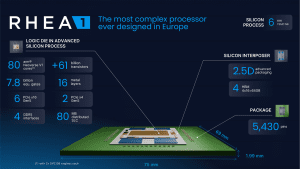
The EPI has made significant strides in high-performance computing, particularly with the successful manufacturing and demonstration of the EPAC Accelerator chip version 1.5. This milestone represents a crucial advancement in the EPI’s mission to develop a common platform for European supercomputers. Additionally, SiPearl’s Rhea1 processor, designed to meet the demands of traditional HPC and AI workloads, is set to revolutionize European supercomputing capabilities.
Future Prospects and Collaborations
As the EPI project nears completion, the consortium partners are gearing up to disseminate their results and innovations. Institutions like CEA-List and the University of Zagreb’s Faculty of Electrical Engineering and Computing have already announced groundbreaking developments that will contribute to the growth of the European HPC ecosystem. With a focus on advancing technological autonomy and sovereignty, the EPI is paving the way for a new era of high-performance computing in Europe.