Rewilding the Eastern Quoll: A Conservation Success Story
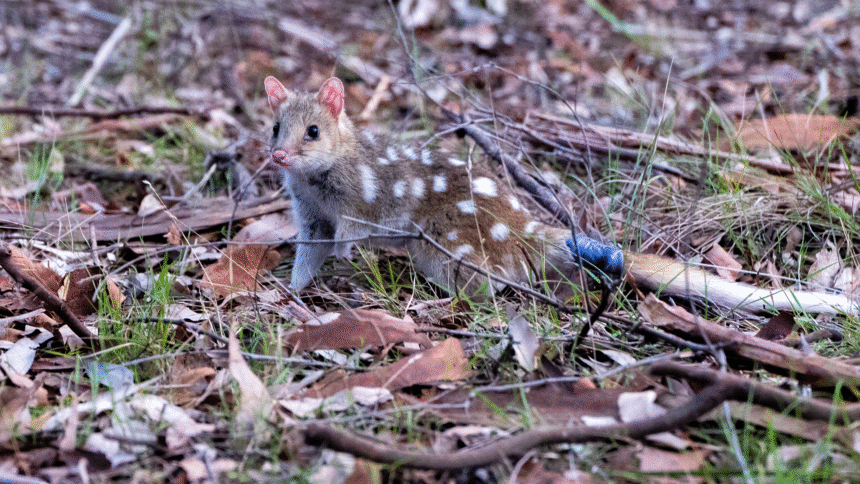
The University of Sydney and conservation organization Aussie Ark have teamed up to release 15 endangered eastern quolls (Dasyurus viverrinus) into a controlled bushland environment. These medium-sized, bushy-tailed, white-spotted nocturnal marsupials were reintroduced into a preserve on the Scots College’s Bannockburn property near Nowra along the southern coast of New South Wales, Australia.
Jerrinja tribal leader Ron Carberry conducted a Welcome to Country ceremony as the quolls explored their new home. A Welcome to Country is a traditional Indigenous ceremony that welcomes visitors to the land and pays respect to the Traditional Owners.
This release marks a significant step in rewilding a species that disappeared from Australia’s mainland over 60 years ago. Eastern quolls are now primarily found in Tasmania, inhabiting various landscapes such as farmlands, open grasslands, dry forests, woodlands, coastal scrub, and alpine heathland. These opportunistic hunters feed on live prey like insects, small mammals, birds, and reptiles, as well as scavenging for food.
The reintroduced populations are being established in areas where introduced predators are managed, such as the 400-hectare Barrington Wildlife Sanctuary. Ten of the eastern quolls released at the Bannockburn site were born and bred at the sanctuary.
Thomas Newsome from the University of Sydney’s Global Ecology Lab emphasizes the importance of long-term scientific research to understand the successful rewilding of the species. The team plans to use VHF radio and GPS tail transmitters, a network of camera traps, and quarterly cage trapping to monitor the quolls and collect data.
Aussie Ark Operations Manager Dean Reid sees this release as a significant step towards rewilding the eastern quoll on the Australian mainland. The site will join the SE NSW Eastern Quoll Hub, participating in a genetic metapopulation management plan to ensure the long-term health of quoll populations in predator-free sanctuaries.
This conservation success story showcases the efforts of researchers, conservationists, and Indigenous communities in restoring a species to its natural habitat. Through collaboration and research, the eastern quoll may once again roam the Australian mainland, contributing to the ecosystem from which it has been absent for decades.
How to Preserve the Original HTML Structure for SEO Optimization
Introduction
When it comes to optimizing your website for search engines, preserving the original HTML structure is crucial. This not only helps search engine crawlers easily navigate and index your site but also ensures a seamless user experience. In this article, we will discuss the importance of maintaining the original HTML structure for SEO purposes and provide some tips on how to do so effectively.
Why Preserve the Original HTML Structure?
Preserving the original HTML structure of your website is essential for SEO optimization. Search engine crawlers rely on this structure to understand the content of your site and rank it accordingly. When you alter the HTML structure, you risk confusing search engines and potentially lowering your search engine ranking. Additionally, maintaining the original structure helps ensure a consistent user experience, making it easier for visitors to navigate your site.
Tips for Preserving the Original HTML Structure
1. Use Semantic HTML Elements
When designing your website, make use of semantic HTML elements such as <header>, <footer>, and <nav> to clearly define the different sections of your site. This not only helps search engines understand the structure of your site but also improves accessibility for users with disabilities.
2. Avoid Using Tables for Layout
While tables were commonly used for layout purposes in the past, they are not recommended for modern web design. Instead, use CSS for layout and reserve tables for tabular data only. This will help keep your HTML structure clean and easy to understand for search engines.
3. Maintain a Consistent URL Structure
It is important to maintain a consistent URL structure throughout your website. This not only helps with SEO but also makes it easier for users to navigate your site. Avoid changing URLs frequently and use descriptive keywords to improve search engine visibility.
Conclusion
Preserving the original HTML structure of your website is crucial for SEO optimization. By following the tips outlined in this article, you can ensure that your site is easily navigable by search engine crawlers and provides a seamless user experience. Remember to always prioritize the original HTML structure when designing or updating your website to maximize its SEO potential.
Title: The Enchanting World of Botanical Gardens
Every year, thousands of people flock to botanical gardens around the world to immerse themselves in the beauty of nature. These lush green spaces are not only a feast for the eyes but also a sanctuary for the soul. From colorful flowers to towering trees, from tranquil ponds to cascading waterfalls, botanical gardens offer a glimpse into the diverse and enchanting world of plants.
One of the most famous botanical gardens in the world is the Royal Botanic Gardens in Kew, London. Founded in 1840, this UNESCO World Heritage Site spans over 300 acres and is home to over 50,000 plant species. Visitors can wander through the iconic glasshouses, like the Palm House and the Temperate House, which house exotic plants from around the globe. The gardens also feature a treetop walkway, a Japanese garden, and a serene lake, making it a perfect retreat from the hustle and bustle of city life.
Another gem is the Singapore Botanic Gardens, the first and only tropical garden to be designated as a UNESCO World Heritage Site. Spanning over 180 acres, this lush oasis showcases the rich biodiversity of Southeast Asia. Visitors can explore the National Orchid Garden, which boasts over 1,000 orchid species, or take a leisurely stroll along the Symphony Lake, where free concerts are held on weekends.
In the United States, the New York Botanical Garden is a must-visit destination for plant enthusiasts. Located in the Bronx, this 250-acre garden is home to a diverse collection of flora, including the largest Victorian glasshouse in the country. Visitors can also explore the 50-acre Thain Family Forest, a preserved old-growth forest that provides a stark contrast to the bustling city just outside its gates.
Whether you’re a seasoned botanist or just someone who appreciates the beauty of nature, botanical gardens offer a unique and immersive experience. They provide a space for reflection, inspiration, and connection with the natural world. So next time you’re looking for a peaceful escape, consider visiting a botanical garden and let yourself be enchanted by the wonders of plants.