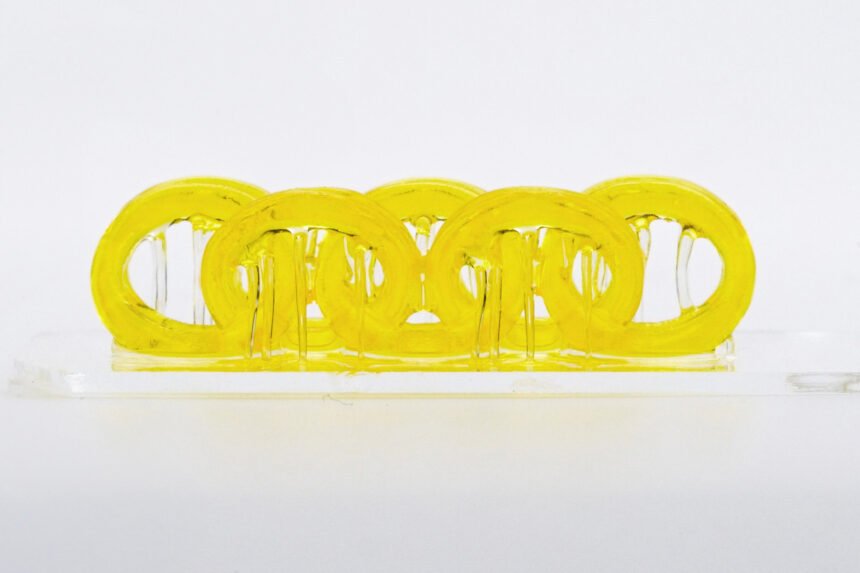
Researchers at The University of Texas at Austin have developed a groundbreaking 3D printing method inspired by the blend of toughness and flexibility found in nature. This innovative technique allows for the creation of objects with both soft and hard properties using different colors of light, opening up new possibilities in fields such as prosthetics, medical devices, and electronics.
Revolutionizing 3D Printing with Novel Resins
Mimicking Nature’s Design for Enhanced 3D Printing
By studying how nature seamlessly combines different materials with varying properties, the research team at The University of Texas at Austin has developed a cutting-edge 3D printing method. This technique integrates soft and hard properties into a single object through the use of different light colors, mirroring the elegant and precise geometric properties found in natural structures like bones and cartilage.
Unveiling the Potential for Next-Generation Applications
The new method holds immense promise for the future of prosthetics, medical devices, and electronics, offering the ability to create objects that move harmoniously with the body. Published in Nature Materials, the research outlines how this advancement could revolutionize additive manufacturing, providing engineers and designers with unprecedented design flexibility.
Enhancing Material Interaction for Seamless Integration
One of the key challenges in creating objects with diverse physical properties is the potential failure at material interfaces. The team’s custom-designed resin and dual-light printing system enable distinct zones of softness and hardness within a single print, showcasing a strong connection between different materials.
Pioneering a Faster and More Precise Approach
Compared to traditional methods, the new 3D printing technique offers faster processing times, higher resolution, and better material properties. With a simple and cost-effective setup, this technology could soon be accessible to various industries, paving the way for innovative applications in healthcare, robotics, and beyond.
More information:
Hybrid epoxy–acrylate resins for wavelength-selective multimaterial 3D printing, Nature Materials (2025). DOI: 10.1038/s41563-025-02249-z
Keldy S. Mason et al, Multicolor Digital Light Processing 3D Printing Enables Dissolvable Supports for Freestanding and Non-Assembly Structures, ACS Central Science (2025). DOI: 10.1021/acscentsci.5c00289