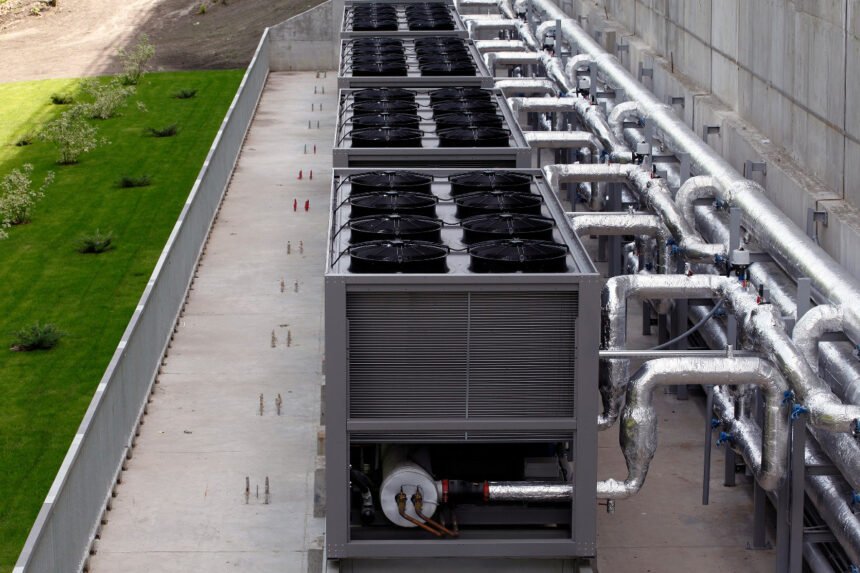
In the realm of artificial intelligence (AI), the importance of efficient cooling solutions cannot be overstated. Alistair Barnes, Head of Mechanical Engineering at Colt Data Centre Services, sheds light on the significance of air cooling in the AI era and the potential benefits of selective hybrid deployments in managing costs and enhancing efficiency.
The rapid growth of AI technology is driving a surge in worldwide spending, with projections indicating a substantial increase in data centre capacity driven by AI workloads. This expansion presents a new set of challenges for data centre operators, particularly in terms of cooling high-performance computing components that generate significant heat. Failure to address thermal output effectively can result in hardware degradation, uneven load distribution, and escalating energy expenses.
Traditional air-cooling methods are reaching their capacity limits as modern infrastructures demand higher rack densities, surpassing the capabilities of air-only cooling. Liquid cooling has emerged as a viable solution to tackle the thermal challenges posed by AI-focused deployments. By utilizing water or specialized coolants to draw heat away from high-temperature components, liquid cooling offers improved heat removal efficiency, heat reuse capabilities, and reduced strain on cooling systems. Various liquid-cooling approaches are now being employed in data centres, ranging from circulating coolant through racks to immersing servers in thermally conductive fluids.
While liquid cooling presents notable advantages, a hybrid cooling strategy combining liquid and air cooling is often the most effective approach for data centre operators. This strategy allows for the selective deployment of liquid cooling where it is most needed, optimizing thermal performance, enhancing power usage effectiveness (PUE), and reducing overall energy consumption. The flexibility of a hybrid cooling approach enables operators to accommodate varying rack densities and evolving requirements, ensuring cost control and energy efficiency.
In conclusion, the adoption of future-ready cooling solutions, such as liquid and hybrid cooling, is crucial for data centres to support the growing demand for AI workloads. By leveraging advanced cooling technologies and strategic planning, data centre operators can future-proof their operations, maintain optimal performance, and thrive in an increasingly AI-driven era.