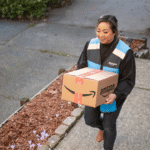
Amazon is venturing into a new realm of local deliveries with its latest project in Seattle’s Ballard neighborhood. The former Fresh Pickup site, which closed in early 2023, is set to transform into a rapid-dispatch delivery hub for Amazon Flex drivers, according to permit filings.
The concept behind this new hub is unique: it will operate as a retail-style store where no customers will ever enter. Instead, Amazon employees will fulfill online orders by picking and bagging items in a back-of-house stockroom, placing the completed orders on shelves in the front of the space, and handing them off to Amazon Flex drivers for quick delivery in the surrounding neighborhood.
The operation is designed for efficiency, with drivers arriving, scanning in, retrieving a packaged customer order, confirming it with an associate, and departing within approximately two minutes. The hub will be operational 24/7, resembling a convenience store model.
Known as the “ZST4” project, this new initiative aligns with Amazon’s “Amazon Now” delivery type, focusing on short, sub-one-hour delivery blocks from dedicated pickup locations. Similar sites, such as ZST3 in Seattle’s University District and ZPL3 in Philadelphia, suggest that the Ballard project is part of a larger rollout of hyperlocal delivery operations.
This move is part of Amazon’s broader strategy to enhance “sub-same-day” delivery by establishing smaller, urban fulfillment centers that carry high-demand items for faster turnaround. The company, along with other players like GoPuff, DoorDash, and Uber Eats, is exploring various models for ultrafast delivery using partnerships and “dark stores.”
The Seattle site represents a shift in Amazon’s Flex program, emphasizing speed and simplicity. Drivers will cycle through the hub quickly, focusing on shorter delivery routes and utilizing personal e-bikes and scooters for deliveries due to the smaller size of orders and shorter distances involved.
Supply-chain analyst Marc Wulfraat views this new approach as a lab experiment to test its profitability. The site will stock essential items and local products tailored to the needs of the community, potentially including perishable items alongside shelf-stable goods.
Amazon’s previous experiments, like the now-defunct “Amazon Today” program, highlight the challenges of ultrafast delivery and smaller orders. By controlling more variables with the new Seattle hub, including inventory flow and labor efficiency, Amazon aims to address these economic challenges.
The Ballard hub will be staffed by four shifts of six to eight employees each day, dispatching approximately 240 vehicles over 24 hours with peak volumes of 15 to 20 trips per hour. This new venture marks a second chapter for the building, which previously housed an Amazon Fresh Pickup location before transitioning into this innovative retail-style delivery hub.
Fitting in with the zoning regulations
The focus on the retail-oriented design of the new Seattle delivery center could play a crucial role in ensuring that the facility complies with the zoning requirements, which prioritize retail-based businesses.
The location is designated for retail and service establishments that cater to automobile traffic, approved for general sales and services as a retail outlet following Amazon’s reconfiguration of the premises from a former restaurant, previously known as Louie’s Cuisine of China.
If the city determines that the new function falls under the retail category, Amazon might bypass a formal review for change of use, thereby avoiding additional assessments like traffic impact studies, environmental evaluations, and updates to meet current building codes.
In its permit application, Amazon consistently refers to retail terms and portrays Flex drivers as stand-ins for customers, stating, “Our store will feature a small customer-facing area where products selected by customers will be available for Amazon Flex Drivers to collect the purchased items,” as outlined in the documentation submitted on October 31.
This approach could potentially serve as a model for regions where authorities are clamping down on “dark stores” within retail districts. Cities such as New York, Amsterdam, and Paris have taken steps to regulate or prohibit micro-fulfillment centers in storefronts, arguing that they diminish the vibrancy of urban centers and breach zoning regulations.
There is no specified timeline from Amazon regarding the commencement of operations at the new facility. We have reached out to the company for insights on the project, and any further details will be included in this article.
[Special thanks to the undisclosed source who alerted us about the filing. If you have pertinent information to share on any topic covered by us, please email tips@geekwire.com or utilize our online submission form.]