


Discussions surrounding sustainability, digital rights, and responsible innovation indicate that technical feasibility is no longer the sole determining factor. The acceptance and trustworthiness of technologies, their ethical alignment, contribution to sustainability, and reflection of societal values are now crucial considerations. As 6G technology advances, these aspects are pivotal to its credibility. The 6G4Society project delves into how 6G can integrate societal, environmental, and economic aspects into innovation itself.
Europe’s vision for 6G technology intertwines technology with sustainability, policy, and ethics. The Smart Networks and Services Joint Undertaking (SNS JU) provides the research and innovation structure, backing projects like 6G4Society to explore how 6G technology can harmonize with European values of inclusivity, trust, and sustainability.
The prevalent policy landscape reflects a growing consensus in Europe that 6G must not only be faster or more efficient but also a driver for environmental, social, and economic sustainability. The 6G4Society project, in conjunction with other SNS initiatives, leads the way by crafting sustainability-centered business models and measurable indicators that connect technological advancements to tangible benefits and sustainability. These models include concepts like Sustainability-as-a-Platform, circular resource marketplaces, and impact-driven partnerships, all aimed at transitioning from quantity-based metrics to value-based outcomes.
Sustainability as the Core of European Connectivity
6G4Society was established to ensure that social and environmental values are not secondary considerations but the fundamental basis of technological progress. Through collaboration among social scientists, engineers, citizens, and policymakers, the project strives to develop practical tools and frameworks that make social acceptability and sustainability quantifiable, actionable, and essential to Europe’s digital evolution.
Europe must depend on more holistic mechanisms such as frameworks, public involvement, value-based indicators, cross-project synergies, and policy fusion. Below, we elaborate on each of these mechanisms.
Frameworks Beyond Specifications
The Acceptance Models of 6G Technology framework, developed by 6G4Society, introduces a structured approach to evaluating how new technologies resonate with ethical standards, cultural contexts, and public confidence. Instead of solely focusing on KPIs like throughput or energy efficiency, this framework incorporates qualitative and quantitative dimensions such as citizen sentiments, inclusivity, and perceived fairness.
Integrating such frameworks into research projects allows for the assessment of societal impacts alongside technical outcomes. This signifies a broader shift within the SNS JU: from designing networks for performance to designing networks for people.
Engaging the Public Early
6G4Society places public engagement at the forefront of its mission through activities like the Citizen Survey, which gathers viewpoints from across Europe on expectations, concerns, and aspirations regarding the next wave of networks.
The project explores participatory mechanisms such as workshops, focus groups, and living-lab trials, which are integral components of policymaking and innovation governance. Engaging citizens early on enables developers and policymakers to identify emerging issues before they escalate into opposition.
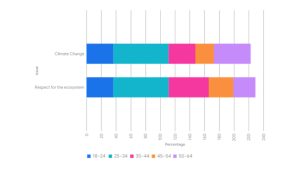
The Citizen Survey, conducted in nine languages and garnering over 1,800 responses, incorporates both quantitative and qualitative questions to prevent bias and encourage reflection on real-life experiences.
The results reveal a spectrum of public attitudes, ranging from curiosity and optimism to skepticism and fatigue. While many respondents acknowledge the potential of 6G to enhance daily life through better information access and connectivity with loved ones, they also express concerns about the rapid pace of technological advancement potentially surpassing societal needs.
Environmental responsibility emerges as a unifying priority across age groups. Younger participants, in particular, demonstrate awareness of societal and environmental implications, often connecting connectivity to issues like energy consumption and material usage. Respect for the environment and biodiversity ranks high across generations, followed by concerns about climate change. Participants emphasize the importance of equal and inclusive connectivity, associating digital equality with broader concepts of solidarity and social cohesion.
These insights emphasize the public’s expectation for 6G technology to be purposeful, transparent, and responsible in design. The findings serve as a crucial reference point for the Social Acceptance Model under development by 6G4Society, ensuring that the next phase of connectivity is guided by public values and geared towards human and planetary well-being.
Crucial Value and Sustainability Indicators
A sustainable 6G environment necessitates new metrics. Traditional KPIs inform us about network performance but not about their contribution to sustainability or equity. To bridge this gap, 6G4Society advocates for the use of Key Value Indicators (KVIs) and Key Sustainability Indicators (KSIs).
These indicators assess aspects such as energy consumption, emissions, material circularity, resilience, fairness, inclusivity, and trust.
Developing KVIs and KSIs also facilitates comparisons across projects and policy domains, aiding the EU in evaluating whether public investments genuinely align with its Green Deal and Digital Decade goals. Within the SNS JU ecosystem, 6G4Society collaborates with other initiatives to standardize definitions and methodologies, ensuring that sustainability metrics are consistent and credible.
Collaborative Synergies Across Projects
6G4Society endeavors to foster synergies across the diverse landscape of European research and innovation. Collaborating with other SNS JU projects ensures that social acceptability and sustainability are not isolated but integrated themes.
This collaborative effort extends beyond the SNS JU community. 6G4Society engages with European and international initiatives on standardization, regulation, and digital inclusivity to align objectives and share best practices. Through workshops and joint publications, it contributes to establishing a common dialogue between engineers, policymakers, and social scientists.
Integration of Policies
Ensuring lasting impact requires the translation of research insights into policy and regulation. 6G4Society contributes by mapping out how societal values intersect with existing and emerging legislative frameworks. By examining these intersections, the project identifies areas where policy tools can reinforce sustainability and acceptance.
The objective is clear: to ensure that incentives and regulatory mechanisms incentivize positive impact. Policy integration involves aligning research outcomes with the European Green Deal, the Digital Decade targets, and the ethical principles enshrined in EU law. It also means making sustainability and equity non-negotiable prerequisites for funding, deployment, and standardization.
Through position papers, workshops, and direct engagement with policymakers, 6G4Society translates academic insights into actionable directives.
Conclusion: Advancing Towards a Value-Driven 6G Future
The efforts of 6G4Society highlight how Europe can progress from aspiration to implementation in embedding societal and environmental values into technological systems. A 6G network grounded in sustainability and equity represents more than just a technical feat; it embodies a democratic and cultural achievement. It signifies that Europe’s technological trajectory will be evaluated by the depth of trust, inclusivity, and shared advantages it delivers.
References
- Calisti, M., Aseeva, A., & Onwude, D. (2025). 6G Sustainability: Prospective Business Models. ACM. https://doi.org/10.1145/3748699.3749820
- 6G4Society project: D1.1- SOCIETAL ASPECTS IN 6G TECHNOLOGY: CONCERNS, ACCEPTANCE MODELS AND SUSTAINABILITY INDICATORS
- D2.1 PUBLIC ENGAGEMENT STRATEGY AND PLAN
- Rezaki, A., Trichias, K., Mesodiakaki, A., Gavras, A., Aseeva, A., Berardinelli, G., Osman, H., Gutiérrez Terán, J., Petersen, K., Gramaglia, M., Katz, M., Bezzi, M., & Ghoraishi, M. (Eds.). (2025). Sustainability in SNS JU Projects – Targets, Methodologies, Trade-offs and Implementation Considerations Towards 6G Systems.
- Petersen, K., Bezzi, M., Gavras, A., Calisti, M., & Mohnani, P. (2025). Value Approach of 6G: The Role of Key Value Indicators in Design and Societal Impact
- 6G4Society project: D3.1 – Report on Liaison Activities
- 6G4Society project: D1.2 – Towards a socially accepted and sustainably 6G-Policy Brief
- 6G4Society project: D4.1 – Dissemination and Communication Strategy and Plan
Please note, this article will also appear in the 24th edition of our quarterly publication.

