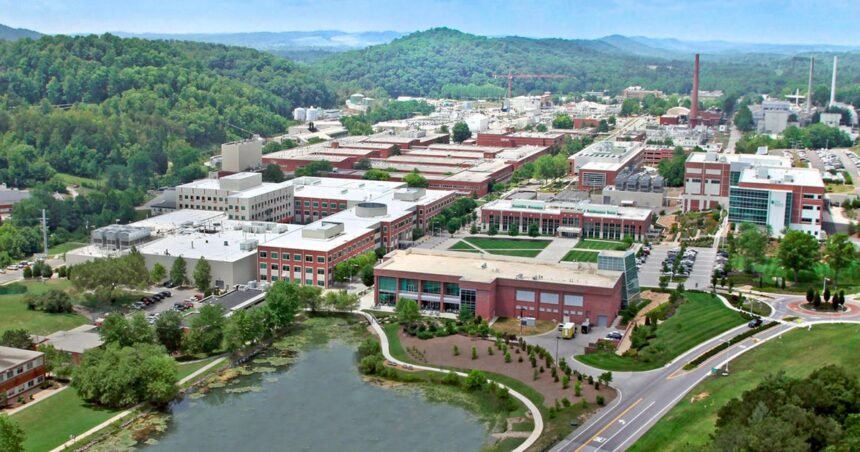
The US Department of Energy (DOE) has announced the opening of the Oak Ridge Reservation in Tennessee for the establishment of AI data centers with on-site power generation by private entities. This initiative, introduced through a Request for Proposals with a deadline of December 1, represents the DOE’s initial step towards utilizing federal land for AI infrastructure development in accordance with the energy and AI leadership executive orders issued by the Trump administration.
This marks a significant milestone for the DOE, as it aligns with recommendations outlined in its 2024 report on powering AI infrastructure. The agency’s findings from last year highlighted the increasing power requirements of hyperscale facilities, emphasizing the need for collaboration between utilities and data center developers to address electricity supply challenges. The deployment of advanced nuclear, enhanced geothermal, and long-duration storage technologies was encouraged to meet the growing demands of AI workloads.
Officials at Oak Ridge view this initiative as a natural progression for the site that played a pivotal role in the development of the atomic bomb during World War II. Acting Assistant Secretary for Environmental Management, Joel Bradburne, described Oak Ridge as a key player in what has been dubbed as Manhattan Project 2.0, signifying a new era of American energy innovation to support the advancement of AI technologies.
The proposal comes at a time when data center operators are under pressure to secure sustainable power sources for energy-intensive AI operations. Nuclear energy has emerged as a viable solution, with several tech companies entering into partnerships with reactor developers in recent months. The DOE is offering two parcels with distinct operational advantages, leveraging the existing infrastructure from their nuclear heritage.
Site A, situated near Oak Ridge National Laboratory, provides access to the Frontier exascale supercomputer and expertise in high-performance computing. This location offers potential data center operators the opportunity to collaborate on energy-efficient AI algorithm development, as recommended in the DOE’s 2024 report. On the other hand, Site B, located at the East Tennessee Technology Park, has been repurposed as an energy hub following its history as a uranium enrichment complex.
Industry analysts see the DOE’s Oak Ridge initiative as a potential template for future data center developments, emphasizing the importance of integrating power readiness into the planning process. Forrester Senior Analyst Abhijit Sunil views this approach as essential for scaling AI infrastructure, setting a precedent for addressing the resource demands of advanced technologies.
However, Andy Best, research director at Info-Tech Research Group, highlighted trade-offs in the structure of the RFP, emphasizing the need to balance speed, accountability, and public value creation. The utilization of federally owned land bypasses traditional development barriers but may overlook local considerations such as environmental reviews and community input. While this expedited approach may accelerate construction timelines, it raises concerns about prioritizing national urgency over local needs in future data center projects.