

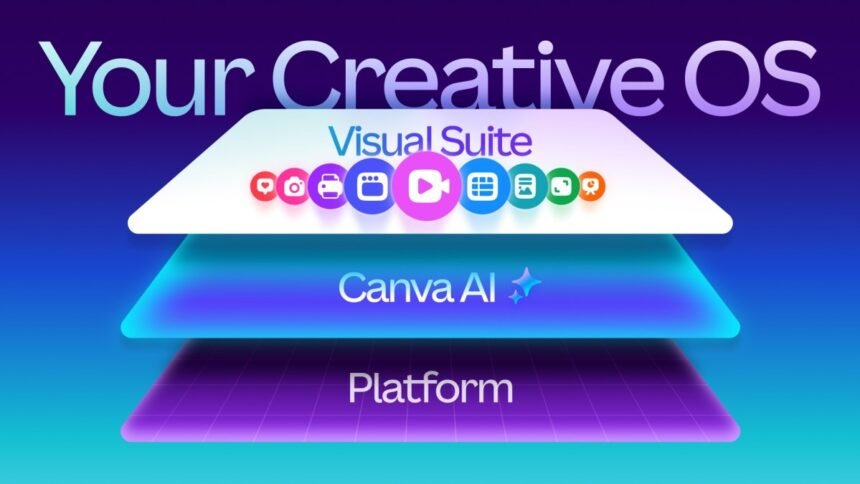
Canva, a leading creative suite company, has unveiled its new design model that revolutionizes the way designs are created today. This innovative model understands various layers and formats, empowering users with advanced features. In addition to this, Canva has introduced new product forms, updates to its AI assistant, and a coding tool for creating widgets with repeatable insights.
The company has launched its own foundational model, trained on its unique elements, allowing for the generation of designs with editable layers and objects instead of traditional flat images. This model is versatile and works seamlessly across different formats such as social media posts, presentations, whiteboards, and websites.
Infusing more AI features into Canva
Canva recently introduced an AI assistant named Canva AI, featuring a chat-like interface for creating new media items using prompts. This assistant is now available across various screens, including design and elements tabs.
Users now have the ability to mention the AI assistant in comments to receive text or media suggestions while collaborating on projects. Additionally, the AI tool can generate 3D objects and replicate the art style of a design.
Canva has also integrated a spreadsheet product with the ability to create mini apps through prompts. This integration enables users to utilize data stored in spreadsheets to create widgets.
Techcrunch event
San Francisco
|
October 27-29, 2025

Canva made headlines last year by acquiring an ad analytics company called MagicBrief. Leveraging this acquisition alongside its platform, Canva is set to launch Canva Grow, a full-stack marketing platform that utilizes AI for asset creation and analytics, enabling marketers to publish ads directly on platforms like Meta.
New products and features
In addition to its AI advancements, Canva has introduced new products and features to enhance its platform. Users can now create forms within Canva to collect various types of input from clients or individuals, eliminating the need for external tools like Google Forms.
Email design has also been added to the platform, allowing users to create templates and layouts for marketing or transactional emails that align with their brand’s visual identity.

In a strategic move to compete with industry giant Adobe, Canva acquired the pro design tool Affinity last year and has now announced that the tool will be free for all users. The Affinity interface is being revamped to combine vector, pixel, and layout capabilities into a single interface, enhancing the user experience. The integration of Affinity with Canva allows designers to seamlessly create objects in the pro tool and transfer them to Canva. Additionally, users can leverage Canva AI to generate images or designs within Affinity.
