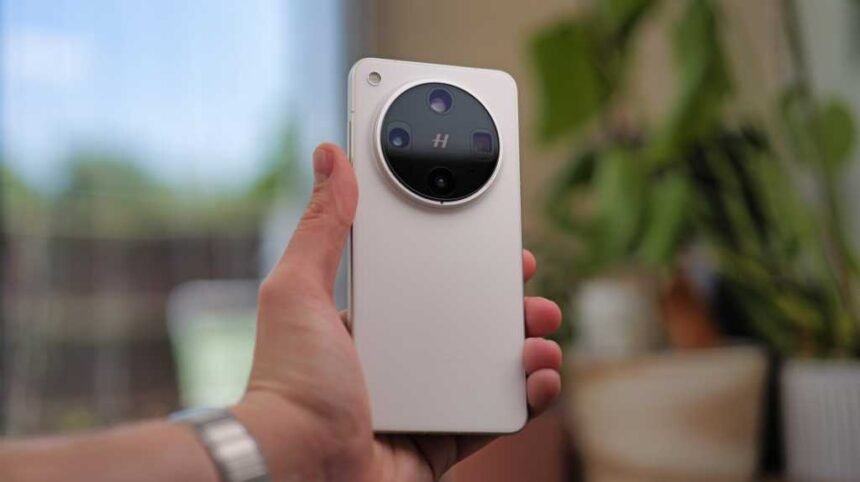
Oppo recently extended its partnership with the renowned photography company, Hasselblad. To celebrate the occasion, I had the opportunity to visit Hasselblad’s hometown of Gothenburg, Sweden, and spent a week capturing photos using Oppo’s most advanced camera phone, the Find X8 Ultra.
The Find X8 Ultra was originally launched in April, but its availability was limited to China until now, hindering a comprehensive assessment of its capabilities. Touted as the best camera phone ever manufactured, it faces fierce competition from established players like Google, Samsung, and Apple.
The camera hardware
Commencing with the primary camera, the Oppo Find X8 Ultra boasts a 1-inch type sensor, the largest sensor present in contemporary smartphones. Compared to popular flagship devices like the iPhone 16 Pro Max or Samsung Galaxy S25 Ultra, the X8 Ultra’s main sensor is approximately 30% larger.
This substantial sensor size equips the X8 Ultra to excel in low-light environments and produce enhanced background blur in close-up shots, resembling the results achieved with mirrorless cameras or DSLRs.
The engineering behind this handset is truly remarkable
The device also features a 15mm-equivalent ultrawide lens, a 70mm (3x) periscope telephoto lens, and a 135mm (6x) telephoto lens. Additionally, a dedicated color spectrum sensor aids in maintaining accurate white balance, particularly in scenarios with intricate multi-colored lighting.
All these cameras are equipped with a 50MP resolution sensor, most of which utilize significantly larger sensors than their mainstream counterparts. On the front, there is a 32MP selfie camera with autofocus capabilities.
Despite the impressive array of lenses, what truly surprised me was the relatively compact camera bump of the X8 Ultra. In comparison to bulkier models like the Xiaomi 15 Ultra and Vivo X200 Ultra, the Oppo Find X8 Ultra boasts a remarkably slim profile, showcasing the intricate engineering involved in its design.
The results
Irrespective of the lighting conditions or subjects, the photos captured on the X8 Ultra during my expedition consistently impressed me. Whether zooming in over significant distances or capturing intricate details in close-up shots, these cameras effortlessly capture all nuances with a visually appealing color palette.
The 3x telephoto lens excels in capturing close-ups of food and nature, while the 6x lens allows for digital zooming of up to approximately 20x with minimal loss in quality
The X8 Ultra predominantly leans towards cooler tones, a characteristic further accentuated when utilizing Hasselblad film simulations. While this aesthetic complemented the Swedish architecture during my visit, I observed that it occasionally deviated from true-to-life representation. Despite the scorching heat in Gothenburg, the blue tones in my photos did not always reflect the warmth of the summer sun accurately, necessitating manual adjustments to convey the actual ambiance effectively.
Primarily, the 3x telephoto lens excels in capturing intricate details in close-ups of food and natural elements, while the 6x lens enables seamless digital zooming up to 20x with minimal compromise in quality. In instances requiring further zooming, AI image enhancement attempts to compensate, yielding satisfactory results albeit falling short of professional standards.
The main camera exhibits exceptional performance in low-light conditions, making it ideal for indoor settings and nocturnal photography. Surprisingly, the 3x telephoto lens closely rivals the main camera’s performance, showcasing impressive adaptability.
While the selfie camera may not be the device’s highlight, I was pleasantly surprised by its quality. It adeptly captures accurate skin tones, sharp details, and performs admirably in low-light settings. For truly captivating portraits, however, the rear cameras remain the preferred choice.
Contrary to the other lenses, the ultrawide lens failed to evoke a significant impression. While competent and harmonizing well with the other cameras, it lacks standout features. Typically, ultrawide cameras across devices exhibit similar limitations, with only a few exceptions like Vivo pushing boundaries in this aspect.
Is the Oppo Find X8 Ultra the best camera phone?
My experience with the Oppo Find X8 Ultra has left a lasting impression. While I refrain from labeling it as the definitive best camera phone, it undoubtedly stands alongside formidable competitors like the Xiaomi 15 Ultra, Vivo X200 Ultra, and Huawei Pura 80 Ultra. Regrettably, acquiring these devices in Western markets poses challenges, with limited availability outside of China. The UK offers access to Xiaomi’s premier model, but other options necessitate importing, presenting further hurdles in the US market.
Despite these constraints, there remains hope for broader availability in the future. Following a hiatus in Europe due to patent disputes with Nokia, Oppo made a resurgence last year, introducing the Find X8 Pro in the UK. While the Ultra variant is yet to debut internationally, speculations hint at a potential global launch in the near future.
If such a development transpires, it promises an exciting prospect, especially with the continuation of the Hasselblad partnership. While Apple and Samsung maintain market dominance for now, Chinese flagship devices like Oppo’s Ultra series present formidable competition, particularly for photography enthusiasts.