Ensuring data center reliability and uptime hinges on deploying the right backup power system. The effectiveness, scalability, and cost of these systems play a crucial role in maintaining uninterrupted operations.
Data centers need backup power because most obtain their power from the public grid, which can fail. Power disruptions can occur due to downed wires or insufficient grid supply, causing outages or brownouts. Brownouts pose a particular problem in the summer, when consumer demand for electricity increases due to the higher usage of air conditioning.
Backup power systems are crucial during these scenarios. They enable data centers to maintain uninterrupted operations indefinitely, provided there is sufficient backup capacity, or allow graceful shutdowns of IT equipment. Graceful shutdowns prevent hardware damage and data loss, as they help avoid risks associated with servers abruptly losing power during outages.
In this article, we will examine the primary types of backup power systems available for data centers.
Backup Power Systems for Data Centers
Data centers have several options for implementing backup power systems, each with distinct advantages and limitations. Below is an overview of the most common systems.
1. UPS Power
Uninterruptible Power Supply (UPS) devices, equipped with rechargeable batteries, offer a cost-effective way to provide temporary backup power to IT equipment during outages. They ensure that servers remain operational for a short period, allowing for a graceful shutdown.
However, UPS systems have notable limitations. Their energy storage capacity is limited, typically sufficient to keep servers running for only a few minutes. While this brief window allows proper system shutdowns, it can’t sustain operations for extended periods.
UPS units also can’t supply power to data center cooling systems. Even if enough UPS devices kept servers running beyond a few minutes, overheating would quickly become critical without functioning cooling systems. Servers would need to be shut down relatively soon to avoid damage from excessive heat.
UPS systems work best for short-term power interruptions or when the primary goal is a controlled shutdown during outages. For longer-term backup power requirements, other systems are needed.

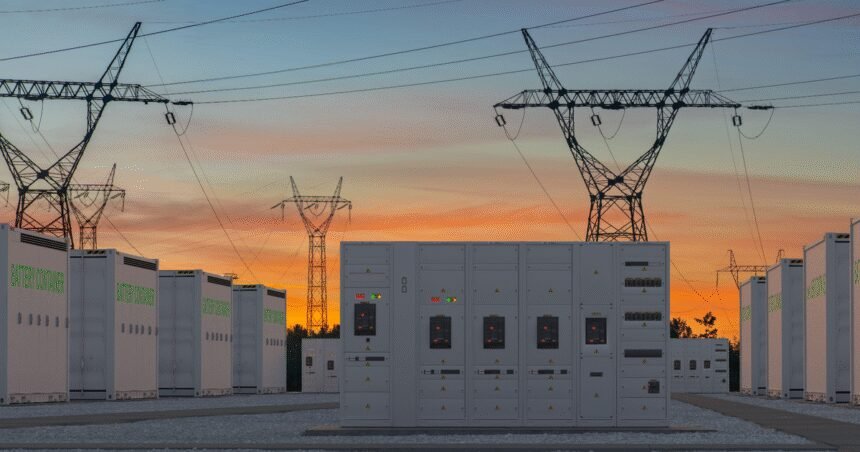
Emergency power backup at data center in Waltham Cross, United Kingdom. (Image: Alamy)
2. Generators
Backup generators offer a relatively low-cost solution for providing backup power to data centers. Like powering a home during an outage, generators can keep a data center operational. However, their reliability and uptime depend on two critical factors: total power capacity and fuel sourcing.
Generator power capacity varies significantly, and scaling up to meet the energy demands of a large data center can be expensive. For example, a generator producing 1 MW of power costs around $100,000. Since data centers consume dozens of megawatts, building sufficient generator capacity to power an entire facility can quickly become cost-prohibitive.
Fuel sourcing is another key consideration. Generators require a steady fuel supply to operate. Unless connected to a continuous fuel source, such as a natural gas pipeline, their runtime equals the amount of fuel stored on site.
Due to these limitations, generators are not always the ideal solution for sourcing backup power in data centers.
3. On-Site Power Generation
On-site power generation offers the most reliable alternative to grid power for data centers, but it is the most expensive option. Private power plants allow data centers to generate their own electricity, eliminating their reliance on the public grid and ensuring a consistent energy supply.
Methods for creating on-site power plants include geothermal, fuel cells, and modular nuclear reactors. However, technologies like fuel cells and modular nuclear reactors remain experimental.
While on-site power generation systems provide a complete alternative to grid energy, they also function as backup power systems, supplying some or all of the energy required during an outage. Depending on the system type and the availability of fuel, they can sustain operations indefinitely or until the fuel is exhausted.
While on-site power generation offers unparalleled reliability, high costs and experimental technologies make it uncommon for most data centers.
A Multi-Pronged Approach to Backup Power
These backup power options outlined above are not mutually exclusive. Data centers often achieve the best results by combining multiple systems. This approach enables facilities to tailor their backup power strategy to meet the specific needs of different workloads and operational priorities.
For example, a data center could deploy an on-site power plant to supply a continuous and reliable energy supply for critical workloads. This ensures essential systems remain operational indefinitely, even during prolonged outages. Simultaneously, diesel generators could supply backup power for less critical servers, offering several days of operational capacity. These servers could also connect to UPS units, which would provide sufficient time for a graceful shutdown if outages exceed the generator’s runtime.
By integrating multiple backup power systems, data centers can strike a balance between reliability, cost, and scalability, while ensuring that both critical and non-critical systems remain adequately supported during power disruptions.