Data center operators today have significantly more cooling options available to them than they did in the past. Facilities can access cutting-edge heat dissipation technologies, including direct-to-chip and immersion cooling.
However, with more options comes the challenge of determining the most suitable system. This guide examines the advantages and disadvantages of key data center cooling methods, helping you make an informed decision.
1. **Computer Room Air Conditioning:**
In the early days, when servers were fewer and many “data centers” were simply rooms dedicated to housing IT equipment within larger buildings, computer room air conditioning (CRAC) was widely used. Despite advancements in cooling technologies, some data centers still rely on CRAC.
CRAC uses traditional air conditioning systems, similar to those in homes and offices, to prevent servers from overheating. Simplicity is a key strength, as CRAC is easy to understand and implement. You can deploy it in buildings with existing central air conditioning systems, redirecting chilled air toward servers.
The downside is that CRAC is not particularly energy-efficient, making it unsuitable for data centers that prioritize sustainability. Additionally, CRAC systems often struggle to meet the cooling demands of large-scale operations, as they lack the capacity to distribute sufficient air to maintain safe server temperatures.
2. **Evaporative Cooling:**
Evaporative cooling dissipates heat by converting liquid water into vapor, absorbing heat during the evaporation process. Data centers implement this technique in two ways: direct evaporative cooling, where server room air passes through a water-soaked membrane, and indirect evaporative cooling, which uses heat exchangers to cool air before pumping it into server rooms.
Evaporative cooling is cost-effective and energy-efficient. Its relatively low installation and operation costs make it suitable for data centers seeking to reduce energy consumption. However, it has a significant drawback: high water usage. Large data centers can consume millions of gallons daily, raising sustainability concerns, particularly for operators considering water usage part of their environmental impact.
3. **Direct-To-Chip Cooling:**
Direct-to-chip cooling (D2C) precisely targets heat sources for efficient dissipation in data centers. D2C systems circulate chilled liquid through pipes near heat-generating components, such as CPUs and GPUs, cooling only areas that require it. Unlike traditional methods, D2C doesn’t waste energy on empty spaces within server rooms, making it exceptionally energy-efficient. Furthermore, it is also sustainable because it doesn’t rely on water.
However, D2C cooling has notable downsides. Implementation costs can significantly exceed evaporative cooling, creating a barrier for cost-sensitive operations. Additionally, the system complicates server upgrades or modifications, requiring adjustments to cooling connections whenever you add or modify servers. Coolant leakage poses another significant problem, potentially causing system failure. While the coolant is non-conductive and unlikely to damage IT equipment, leaks can disrupt operations and demand immediate attention.
4. **Single-Phase Immersion Cooling:**
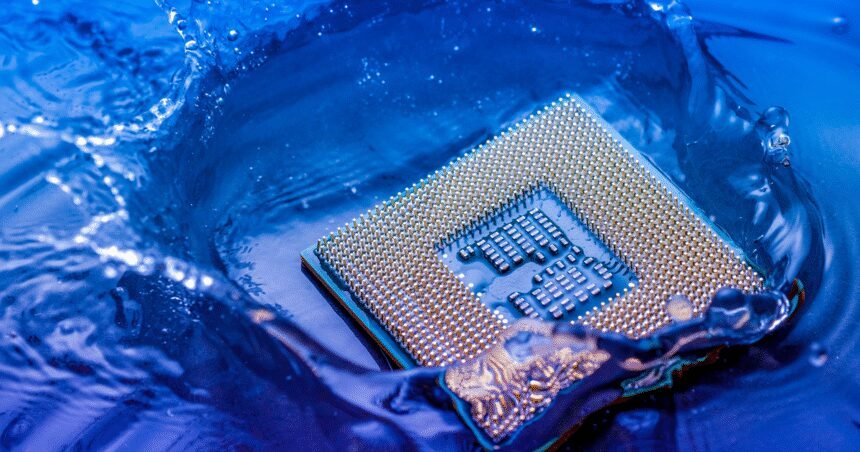
Single-phase immersion cooling submerges IT equipment directly in non-conductive liquid that efficiently absorbs and dissipates heat. This approach eliminates traditional air or water-based cooling methods, offering an effective, sustainable solution.
Single-phase immersion has a lower leakage risk than direct-to-chip cooling systems. When leaks occur, you can detect and address them before they become critical. Moreover, these systems are environmentally friendly, using minimal energy and no water.
High cost is the primary drawback of single-phase immersion cooling. An analysis found that building a system to cool 1 MW of server equipment costs approximately $1 million, compared to roughly $650,000 for a comparable direct-to-chip system. For large-scale data centers with average capacities around 100 MW, these costs become prohibitive.
5. **Multi-Phase Immersion Cooling:**
At the cutting edge of cooling technology, multi-phase immersion cooling builds on the principles of single-phase systems by submerging IT equipment in a non-conductive liquid that boils when exposed to the equipment’s heat. As the liquid evaporates, it efficiently removes heat, making it one of the fastest and most effective cooling solutions available.
The key advantage is hyper-efficiency. The boiling and evaporation process dissipates heat faster than single-phase systems, which rely on fluid absorption without boiling. This makes multi-phase immersion cooling ideal for high-performance data centers requiring maximum cooling capacity.
Cost is the tradeoff for this efficiency. Multi-phase immersion cooling is the most expensive mainstream cooling system, making it impractical for budget-conscious data centers.
Which Cooling System Is Right for Your Data Center?
Having explored all five major cooling technologies, selecting the ideal cooling system requires a thorough evaluation of financial considerations and sustainability goals. Each method offers distinct advantages and trade-offs, making the decision dependent on your specific priorities and operational needs.
For cost-effectiveness, evaporative cooling is typically best. Its relatively low installation and operation costs make it suitable for data centers focused on minimizing upfront expenses. However, in smaller server rooms within buildings with adequate air conditioning systems, CRAC may be more cost-effective.
Multi-phase immersion cooling is the most sustainable option, offering unparalleled heat dissipation efficiency. It is also the most expensive, with single-phase immersion being only slightly cheaper. These systems suit data centers that prioritize sustainability and performance, if budgets allow significant investment.
Direct-to-chip cooling offers a middle ground. While it requires higher initial investment than evaporative cooling, its energy-efficient design reduces long-term operating costs. It is also highly sustainable in terms of energy and water consumption.
Ultimately, the right cooling system depends on your data center’s scale, budget, and sustainability goals. Weighing these factors will help you identify the system that best aligns with your operational priorities.