

The US government has implemented stricter controls on the export of powerful AI chips and associated technology, particularly those used in advanced AI models. This decision aims to address concerns regarding potential military or surveillance applications of AI by foreign entities.
The recent announcement of a new regulation by the US government signifies a tightening grip on the distribution of high-performance AI chips globally. The rule imposes restrictions on the export of chips essential for constructing and operating sophisticated AI models. The escalating apprehensions surrounding the potential misuse of AI in military and surveillance activities by foreign nations have prompted this action.
The limitation imposed is based on a chip’s compute power, quantified by Total Processing Performance (TPP). Under the updated regulation, countries falling under these constraints can acquire chips equivalent to 790 million TPP until 2027. This amount of compute power, as explained by AI expert Divyansh Kaushik from Beacon Global Strategies, is substantial enough to facilitate demanding AI tasks such as supporting global-scale chatbots or personalized recommendation engines utilized by major corporations like Amazon and Netflix.
It’s important to note that the restrictions do not imply a country can only obtain 50,000 chips. In practice, certain organizations may be granted exemptions.
Exemptions Criteria
Established cloud providers like Amazon Web Services and Microsoft Azure are among those eligible for special considerations under the Verified End User (VEU) status. These entities are exempted from GPU limitations provided they meet specific security criteria.
Additionally, there are exemptions at the national level. Companies situated in countries not classified as “countries of concern” can apply for their version of Verified End User status. Once approved, these firms can access approximately 320,000 advanced GPUs within the next two years.
The purpose of these caps is to encourage organizations to follow proper approval procedures. This enables US authorities to effectively monitor the destination of chips and mitigate the risk of diversion to countries under stringent controls, such as China.
Exceptions for Small Orders
Not all orders necessitate a license review. Organizations procuring chips below a specified threshold – roughly 1,700 Nvidia H100s – are only required to notify the government without seeking full approval. This exception aims to expedite lower-risk shipments, particularly those destined for universities, hospitals, and research institutions.
Furthermore, there is an exemption for gaming chips, which are generally less potent and not the primary focus of these restrictions.
Countries Exempt from Limits
Eighteen destinations are entirely exempt from the new restrictions, including the US and several allied nations such as Australia, Canada, Japan, and the United Kingdom. These countries can continue receiving advanced GPUs without being subject to the TPP cap.
Regulation on Model Weights
Besides hardware, the regulation also addresses “model weights,” crucial parameters governing the behavior of an AI model. During the training phase, an AI system adjusts these weights to refine its responses to different inputs. The rule establishes standards to safeguard closed-weight models – those with private weight parameters – from potential misuse or leakage.
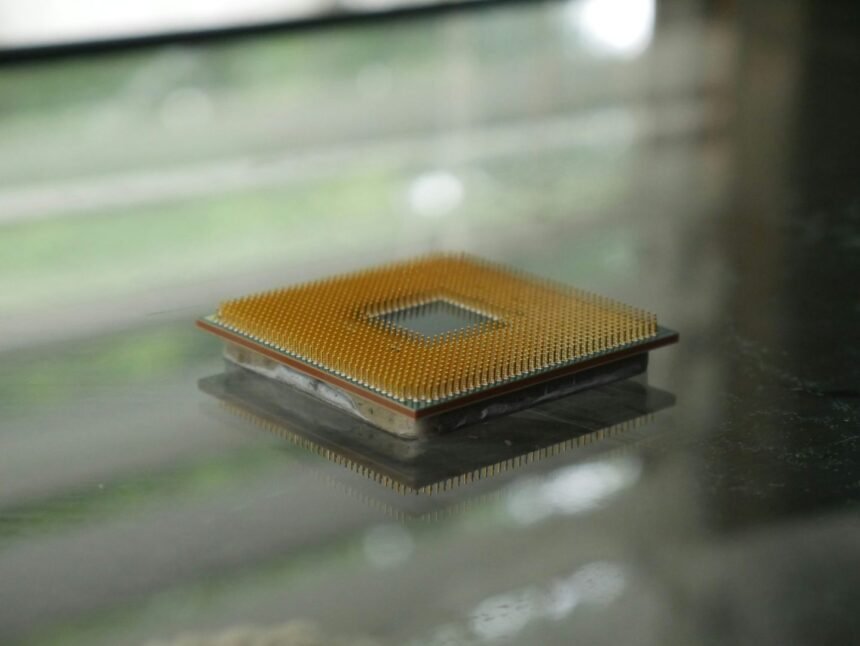
(Photo by Devin Spell)
See also: The multi-disciplinary puzzle of edge computing, solved by IBM
Interested in learning more about edge computing from industry experts? Explore Edge Computing Expo events in Amsterdam, California, and London.
Discover additional upcoming enterprise technology events and webinars hosted by TechForge here.

