If you are in the process of launching a startup and seeking venture capital investment to support your innovative ideas, it is essential to focus on addressing a specific problem, demonstrate strong conviction, and strategize distribution in the era of artificial intelligence (AI).
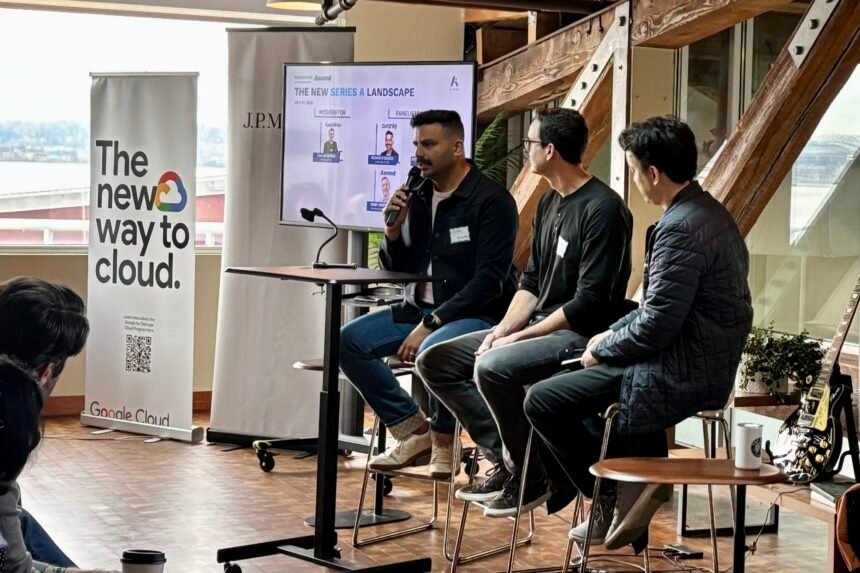
These valuable insights were shared during a recent panel discussion at Seattle AI Week, where I had the pleasure of moderating a conversation with Kellan Carter, the founding general partner at Fuse, based in Bellevue, Washington, and Rohan D’Souza, the CEO and co-founder of Avante, a healthcare benefits startup located in Seattle.
Carter and D’Souza have a longstanding relationship, with Fuse leading Avante’s $10 million seed funding round back in late 2023, even before the company had substantial revenue.
The panel discussion, titled “The New Series A Landscape,” hosted by Ascend, a Seattle VC firm, highlighted the evolving expectations in the AI industry.
The median Series A funding round in Q1 of this year was $7.9 million, as reported by Carta. However, there were nine companies in Q3 that secured over $200 million for their Series A rounds, according to CB Insights.
Carter emphasized the increasing variability in Series A funding, noting that for companies securing substantial rounds, it often comes down to possessing a unique and compelling insight that garners investor interest.
The surge in venture funding, reaching a 3-year high, can be attributed largely to AI, which accounted for 51% of all funding and 22% of deals in Q3, according to CB Insights.
When pitching to investors, D’Souza suggested focusing on how AI can enhance margins, such as accelerating customer acquisition and onboarding processes.
Avante, which launched earlier this year, offers software solutions designed to streamline HR administration tasks and reduce overall benefits program costs for companies.
As Avante prepares for a Series A funding round, D’Souza sees the infusion of fresh capital not only as a financial boost but also as a signal to enterprise buyers, reassuring them of the company’s stability and longevity.
Both D’Souza and Carter emphasized the importance of transparency with investors, clear communication, and a focused approach to solving a specific problem in a unique way.
By following these strategies and staying ahead of incumbent competitors, startups can position themselves for success in the competitive landscape of AI-driven industries.