

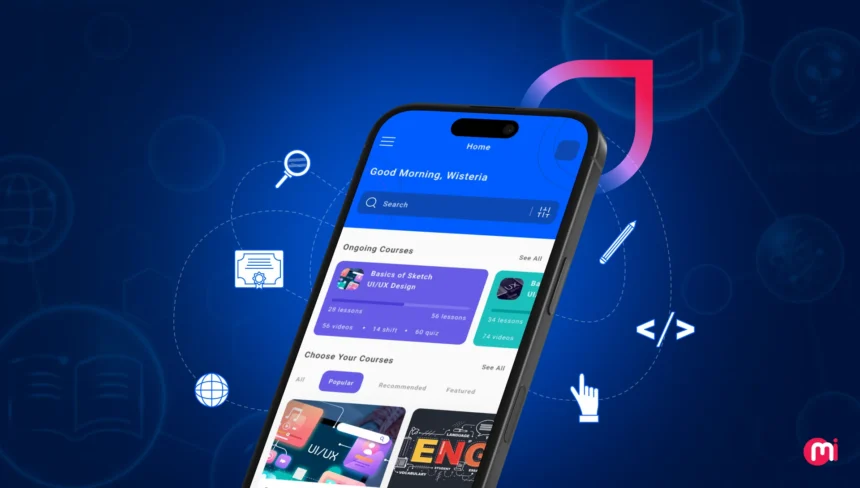
The realm of online education and eLearning is expanding rapidly, driven by the increasing use of mobile phones and tablets. This shift highlights the transformative impact of digital apps on the education sector. In this article, we will delve into the realm of eLearning app development, exploring its nuances and significance.
The landscape of online education is evolving at a swift pace, propelled by the widespread adoption of mobile devices. This transformation underscores the pivotal role of digital applications in reshaping the educational sphere. In this comprehensive guide, we will navigate the intricacies of eLearning app development, unveiling its trends, types, benefits, development process, essential features, cost considerations, and more. Join us on this insightful journey through the realm of eLearning apps.
The world of mobile learning is poised for exponential growth, with the global market projected to reach a value of USD 604.8 billion by 2033. This remarkable surge is indicative of the profound impact of educational software development on modern learning practices. The proliferation of eLearning apps, particularly those catering to children, has transcended the constraints of time and space, enabling users to access educational content anytime, anywhere. By addressing key challenges in education and delivering personalized learning experiences, these apps have revolutionized the learning landscape.
Educational institutions and organizations are embracing new paradigms of content delivery through feature-rich eLearning apps, leveraging the latest trends in the eLearning domain. As a result, eLearning mobile app development services have become indispensable in the educational ecosystem. This article aims to demystify the intricacies of eLearning app development, offering insights into trends, types of apps, benefits, development steps, feature integration, cost considerations, and more. Embark on this informative journey to unravel the world of eLearning app development.
**Key Takeaways**
– eLearning apps facilitate educational and training experiences through electronic devices.
– Trends like AI, ML, big data, AR, MR, and VR are reshaping the eLearning landscape.
– Different types of eLearning apps include LMS, mobile learning apps, virtual classrooms, etc.
– eLearning apps offer benefits like enhanced reach, cost-effectiveness, customization, and more.
**What is eLearning App Development?**
An eLearning app serves as a digital platform designed to deliver educational and training content via electronic devices such as smartphones and computers. These apps leverage technology to provide a diverse range of learning resources, offering users the flexibility to acquire skills at their convenience. Specialized solutions in eLearning app development manage, deliver, and track learning processes tailored to specific user groups, including students, institutions, and teachers.
**eLearning App Development Trends in 2026**
The year 2026 heralds a paradigm shift in learning practices, with learners seeking authentic experiences while institutions prioritize practical learning outcomes. Key trends in eLearning app development include the integration of Artificial Intelligence and Machine Learning, leveraging big data for enhanced learning experiences, and the adoption of Augmented Reality (AR), Mixed Reality Learning (MR), and Virtual Reality (VR) technologies.
**Main Types of eLearning Applications**
– Learning Management Systems (LMS)
– Course-based Learning Apps
– Mobile Learning Apps
– Virtual Classrooms
– Massive Open Online Courses (MOOCs)
– Corporate Training Apps
– Educational Games for Children
**Benefits of eLearning Application Development**
– Enhanced Reach and Accessibility
– Cost-Effectiveness
– Customization
– Real-time Progress Tracking and Analytics
– Consistency and Standardization
**How to Develop an eLearning App: A Step-by-step Process**
1. Conduct Market Analysis
2. Set Your Goals
3. Work on UI/UX Design
4. MVP Development
5. Choose the Monetization Method
6. Testing Support
**Must-have Features in your eLearning App**
1. Registration and Account Management
2. Course Catalogue and Search Functionality
3. Content Management System
4. Interactive Quizzes and Assessments
5. Progress Tracking
6. Integrated Payment System
7. User Feedback and Ratings
8. Dashboard & Analytics
9. Technical Support and Help Center
10. Integration with Other Tools
**How Much Does it Cost to Develop an eLearning App?**
The cost of eLearning app development varies based on features, complexity, and post-launch expenses. A basic MVP may range from $30,000 to $50,000+, while a full-featured platform can cost $80,000 to $150,000+.
**Real World Examples of Successful E-learning Apps**
1. Duolingo
2. Udemy
3. Coursera
**How Can MindInventory Help You with eLearning App Development**
MindInventory, a leading education software development company, specializes in creating user-friendly eLearning apps tailored to the latest trends and features. With a focus on design and functionality, MindInventory can bring your eLearning app vision to life, catering to a diverse audience and enhancing the educational experience.
**FAQs on eLearning App Development**
– How long does it take to build an education mobile app?
– Which technology stack is best for eLearning app development?
– What features should be included in an eLearning app?

