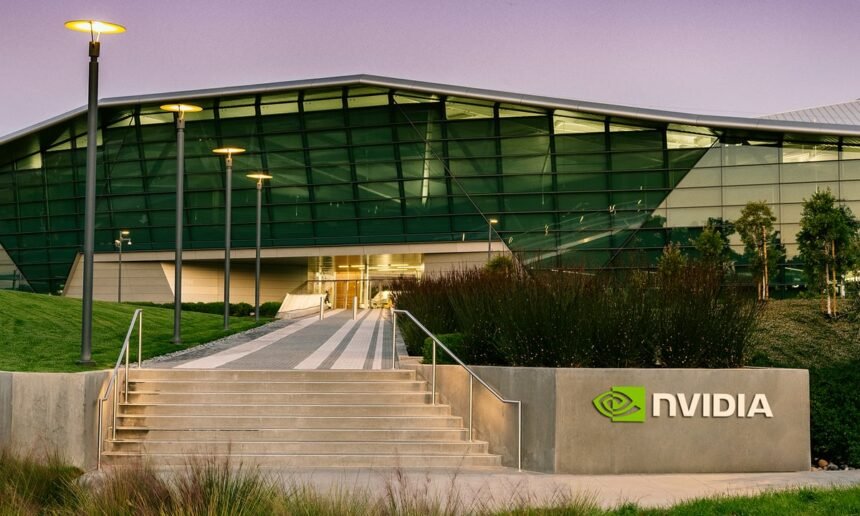
Summary:
- Nvidia’s success is closely linked to the spending plans of other companies, especially in the AI sector.
- Projecting where Nvidia’s stock will be in five years is crucial for both individual and general market investors.
- Nvidia’s revenue growth and market expectations indicate a promising future if AI hyperscalers continue their spending trends.
Rewritten Article:
Predicting the trajectory of a stock like Nvidia over the next five years is a challenging task, considering the unpredictable nature of the market. The past five years have seen significant shifts, from the onset of the COVID-19 pandemic to the current AI arms race. Long-term investors must analyze trends to gauge where Nvidia, the world’s largest company, is headed. This projection holds significance for both individual investors and the broader market, given Nvidia’s substantial presence in the S&P 500.
Nvidia’s core business revolves around supplying hardware for the AI buildout, particularly through its graphics processing units (GPUs). These devices excel in processing complex workloads, making them ideal for various applications, including artificial intelligence. The market for AI computing power has witnessed exponential growth, with AI hyperscalers announcing record data center capital expenditure plans. A significant portion of this spending is allocated towards purchasing computing power, with Nvidia emerging as a popular choice due to its efficient resources.
In the third quarter of fiscal year 2026, Nvidia reported a remarkable 62% year-over-year revenue growth, reaching $57 billion. CEO Jensen Huang highlighted the overwhelming demand for cloud GPUs, indicating strong future prospects for the company. Looking ahead, Nvidia aims to capitalize on the expanding market, with expectations of global data center capital expenditures reaching $3 trillion to $4 trillion by 2030.
If Nvidia maintains its market share, its revenue could potentially quintuple, surpassing the $1 trillion milestone in the next five years. This optimistic outlook hinges on the continued spending patterns of AI hyperscalers. Should these companies sustain their investments, Nvidia is poised to deliver exceptional returns over the coming years. However, any deviation from these spending trends could potentially impact Nvidia’s growth trajectory. Summary:
- The blog discusses the importance of self-care and mental health.
- It emphasizes the need to prioritize self-care practices to maintain overall well-being.
- The blog provides tips and suggestions on how to incorporate self-care into daily routines.
Article:
In today’s fast-paced world, it’s easy to let self-care and mental health take a backseat in our lives. However, this neglect can have detrimental effects on our overall well-being. It’s crucial to prioritize self-care practices to ensure we are taking care of ourselves both physically and mentally.One of the key points highlighted in the blog is the importance of carving out time for self-care. Whether it’s taking a few minutes each day to practice mindfulness or scheduling regular exercise sessions, making self-care a priority can greatly improve our mental health. By setting aside time for ourselves, we are better equipped to handle the stresses and challenges that come our way.
The blog also provides practical tips on how to incorporate self-care into our daily routines. From creating a self-care routine to practicing gratitude and setting boundaries, there are numerous ways to prioritize our mental health and well-being. By implementing these suggestions, we can create a healthier and more balanced lifestyle for ourselves.
In conclusion, self-care is essential for maintaining good mental health. By making self-care a priority and incorporating it into our daily routines, we can improve our overall well-being and lead happier, more fulfilling lives. Remember, taking care of yourself is not selfish – it’s necessary for a healthy mind and body.