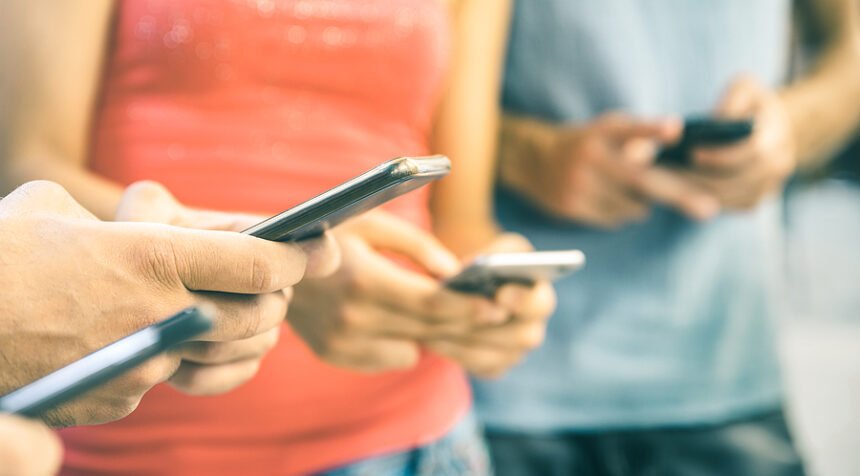
The school will require students to have their smartphones, watches, and other devices turned off before entering the premises in the morning. These devices must then be stored away in backpacks or lockers for the duration of the school day and can only be retrieved once students leave the school grounds. This policy applies at all times, including during classes, passing periods, and lunch breaks.
Students who fail to comply with the new rules will face consequences that escalate with each offense. These consequences range from having their phone confiscated until the end of the day to scheduling a parent conference to discuss further steps. In cases where students need to contact their families during school hours, they must visit the main school office or counseling office to make a private phone call, with parents required to relay messages through office staff.
- Smartphones, watches, and other devices will be off before students enter school in the morning and away (in backpacks or lockers) for the day, and do not come out until students leave school.
- This includes time in classes, passing between classes, at lunch, etc.
- Students who break the new rules will face a series of escalating consequences, from having their phone held until the end of the day to scheduling a parent conference in which additional steps will be discussed.
- Students who need to contact their family during the school day will need to go to the main school office or counseling office to make a private phone call. Parents will need to call the school and give any message for a student to office staff.
According to Houston, a teacher survey at the school found that 85% reported phones to be a problem at Whitman, impacting learning and social interactions. In response to these findings, Whitman’s leadership team collaborated with various school groups, including the Associated Student Body and Parent Teacher Student Association, to gather input and concerns. The school also conducted surveys among Whitman students to incorporate their perspectives into the decision-making process.
Whitman’s proactive approach reflects a growing trend in educational settings, where schools are recognizing the detrimental effects of excessive cellphone and social media use on students’ academic performance, mental health, and social interactions. This shift is evident not only at Whitman but also in other school districts and states across the U.S., where policies restricting or prohibiting smart device usage in schools are being implemented.
The Washington Office of Superintendent of Public Instruction recently released survey results showing that 75% of districts will have policies in place by the start of the school year to limit smart device use during class time. Additionally, schools like Hamilton International and Robert Eagle Staff in Seattle have introduced measures such as Yondr pouches to restrict phone usage during school hours.
While Seattle Public Schools (SPS) has not implemented a districtwide cellphone policy for the upcoming school year, individual schools are managing their cellphone policies based on community needs and educational environments. SPS is actively working on the Student Cellphone and Personal Technology Policy initiative to create focused and wellness-centered learning environments across all schools.
As part of this initiative, SPS will engage students, staff, families, and community members in discussions and surveys to gather input for a comprehensive Decisional Paper to be finalized by December 2025. This collaborative approach aims to ensure transparency and shared ownership of any future districtwide policy updates related to cellphone and personal technology use in schools.