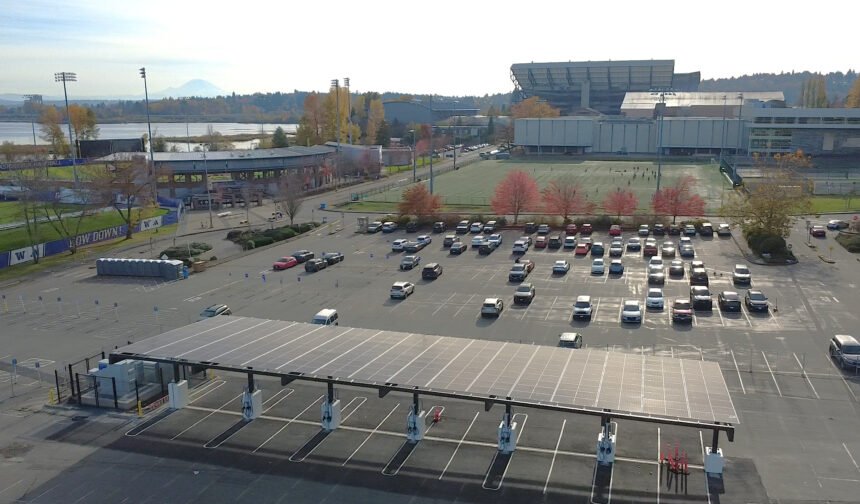
The University of Washington has recently completed the installation of a solar canopy in a parking lot adjacent to Husky Stadium, marking a significant step towards a greener and more sustainable future. The 84-kilowatt solar array is complemented by Level 2 EV charging stations capable of accommodating up to 20 vehicles at a time. With a price tag of $3.7 million, the project also includes electrical infrastructure that can support future expansions to generate up to 2.5 megawatts of power, enough to power approximately 2,000 homes.
This solar canopy project serves as a pilot initiative to help the University of Washington achieve its sustainability goals and reduce its carbon footprint, according to Mark Huppert, interim director of UW Transportation Services. Situated on the former Montlake landfill site, the project demonstrates the university’s commitment to repurposing land for environmentally friendly purposes.
Collaborating with partners such as Sea Con and Prime Electric, the University of Washington enlisted Trinity Energy (formerly Trinity Structures) to fabricate the canopy system. By connecting the installation to the electrical grids powering the City of Seattle and the UW campus, the university aims to decrease its reliance on the utility grid, mitigate power outages, and stabilize electricity costs.
Darin Leonard, president of Trinity Energy, emphasized the strategic importance of generating solar power from a parking lot, highlighting the significant benefits of such initiatives. The project originated from a collaboration between UW Solar, retired UW Transportation Services director Anne Eskridge, and Jan Whittington, director of the UW’s Urban Infrastructure Lab.
As part of its ongoing efforts to promote sustainability, the University of Washington is developing its 2050 Sustainability Action Plan, which includes plans for further expanding solar canopy installations in parking lots. The project received funding from UW Transportation Services, Seattle City Light, and the Washington State Department of Commerce’s electric vehicle charging program under the Climate Commitment Act.
Editor’s note: Additional information on project partners has been included in the updated story.