Summary:
- Warren Buffett’s retirement from Berkshire Hathaway has sparked concerns about the company’s future.
- Analyst Meyer Shields gave Berkshire Hathaway a rare sell rating, citing various risks, including succession and economic uncertainties.
- The biggest risk for Berkshire Hathaway may be its own valuation, as Warren Buffett has stopped buying back shares due to high premiums.
Article:
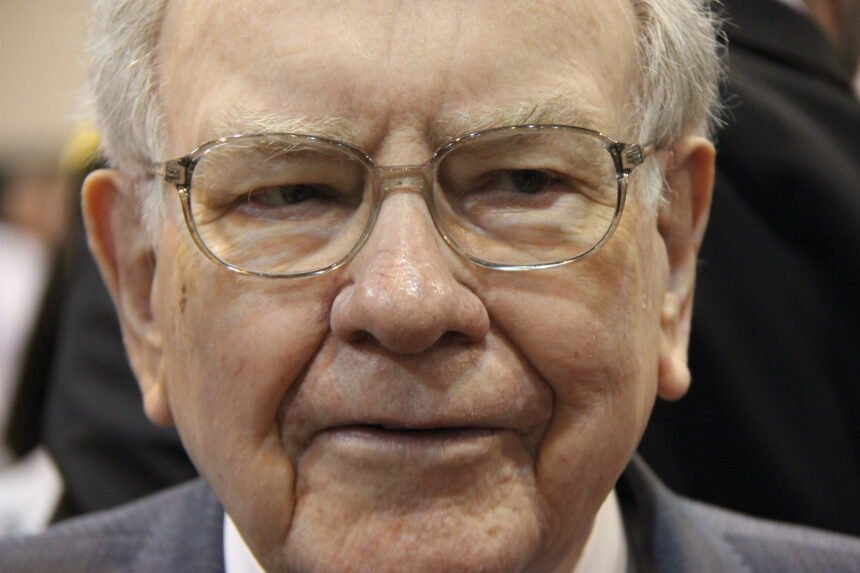
As Warren Buffett prepares to retire from his role as CEO of Berkshire Hathaway at the end of this year, investors are grappling with uncertainty about the company’s future. Despite Buffett’s stellar track record of outperforming the S&P 500 by a wide margin, questions loom about how Berkshire will fare without its legendary leader at the helm.Analyst Meyer Shields recently gave Berkshire Hathaway a rare sell rating, citing concerns such as the succession risk of Warren Buffett stepping down, weaker auto insurance margins at GEICO, economic uncertainties due to tariffs, and declining interest rates. These factors have raised doubts about the company’s operating results in the near future.
However, the biggest risk facing Berkshire Hathaway may not be related to Buffett’s retirement or the operational challenges mentioned by Shields. Instead, it could be the company’s own valuation. Warren Buffett, known for his value investing approach, has stopped buying back shares of Berkshire Hathaway due to high premiums. This reluctance to repurchase shares suggests that the stock may be overvalued, especially in a market environment where prices are historically high.
With the "Buffett Indicator" hitting record levels and Berkshire’s premium to book value soaring, investors may need to reassess their expectations for the company’s performance. As Berkshire Hathaway navigates the post-Buffett era, the real test may lie in how well it can weather the storm of valuation concerns and market uncertainties. Summary:
- Market-cap-to-GDP ratio has historically averaged around 85% since 1970.
- S&P 500’s Shiller Price-to-Earnings (P/E) Ratio is currently elevated, nearing the levels seen before the dot-com bubble burst.
- Berkshire Hathaway’s top investment, Apple, is trading at a high earnings multiple, raising concerns about valuation.
Article:
Understanding Stock Valuation: A Closer Look at Market Metrics
When it comes to evaluating the stock market, one key metric that investors often look at is the market-cap-to-GDP ratio. This ratio, which has averaged around 85% when back-tested to 1970, provides insight into the overall valuation of the market relative to the size of the economy.
Taking a deeper dive into stock valuations, the S&P 500’s Shiller Price-to-Earnings (P/E) Ratio, also known as the cyclically adjusted P/E Ratio or CAPE Ratio, paints a concerning picture. This ratio, which has historically averaged around 17.29 since January 1871, recently hit a high of 41.18, approaching the record high of 44.19 seen before the dot-com bubble burst.
Highlighting the impact of these elevated valuations, Berkshire Hathaway’s largest investment holding, Apple, is currently trading at a trailing-12-month earnings multiple of almost 41. This represents a significant premium compared to its historical average and raises questions about the company’s growth prospects.
While valuation concerns are typically viewed as short-term issues, they are becoming a major headwind for Berkshire Hathaway stock as we look ahead to the post-Buffett era. As investors navigate these challenging market conditions, understanding the nuances of stock valuation metrics becomes crucial in making informed investment decisions.