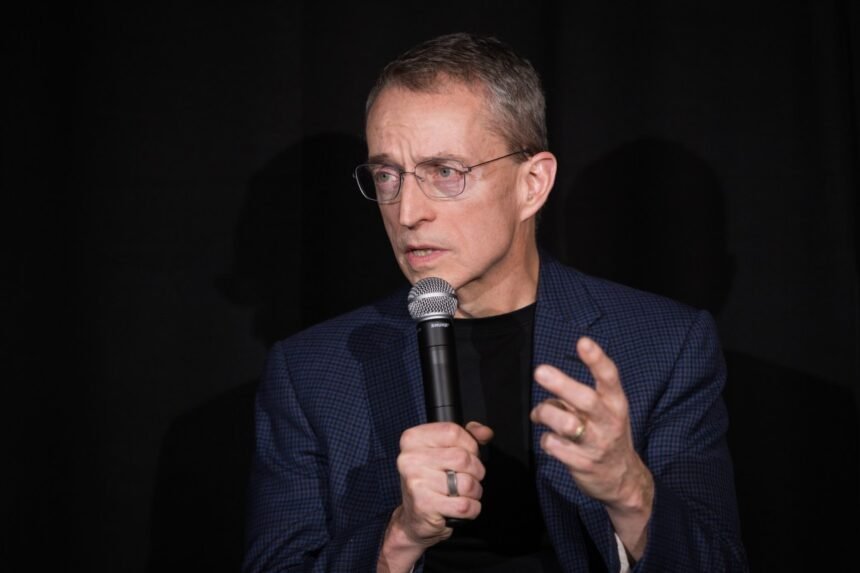
A year after parting ways with Intel, Pat Gelsinger remains deeply entrenched in the semiconductor industry, albeit in a different capacity. Now serving as a general partner at Playground Global, he is actively involved with 10 startups, with one particular portfolio company, xLight, garnering a significant portion of his focus. Recently, xLight made headlines by securing a preliminary deal worth up to $150 million from the U.S. Commerce Department, positioning the government as a notable shareholder in the venture.
Gelsinger’s extensive experience, including a 35-year tenure at Intel, has equipped him with a keen understanding of the semiconductor landscape. His strategic vision for xLight revolves around addressing a critical bottleneck in the industry: lithography. By harnessing the power of massive “free electron lasers” driven by particle accelerators, xLight aims to revolutionize chip manufacturing processes. Gelsinger envisions this technology as a key driver in perpetuating Moore’s Law, a foundational principle dictating exponential growth in computing capabilities.
The partnership between xLight and the U.S. government through the Chips and Science Act award underscores a broader trend that has sparked unease within Silicon Valley. The concept of government entities taking equity stakes in pivotal tech companies challenges long-held notions of free-market principles. Despite the philosophical debates surrounding this development, Gelsinger remains resolute in his commitment to advancing xLight’s innovative solutions for the semiconductor industry.
At the core of xLight’s endeavors lies a groundbreaking approach to lithography. The company is poised to construct colossal machines spanning football-field dimensions to house free electron lasers capable of emitting ultraviolet light at unprecedented precision levels. By surpassing the limitations of existing technologies, xLight aims to usher in a new era of semiconductor manufacturing efficiency and performance.
Leading the charge at xLight is Nicholas Kelez, whose unconventional background adds a unique perspective to the project. Kelez’s prior experience in quantum computing and X-ray science facilities complements the ambitious goals set forth by xLight. The company’s differentiated approach to light generation and distribution signals a departure from traditional methodologies, positioning xLight as a trailblazer in the industry’s evolution.
While xLight’s timeline for delivering tangible results is ambitious, with plans to produce silicon wafers by 2028 and launch commercial systems by 2029, the road ahead is not without challenges. Collaboration with industry incumbents like ASML, intense market competition, and securing commitments from major chipmakers are key hurdles that xLight must navigate to realize its vision.
As xLight forges ahead in redefining semiconductor manufacturing paradigms, the industry landscape continues to evolve. Competitors like Substrate, backed by prominent figures such as Peter Thiel, are also making significant strides in the semiconductor arena. Despite the intensifying competition, Gelsinger remains steadfast in his belief in xLight’s transformative potential, underscoring the company’s pivotal role in shaping the future of semiconductor technology.
Gelsinger’s connection to the Trump administration adds an interesting dimension to the narrative. He introduced xLight to Commerce Secretary Howard Lutnick before Playground’s investment in the startup, highlighting his efforts to promote domestic chip manufacturing. While some criticize the administration’s involvement, Gelsinger defends it as vital for national competitiveness, emphasizing the need for strategic industrial policies to drive progress.
He also draws attention to the significance of energy policy in shaping economic capacity, citing the disparity between the US and China in nuclear reactor construction. This example underscores the importance of policy decisions in a digitally-driven economy and their impact on a nation’s prosperity.
Regarding xLight’s collaboration with the government, it comes with minimal constraints. Despite the investment, the Commerce Department will not have veto power or a board position, ensuring xLight’s autonomy. This strategic partnership underscores the importance of xLight’s success for national interests, with a focus on driving technological innovation within the country.
With $40 million raised from investors like Playground Global, xLight is gearing up for another funding round in January to fuel its growth. Unlike other tech sectors requiring massive investments, xLight’s approach is more feasible, aligning with its mission to advance semiconductor technology without the need for exorbitant funding.
Additionally, xLight’s agreement with New York to establish its first machine at the New York CREATE site signifies a step towards expanding its presence and technological capabilities. However, finalization of the agreement is still pending, highlighting the ongoing developments in xLight’s journey.
For Gelsinger, xLight represents more than just a business venture; it symbolizes his commitment to the semiconductor industry and his innovative approach to driving progress. Despite potential conflicts with traditional Silicon Valley norms, Gelsinger remains dedicated to leveraging his expertise to shape the industry’s future.
When addressing his role in the current political landscape, Gelsinger emphasizes the importance of corporate neutrality and strategic decision-making to achieve business objectives. By navigating policy dynamics effectively, he aims to steer xLight towards success while balancing stakeholder interests.
Reflecting on his transition from Intel to venture capital, Gelsinger expresses enthusiasm for the opportunity to influence diverse technologies across multiple startups. His deep-rooted passion for tech innovation drives his involvement in various projects, showcasing his adaptability and thirst for new challenges.
As Gelsinger humorously mentions reclaiming his weekends, the underlying dedication to his work ethic remains evident. Despite his reputation as a workaholic, his foray into venture capital signifies a new chapter in his career, blending experience with a fresh perspective on technological advancement.
the following paragraph:
Original Paragraph:
“The Great Barrier Reef is the world’s largest coral reef system, stretching over 2,300 kilometers along the coast of Queensland, Australia. It is home to a diverse range of marine life, including over 1,500 species of fish, 411 types of hard coral, and countless other organisms. The reef attracts millions of tourists each year who come to snorkel, dive, and explore its vibrant underwater world.”
Rewritten Article:
Nestled along the coast of Queensland, Australia, lies the magnificent Great Barrier Reef, a sprawling coral reef system that stretches over 2,300 kilometers. This natural wonder is a haven for a vast array of marine life, boasting over 1,500 species of fish, 411 types of hard coral, and an abundance of other fascinating organisms. It is no wonder that the Great Barrier Reef attracts millions of tourists each year, drawn to its unparalleled beauty and vibrant underwater world. Visitors flock to the reef to immerse themselves in its crystal-clear waters, where they can snorkel, dive, and marvel at the kaleidoscope of colors and life that thrives beneath the surface. From the graceful movements of schools of fish to the intricate formations of coral gardens, the Great Barrier Reef offers a mesmerizing glimpse into the wonders of the ocean. Whether you are a seasoned diver or a curious novice, exploring the Great Barrier Reef is an experience that will leave you in awe of the natural world and eager to protect this precious ecosystem for generations to come.