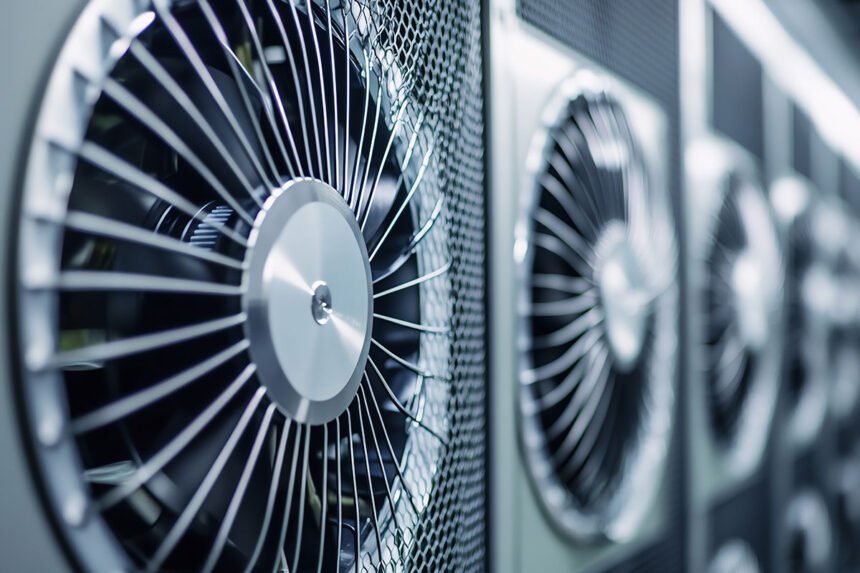
As the demand for energy in data centres continues to rise and climate targets become more urgent, Luca Rizzo, Global Industry Manager at ABB, delves into the potential of smarter cooling systems as a solution.
Data centres play a crucial role in supporting the digital services that drive the global economy, such as cloud computing and AI applications. However, their rapid growth has led to significant challenges in energy consumption.
Currently, data centres and data transmission networks consume 1-1.5% of global electricity and contribute 0.5% of CO₂ emissions, figures comparable to entire industries like chemicals and aviation. This trend is expected to escalate, with projections suggesting a 160% increase in data centre energy demand by 2030, reaching 3-4% of global energy consumption.
A large portion of this energy, around 40%, is used by cooling systems to maintain optimal operating temperatures and prevent equipment failures. As the use of AI technologies increases, the need for efficient cooling processes becomes even more critical, both environmentally and economically.
High-efficiency motors and variable speed drives (VSDs) play a crucial role in reducing energy consumption related to cooling systems in data centres. These components control the operation of pumps, fans, and compressors, essential elements of cooling infrastructure.
Older motors in cooling systems often operate inefficiently, leading to excessive electricity usage and higher energy costs. Modern high-efficiency motors meeting IE4 and IE5 standards significantly reduce energy losses by optimizing electrical and mechanical performance. By using these motors, data centres can achieve electricity savings of up to 10%, providing a quick return on investment.
When combined with VSDs, high-efficiency motors allow motor speeds to be adjusted based on actual cooling demands in real-time. This dynamic response prevents unnecessary energy use as motors don’t need to run at full capacity when cooling loads are lower. By utilizing VSDs, data centres can reduce energy consumption from cooling systems by 30-50% while maintaining optimal server temperatures and extending the lifespan of cooling system components.
Ultra-low harmonic (ULH) drives are another innovation in cooling system efficiency that addresses power quality issues caused by harmonics. ULH drives minimize harmonic distortion, providing cleaner and more reliable power delivery, enhancing the performance of cooling systems, and reducing wear and tear on electrical infrastructure.
Modular cooling solutions offer data centre operators the flexibility to upgrade components as more efficient models become available, ensuring continuous improvements in energy performance. This approach aligns with sustainability goals by allowing operators to make incremental changes rather than replacing entire systems.
Investing in energy-efficient cooling technologies not only benefits the environment but also makes financial sense for data centre operators. By reducing electricity consumption, operators can achieve cost savings on energy bills and may also be eligible for incentives from governments and regulatory bodies for adopting high-efficiency motors and drives.
In conclusion, energy-efficient cooling will be crucial for the sustainability and profitability of data centres as they continue to grow in size and complexity. High-efficiency motors, intelligent VSDs, and ultra-low harmonic drives offer significant energy savings while improving system reliability and flexibility.