Summary:
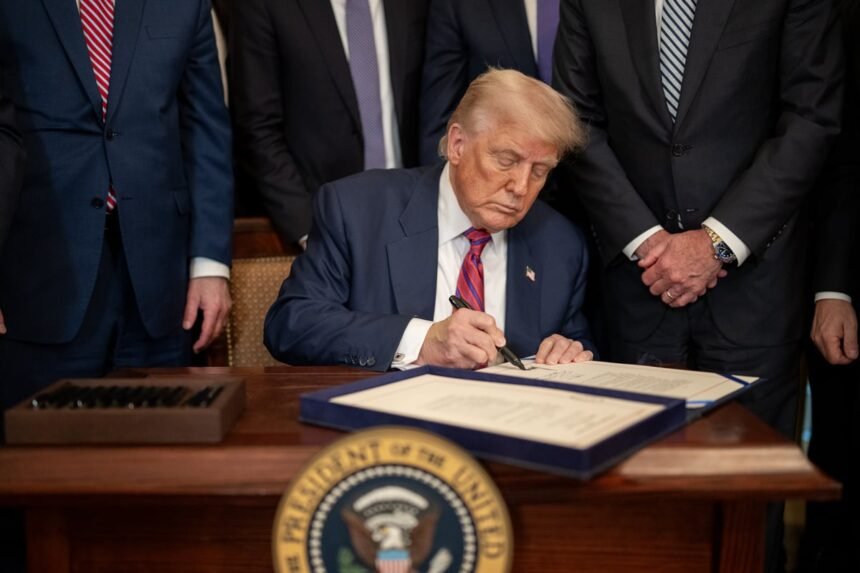
1. The S&P 500 is currently trading at historically high valuations, exacerbated by economic challenges due to tariffs imposed by President Trump.
2. President Trump’s tariffs have led to increased unemployment and record-low consumer sentiment, contradicting claims of economic benefits.
3. The S&P 500’s cyclically adjusted price-to-earnings ratio is at one of the highest levels in history, signaling potential future declines.
Article:
The S&P 500 is currently experiencing one of its most expensive valuations in history, with economic uncertainties looming due to tariffs imposed by President Trump. Despite a 15% year-to-date gain, concerns have been raised over the impact of these tariffs on U.S. companies and consumers, who are collectively bearing the brunt of the duties according to research from Goldman Sachs.
President Trump’s claims of tariffs boosting the U.S. economy have been refuted by experts, with JPMorgan Chase even reducing its economic growth forecast due to the effects of new trade policies. Unemployment has risen, manufacturing activity has declined, and consumer sentiment is at a record low, painting a grim picture of the current economic landscape.
Furthermore, the S&P 500’s cyclically adjusted price-to-earnings ratio has surpassed 39, a level seen only once before during the dot-com bubble. Historical data suggests that such high valuations often precede market declines, indicating a potential downturn in the near future. While some investors remain optimistic about future earnings growth, caution is advised in the current market environment.
In conclusion, investors are urged to exercise prudence and focus on high-conviction stocks with sensible valuations. With the uncertainties surrounding tariffs and economic headwinds, maintaining a cash reserve in portfolios could prove beneficial in capitalizing on potential market downturns. Stay informed, stay cautious, and be prepared for any fluctuations in the market ahead.