Texas experienced a tumultuous winter in February 2021, with subfreezing temperatures and snowfall causing havoc across Northern Texas. This extreme weather exposed vulnerabilities in the assumptions made about grid stability, fuel resupply, site access, and cross-vendor collaboration within data centers. While most data centers managed to stay online during the crisis, some were pushed to their limits as blackouts spread and plans for refueling and access fell apart.
Data centers are typically designed to withstand harsh conditions like those seen in Texas in 2021. However, the freeze highlighted off-site dependencies that were not fully considered in the initial designs. For example, delays in refueling due to icy roads and closures of interstate highways left some data centers in a precarious position. Netrality’s chief operating officer, Josh Maes, acknowledged that the disruption to fuel logistics during the freeze had been underestimated.
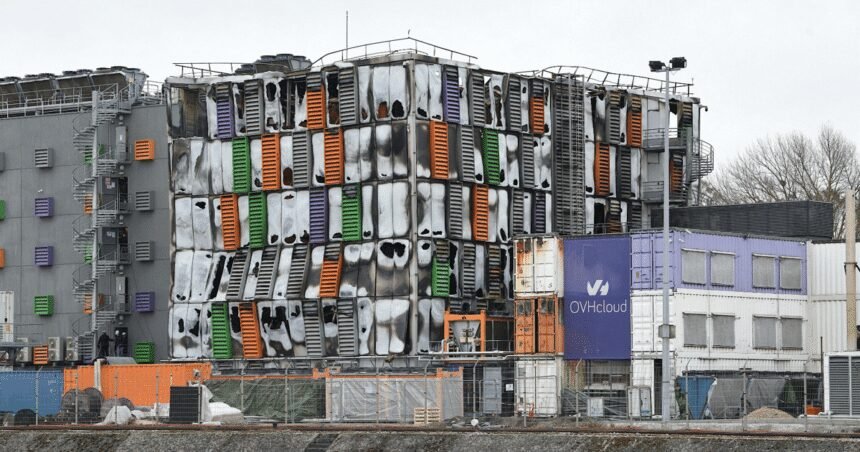
Just a month later, a different kind of failure occurred in Strasbourg, France, when a fire traced to UPS equipment destroyed OVH’s SBG2 data center. The environmentally friendly passive cooling system at the facility, while sustainable, inadvertently fueled the flames once the fire broke out. Backup generators kicked in after the main power supply was cut, showcasing how control logic can behave as designed in one context but dangerously in another. This incident underscored the importance of airflow management and shutdown coordination in fire safety protocols.
These incidents serve as a reminder of the “unknown unknowns” that can lurk within any data center, including single points of failure (SPOF) that may be inherent in the design, introduced through upgrades, or arise from human error.
During the design phase of data centers, teams conduct SPOF assessments to identify weak links and decide whether to eliminate or accept them based on factors like likelihood, impact, and cost. While many data centers are built with a high degree of fault tolerance, some designs may fall short of total redundancy due to cost constraints.
Standards frameworks such as the Uptime Institute’s Tier Standards provide customers with a clear understanding of the risks associated with a data center’s design. These frameworks, along with certifications like TIA-942 and EN 50600, align with the tiered paradigm established by the Uptime Institute, with Tier IV offering complete fault tolerance. However, even Tier IV data centers can fail if control settings, protection coordination, or operating procedures deviate from design assumptions.
Publicly documented outages demonstrate that data center failures are often the result of multiple issues acting in concert, rather than a single point of failure. It’s crucial for data center operators to constantly assess and address potential vulnerabilities to ensure the resilience and reliability of their facilities. In 2014, there was a significant downtime incident at the Singapore Stock Exchange (SGX) due to a malfunction in one of the two diesel rotary uninterruptible power supplies (DRUPS). This malfunction caused a frequency mismatch between power sources, leading to a series of failures in the data center. An investigation by external parties, including Ansett’s data center consulting company i3 Solutions, revealed that downstream static transfer switches (STS) were not configured to handle the out-of-phase transfer, resulting in a surge in current that tripped breakers and caused a cascade of issues across the primary data center.
DRUPS-related problems have been linked to various data center outages, such as those affecting AWS’s Sydney Region in June 2016 and Sovereign House in London in November 2015. These issues can be caused by synchronization faults, voltage sags, contaminated fuel, maintenance issues, and human errors.
Human errors play a significant role in data center incidents, with various mistakes and intentional lapses in judgment observed by industry experts. Training, staffing, and procedural rigor are crucial in mitigating human factor risks in data centers. It is essential to have formalized staff development programs that focus on applied knowledge, confidence, and effective procedures during incidents. Incidents should be viewed as learning opportunities rather than sources of embarrassment.
Enforcement of procedures is often lacking in data centers, leading to failures caused by organizational decisions like lack of maintenance and incorrect procedures. Adequate training and proper staffing levels are essential for operational resilience, but they are often overlooked in favor of cost-cutting measures.
Despite efforts to design out failures and conduct thorough testing, data center outages are inevitable. It is crucial to have a cohesive approach that combines thoughtful design, verified controls, disciplined procedures, and a culture of learning from incidents. By following best practices, the frequency, size, and impact of failures can be minimized, even for major players like Google.
As a business owner, you want to make sure that your website is easily discoverable by potential customers searching for products or services related to your industry. By incorporating relevant keywords, creating high-quality content, and improving your website’s load speed, you can improve your website’s SEO and attract more organic traffic. Additionally, optimizing your meta tags, headers, and images can further enhance your website’s visibility in search engine results pages.
By implementing these SEO best practices, you can improve your website’s search engine rankings and drive more organic traffic to your site. Remember that SEO is an ongoing process, so regularly monitoring your website’s performance and making adjustments as needed is essential for long-term success. By staying up-to-date with the latest SEO trends and algorithms, you can stay ahead of the competition and continue to grow your online presence. Title: The Enigmatic World of Bioluminescent Organisms
Bioluminescence is a fascinating phenomenon seen in various organisms, from deep-sea creatures to fireflies in the summer night. The ability to produce light through chemical reactions is a unique adaptation that has evolved in a wide range of species.
One of the most well-known examples of bioluminescence is the firefly. These insects produce light through a complex chemical reaction involving luciferin and luciferase enzymes. The light produced is often used as a form of communication, with males using their flashing lights to attract females during mating season.
In the depths of the ocean, bioluminescent organisms abound. Deep-sea fish, jellyfish, and squid all possess the ability to produce light through specialized light-producing organs called photophores. This adaptation serves a variety of functions, from attracting prey to confusing predators.
Another intriguing example of bioluminescence can be found in certain species of fungi. These luminescent mushrooms emit a soft, eerie glow in the dark, creating an otherworldly atmosphere in the forest. The exact purpose of this bioluminescence in fungi is still not fully understood, but it is believed to play a role in attracting insects for spore dispersal.
Bioluminescent bacteria are another fascinating group of organisms that have the ability to produce light. These bacteria emit a blue-green light through a chemical reaction that involves the enzyme luciferase. Some species of bioluminescent bacteria form symbiotic relationships with other organisms, providing them with the ability to produce light in exchange for nutrients.
The study of bioluminescent organisms continues to captivate scientists and researchers around the world. By unraveling the mysteries of how these organisms produce light and the ecological roles of bioluminescence, we can gain a deeper understanding of the diversity and complexity of life on Earth. The enigmatic world of bioluminescent organisms holds many secrets waiting to be discovered.