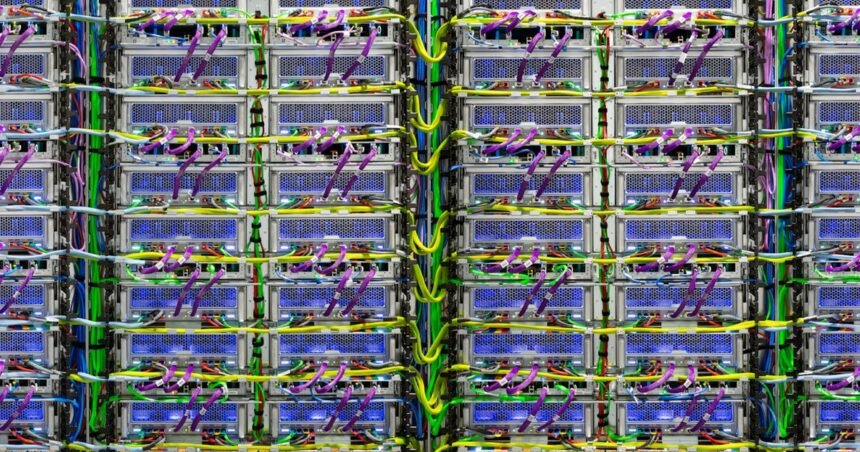
When it comes to AI hardware, TPUs are the way to go if you’re serious about training and serving models. Google has been utilizing TPUs for its AI projects and offers them to businesses through Google Cloud. However, TPUs are not available for purchase by third parties, making them exclusive to Google and its customers.
That’s the short take on the
role that TPUs play in AI workloads
. For the details, keep reading as we unpack everything you need to know about TPUs in the data center.
What is a TPU?
A TPU – short for tensor processing unit – is a type of computing chip optimized for training and serving certain types of AI models. More specifically, TPUs are a form of application-specific integrated circuit, or ASIC. An ASIC is any type of chip designed for a specific task. In the case of TPUs, that task is AI workloads. TPUs fall under the ‘AI accelerator’ category of specialized hardware designed to optimize machine learning workloads.
Google began developing TPUs in 2015 for use in its own AI projects. Starting in 2018, it made them available to other businesses, primarily by offering TPU-powered cloud server instances on Google Cloud. We’ll explain how to access TPUs below.
How do TPUs work?
Because TPUs are a proprietary product developed by Google, full details on how they work are not publicly available. At a high level, however, they use a design that places an AI model’s data and parameters into a matrix, then processes them in parallel.