

Sunday, 2 Aug 2026
Subscribe
logo logo
  • Global
  • Technology
  • Business
  • AI
  • Cloud
  • Edge Computing
  • Security
  • Investment
  • More
    • Sustainability
    • Colocation
    • Quantum Computing
    • Regulation & Policy
    • Infrastructure
    • Power & Cooling
    • Design
    • Innovations
  • 🔥
  • data
  • revolutionizing
  • Stock
  • Investment
  • Future
  • Secures
  • Growth
  • Top
  • Funding
  • Power
  • Center
  • technology
Font ResizerAa
Silicon FlashSilicon Flash
Search
  • Global
  • Technology
  • Business
  • AI
  • Cloud
  • Edge Computing
  • Security
  • Investment
  • More
    • Sustainability
    • Colocation
    • Quantum Computing
    • Regulation & Policy
    • Infrastructure
    • Power & Cooling
    • Design
    • Innovations
Have an existing account? Sign In
Follow US
© 2022 Foxiz News Network. Ruby Design Company. All Rights Reserved.
Silicon Flash > Blog > Innovations > Optimizing Efficiency: Monitoring Multiple Self-Driving Vehicles Simultaneously
Innovations

Optimizing Efficiency: Monitoring Multiple Self-Driving Vehicles Simultaneously

Published September 1, 2025 By Juwan Chacko
Share
3 Min Read
Optimizing Efficiency: Monitoring Multiple Self-Driving Vehicles Simultaneously
SHARE

Recent research led by Coventry University suggests that one person can effectively monitor up to five self-driving vehicles simultaneously. This study sheds light on the critical role of remote supervision in ensuring the safety and efficiency of autonomous vehicles, particularly in services like driverless buses and delivery vehicles.

Optimizing Remote Monitoring of Self-Driving Vehicles


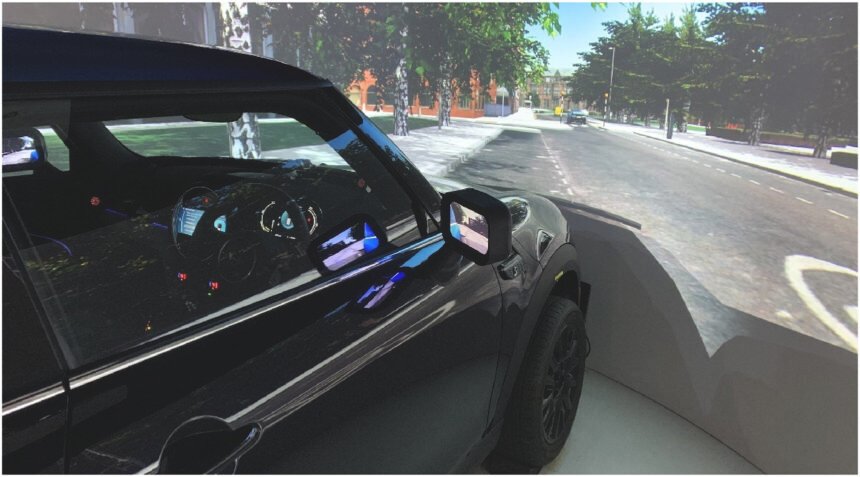
Simulator used to generate AV video clips. Credit: Computers in Human Behavior (2025). DOI: 10.1016/j.chb.2025.108690

As self-driving vehicle trials expand across the UK, the need for trained individuals to oversee multiple autonomous vehicles simultaneously becomes increasingly apparent. Remote monitoring plays a crucial role in ensuring the smooth operation of driverless services such as buses and delivery vehicles.

Understanding the Limits of Remote Supervision

The study conducted by Coventry University’s Research Center for Future Transport and Cities aimed to determine the optimal number of self-driving vehicles one person can effectively monitor without compromising safety or efficiency. Experienced drivers with limited monitoring experience were tasked with observing synthetic self-driving cars in a simulated control room environment.

Operators were required to assess potential issues and decide if intervention by a standby driver was necessary, without directly interfering with the vehicles’ operations. The research, published in the journal Computers in Human Behavior, focused on participants’ response times, accuracy, and overall task difficulty.

How many self-driving vehicles can one person monitor at the same time?
Computer based simulator of remote monitoring workstation. Credit: Computers in Human Behavior (2025). DOI: 10.1016/j.chb.2025.108690

The results indicated that operators were most effective when monitoring approximately five vehicles, allowing them to maintain alertness and respond promptly to any potential issues. Performance remained consistent when overseeing between five and seven vehicles but declined significantly beyond that threshold.

Interestingly, operators who monitored only three vehicles tended to intervene excessively, suggesting that the task may have been too simplistic, leading to over-alertness. Clear and timely information from the vehicles was deemed essential for decision-making, although an excessive amount of messages proved to be distracting.

See also  Raindrop's AI-Native Observability Platform: Ensuring User Satisfaction and Performance Monitoring

Implications for Future Transport Networks

Professor Stewart Birrell, Director of the Research Center for Future Transport and Cities, emphasized the importance of these findings for the safe implementation of connected and automated vehicles. Understanding the optimal number of vehicles that can be supervised by one individual is crucial for the effective deployment of autonomous systems in urban environments.

By leveraging this knowledge, future transport networks can ensure operational efficiency without overwhelming human operators who may need to monitor multiple vehicles simultaneously.

More information:
Adam Bogg et al, Overloaded, underloaded or in control: How many automated vehicles can one person supervise?, Computers in Human Behavior (2025). DOI: 10.1016/j.chb.2025.108690


Provided by Coventry University


TAGGED: efficiency, monitoring, Multiple, Optimizing, SelfDriving, Simultaneously, Vehicles
Share This Article
Facebook LinkedIn Email Copy Link Print
Previous Article Top ETF Picks for Your Investment Portfolio Top ETF Picks for Your Investment Portfolio
Next Article Join the Movement: Volunteer at Disrupt 2025 before it’s too late Join the Movement: Volunteer at Disrupt 2025 before it’s too late
Leave a comment

Leave a Reply Cancel reply

Your email address will not be published. Required fields are marked *

Your Trusted Source for Accurate and Timely Updates!

Our commitment to accuracy, impartiality, and delivering breaking news as it happens has earned us the trust of a vast audience. Stay ahead with real-time updates on the latest events, trends.
FacebookLike
LinkedInFollow

Popular Posts

Les meilleures offres à ne pas manquer pour l’Apple Watch lors du Black Friday

The annual Black Friday event will officially start on November 24, 2023, with most retailers…

June 17, 2025

Unveiling ModelNova: Revolutionizing Edge AI with Ceva and embedUR’s NeuPro NPUs

Ceva and embedUR systems have collaborated to introduce the ModelNova platform for Ceva's NeuPro NPU…

November 6, 2025

DeepMind’s AI Makes History: Winning Gold at World’s Toughest Math Competition

Summary: 1. Google DeepMind's Gemini AI model achieves gold medal-level performance at the International Mathematical…

July 22, 2025

Enhanced Networking Features in Kubernetes v1.34 for Cloud-Native Infrastructure

In the realm of Kubernetes networking, KEP #3015, titled 'PreferSameZone and PreferSameNode Traffic Distribution,' aims…

August 29, 2025

The Rise of Identity-First Security: Safeguarding Against AI-Powered Social Engineering

Identity security in the world of enterprise is facing a significant challenge. Instead of targeting…

October 8, 2025

You Might Also Like

Empowering Innovation: The Role of Design Enablement Teams in the European Chips Act
Innovations

Empowering Innovation: The Role of Design Enablement Teams in the European Chips Act

Juwan Chacko
Secure Access: Biometric Passwordless Login and EU Digital Wallet Protection Platform
Innovations

Secure Access: Biometric Passwordless Login and EU Digital Wallet Protection Platform

Juwan Chacko
The Crucial Role of Intelligent Networks in Europe’s Digital Future
Innovations

The Crucial Role of Intelligent Networks in Europe’s Digital Future

Juwan Chacko
Innovating the Future: EPI’s Revolutionary Approach to High-Performance Computing
Innovations

Innovating the Future: EPI’s Revolutionary Approach to High-Performance Computing

Juwan Chacko
logo logo
Facebook Linkedin Rss

About US

Silicon Flash: Stay informed with the latest Tech News, Innovations, Gadgets, AI, Data Center, and Industry trends from around the world—all in one place.

Top Categories
  • Technology
  • Business
  • Innovations
  • Investments
Usefull Links
  • Home
  • Contact
  • Privacy Policy
  • Terms & Conditions

© 2025 – siliconflash.com – All rights reserved

Welcome Back!

Sign in to your account

Lost your password?