Recent research led by Coventry University suggests that one person can effectively monitor up to five self-driving vehicles simultaneously. This study sheds light on the critical role of remote supervision in ensuring the safety and efficiency of autonomous vehicles, particularly in services like driverless buses and delivery vehicles.
Optimizing Remote Monitoring of Self-Driving Vehicles
As self-driving vehicle trials expand across the UK, the need for trained individuals to oversee multiple autonomous vehicles simultaneously becomes increasingly apparent. Remote monitoring plays a crucial role in ensuring the smooth operation of driverless services such as buses and delivery vehicles.
Understanding the Limits of Remote Supervision
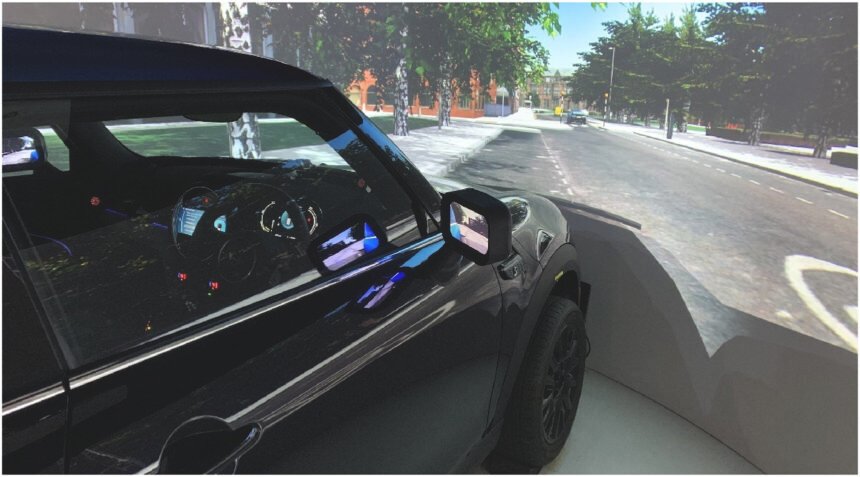
The study conducted by Coventry University’s Research Center for Future Transport and Cities aimed to determine the optimal number of self-driving vehicles one person can effectively monitor without compromising safety or efficiency. Experienced drivers with limited monitoring experience were tasked with observing synthetic self-driving cars in a simulated control room environment.
Operators were required to assess potential issues and decide if intervention by a standby driver was necessary, without directly interfering with the vehicles’ operations. The research, published in the journal Computers in Human Behavior, focused on participants’ response times, accuracy, and overall task difficulty.

The results indicated that operators were most effective when monitoring approximately five vehicles, allowing them to maintain alertness and respond promptly to any potential issues. Performance remained consistent when overseeing between five and seven vehicles but declined significantly beyond that threshold.
Interestingly, operators who monitored only three vehicles tended to intervene excessively, suggesting that the task may have been too simplistic, leading to over-alertness. Clear and timely information from the vehicles was deemed essential for decision-making, although an excessive amount of messages proved to be distracting.
Implications for Future Transport Networks
Professor Stewart Birrell, Director of the Research Center for Future Transport and Cities, emphasized the importance of these findings for the safe implementation of connected and automated vehicles. Understanding the optimal number of vehicles that can be supervised by one individual is crucial for the effective deployment of autonomous systems in urban environments.
By leveraging this knowledge, future transport networks can ensure operational efficiency without overwhelming human operators who may need to monitor multiple vehicles simultaneously.
More information:
Adam Bogg et al, Overloaded, underloaded or in control: How many automated vehicles can one person supervise?, Computers in Human Behavior (2025). DOI: 10.1016/j.chb.2025.108690