Summary:
- Many companies aim to improve data center water usage effectiveness by targeting a rate of 0 L/kWh to run water-free data centers.
- Water is crucial for cooling data centers, but it poses challenges due to its scarcity and environmental impact.
- Implementing water-free cooling systems, like liquid immersion or mechanical cooling, can help achieve sustainability goals in data centers.
Article:
Data centers play a vital role in our digital world, but their environmental impact, particularly in terms of water usage, has become a growing concern. While some companies may be content with beating the average water usage effectiveness (WUE) rate of 1.8 L/kWh, others are striving for more ambitious goals. The concept of water-free data centers, where no water is consumed for cooling purposes, is gaining traction among organizations committed to sustainability.
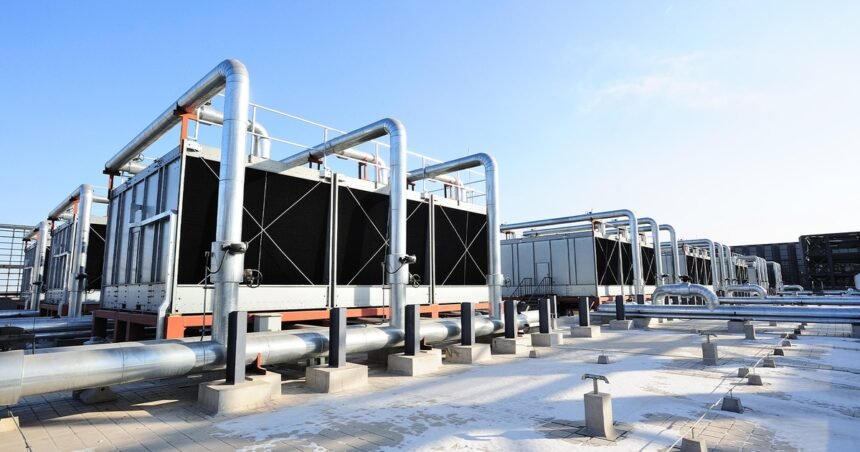
Water is essential for cooling data centers, as it helps dissipate heat generated by IT equipment through evaporation. However, the high rates of water consumption pose challenges, especially in regions where water scarcity is a pressing issue. This has led data center operators to focus on reducing water consumption as part of their sustainability strategies, alongside decreasing energy usage.
To achieve water sustainability goals, some companies are exploring the idea of water-free data centers. These facilities aim to eliminate the need for water entirely in the cooling process, relying on innovative cooling systems like liquid immersion or mechanical cooling. While liquid immersion cooling is energy-efficient but costly, mechanical cooling systems offer a more affordable alternative, albeit at the expense of higher electricity consumption.
Microsoft and other industry players have outlined concepts for water-free data centers, with plans to pilot such facilities in the coming years. By integrating mechanical cooling with chip-level cooling solutions and other innovative technologies, these companies hope to reduce their reliance on water while maintaining efficient cooling processes. While widespread adoption of water-free data centers may still be a distant goal due to cost and complexity, the technology to achieve zero water usage is already within reach, awaiting the right design choices to make it a reality.
In conclusion, the journey towards water-free data centers may be challenging, but with the right approach and technological advancements, it is possible to create sustainable and efficient data centers that minimize their impact on water resources.