

Sunday, 3 May 2026
Subscribe
logo logo
  • Global
  • Technology
  • Business
  • AI
  • Cloud
  • Edge Computing
  • Security
  • Investment
  • More
    • Sustainability
    • Colocation
    • Quantum Computing
    • Regulation & Policy
    • Infrastructure
    • Power & Cooling
    • Design
    • Innovations
  • 🔥
  • data
  • revolutionizing
  • Stock
  • Investment
  • Future
  • Secures
  • Growth
  • Top
  • Funding
  • Power
  • Center
  • technology
Font ResizerAa
Silicon FlashSilicon Flash
Search
  • Global
  • Technology
  • Business
  • AI
  • Cloud
  • Edge Computing
  • Security
  • Investment
  • More
    • Sustainability
    • Colocation
    • Quantum Computing
    • Regulation & Policy
    • Infrastructure
    • Power & Cooling
    • Design
    • Innovations
Have an existing account? Sign In
Follow US
© 2022 Foxiz News Network. Ruby Design Company. All Rights Reserved.
Silicon Flash > Blog > Innovations > Harvesting Earth’s Heat: The Stirling Engine’s Journey to Space
Innovations

Harvesting Earth’s Heat: The Stirling Engine’s Journey to Space

Published November 12, 2025 By Juwan Chacko
Share
4 Min Read
Harvesting Earth’s Heat: The Stirling Engine’s Journey to Space
SHARE

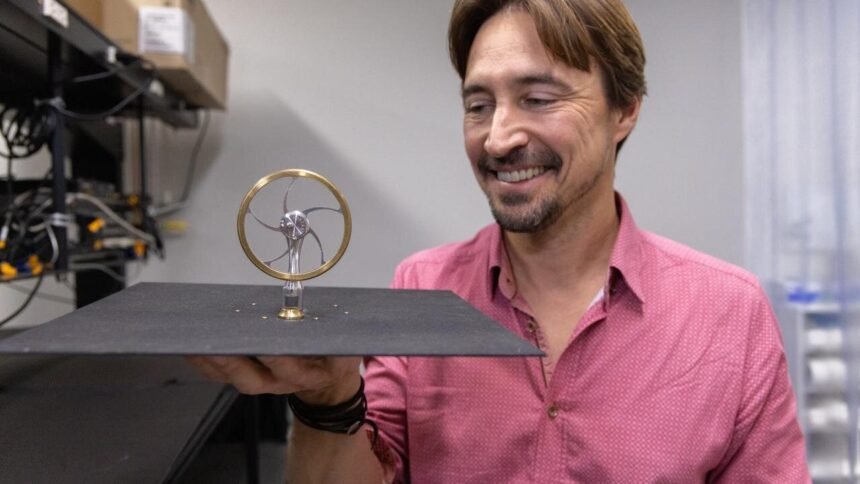
Engineers at the University of California, Davis, have developed a groundbreaking device that harnesses mechanical power at night by utilizing the natural warmth surrounding us and the cold expanse of space. This innovative invention has the potential to be utilized in various applications, such as ventilating greenhouses or other buildings. The research detailing this new device was published on November 12 in Science Advances.

The device in question is a Stirling engine, a type of machine that operates on a small temperature difference. Unlike traditional engines like internal combustion engines that require a significant heat gradient to generate power, the Stirling engine can efficiently work with minor temperature differentials. Professor Jeremy Munday, co-author of the research paper and an expert in electrical and computer engineering at UC Davis, explained that Stirling engines excel in scenarios where only slight temperature differences exist.

Typically, a Stirling engine is connected directly to a heat source on one side and a cooler environment on the other. However, Munday and graduate student researcher Tristan Deppe pondered a unique approach. Instead of heating up one side using conventional methods like burning fuel, they proposed connecting the cold side of the engine to deep space, which is extremely cold yet far away.

Munday elaborated on this concept, stating that the engine doesn’t need to physically touch space; it can interact with space radiatively. By tapping into the temperature differential between Earth’s warmth and the coldness of space, this experimental engine has the potential to revolutionize energy generation and utilization. The device could be a game-changer for sustainable energy solutions, offering a novel way to harness power during nighttime hours. Imagine standing outside on a cold, clear night, feeling the chill in the air as heat escapes from your body. Now, picture harnessing that heat loss to generate power. This concept may seem far-fetched, but researchers Deppe and Munday have found a way to do just that.

See also  Introducing STULZ's Innovative CyberRack SideCooler: Maximizing Space in Data Centers

Their innovative idea involves using a simple Stirling engine, which consists of a piston driving a flywheel. By placing this engine on a panel that acts as a heat-radiating antenna and positioning it outdoors at night, they are able to utilize the ground as the warm side of the engine and channel the cold of space through the antenna.

After a year of nighttime experiments, the researchers discovered that their small device could generate at least 400 milliwatts of mechanical power per square meter. They successfully used the device to power a fan and even connected it to a small electrical motor to generate current.

The implications of this research are significant. It demonstrates the possibility of generating useful amounts of power from the night sky, particularly in areas with low humidity and clear night skies. This technology could be utilized to ventilate greenhouses or residential buildings, offering a sustainable and eco-friendly energy solution.

UC Davis has recognized the potential of this groundbreaking work and has filed a provisional patent related to it. The research, published in the journal Science Advances, opens up new possibilities for harnessing Earth’s ambient radiation to create power in innovative ways.


TAGGED: Earths, Engines, Harvesting, Heat, Journey, space, Stirling
Share This Article
Facebook LinkedIn Email Copy Link Print
Previous Article Comparing DDR5, DDR4, and DDR3: Selecting the Best RAM for Server Performance Comparing DDR5, DDR4, and DDR3: Selecting the Best RAM for Server Performance
Next Article Pouring B into US Data Centers: A Look at the Anthropic Impact Pouring $50B into US Data Centers: A Look at the Anthropic Impact
Leave a comment

Leave a Reply Cancel reply

Your email address will not be published. Required fields are marked *

Your Trusted Source for Accurate and Timely Updates!

Our commitment to accuracy, impartiality, and delivering breaking news as it happens has earned us the trust of a vast audience. Stay ahead with real-time updates on the latest events, trends.
FacebookLike
LinkedInFollow

Popular Posts

Unlocking the Power of GPT-4.1 and 4.1 Mini in ChatGPT: A Guide for Enterprises

Summary: OpenAI has introduced GPT-4.1, a new large language model, to users of ChatGPT. GPT-4.1…

May 15, 2025

Revolutionizing Fashion: Introducing ‘Ella’ – Your Personalized AI Styling Assistant

The exclusive membership platform Vivrelle, known for offering high-end goods for rent, revealed on Thursday…

September 4, 2025

Empathy Secures $72 Million in Series C Funding to Drive Growth

Summary: Empathy, a NYC-based lost support and legacy planning technology company, secured $72M in Series…

May 30, 2025

Shifting the AI Landscape: How Meta’s Three Strategic Moves Transformed Its Path in 2025

Summary: 1. Meta prioritized long-term AI control over short-term margin by investing heavily in AI…

December 30, 2025

The Trump Administration’s Strategic Agreement to Safeguard Intel’s Foundry Unit Sale

The Trump administration appears to be exerting influence over Intel's decision-making regarding its struggling foundry…

August 29, 2025

You Might Also Like

Empowering Innovation: The Role of Design Enablement Teams in the European Chips Act
Innovations

Empowering Innovation: The Role of Design Enablement Teams in the European Chips Act

Juwan Chacko
Secure Access: Biometric Passwordless Login and EU Digital Wallet Protection Platform
Innovations

Secure Access: Biometric Passwordless Login and EU Digital Wallet Protection Platform

Juwan Chacko
The Crucial Role of Intelligent Networks in Europe’s Digital Future
Innovations

The Crucial Role of Intelligent Networks in Europe’s Digital Future

Juwan Chacko
Abbots Langley Data Centre Secures Government Funding for Innovative Heat Network Project
Global Market

Abbots Langley Data Centre Secures Government Funding for Innovative Heat Network Project

Juwan Chacko
logo logo
Facebook Linkedin Rss

About US

Silicon Flash: Stay informed with the latest Tech News, Innovations, Gadgets, AI, Data Center, and Industry trends from around the world—all in one place.

Top Categories
  • Technology
  • Business
  • Innovations
  • Investments
Usefull Links
  • Home
  • Contact
  • Privacy Policy
  • Terms & Conditions

© 2025 – siliconflash.com – All rights reserved

Welcome Back!

Sign in to your account

Lost your password?