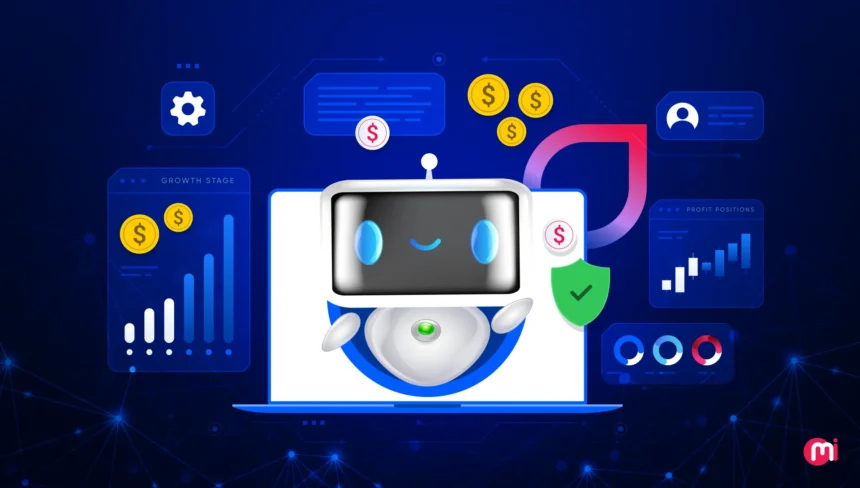
The global AI in wealth management & financial planning market is expected to reach $129.6 billion by 2034, according to InsightAce Analytic. This growth demonstrates the increasing adoption and importance of AI in the finance industry. AI is playing a crucial role in transforming wealth management, from financial data analytics to personalized portfolio management, operational efficiency, and risk management.
One of the key aspects of AI in wealth management is the use of robo-advisors, advanced data analytics, and automation of back-office tasks. These technologies enable human advisors to focus on building strategic client relationships, offering tailored financial strategies, managing risk effectively, and providing seamless client experiences at scale.
Firms that leverage AI in wealth management are more likely to streamline compliance, operations, and customer relationship management. The future of wealth management is expected to involve a hybrid human-AI collaboration, combining the strengths of both to provide the best possible outcomes for clients.
AI in wealth management refers to the use of AI-enabled systems that mimic human reasoning, learning, and decision-making in financial advisory and investment processes. These systems use technologies like machine learning, natural language processing (NLP), predictive analytics, and automation to analyze market data, manage portfolios, detect fraud, and personalize client recommendations.
The use cases of AI in wealth management are diverse, ranging from financial data analytics to personalized portfolio management, and tailored client services through robo-advisors. AI agents are revolutionizing business processes in finance by automating routine accounting tasks, providing personalized insights, and more.
AI-powered wealth management algorithms analyze a wide range of financial data to generate insights in real-time, helping financial institutions create tailored solutions for individual clients. Predictive analytics helps firms identify emerging opportunities, assess risk exposure, and make well-informed investment decisions faster than traditional methods.
AI in portfolio management leverages data analytics, machine learning, NLP, deep learning algorithms, and predictive models to deliver personalized investment strategies tailored to each client’s goals, risk tolerance, and behavioral data. Machine learning and deep learning continuously refine these models to ensure portfolios stay optimized even as markets evolve.
AI-enabled tools for wealth management help financial institutions analyze customers’ interactions, communication patterns, and historical preferences to identify behavioral trends. This information can be used to provide personalized recommendations and improve client satisfaction and retention. Understanding a customer’s financial goals and how they make decisions is crucial for financial advisors to provide relevant advice and engagement strategies. By delving into behavioral intelligence, advisors can build more meaningful relationships with clients, making them feel understood, valued, and confident in their wealth management journey.
One innovative tool transforming the financial advisory landscape is robo-advisors. These AI-powered digital platforms offer automated, algorithm-driven wealth management and financial advice with minimal human intervention. Robo-advisors conduct financial planning services like risk assessment, asset allocation, automatic rebalancing, and tax-loss harvesting, making investment management more accessible and efficient for clients. By collecting data on an individual’s financial goals, risk tolerance, and time horizon, robo-advisors can create and manage diversified portfolios at a lower cost than traditional human advisors.
AI in wealth management also plays a vital role in risk and compliance management. By utilizing artificial intelligence, financial institutions can enhance risk assessment by identifying patterns that may indicate fraud, market manipulation, or vulnerabilities in customers’ portfolios. Compliance systems powered by AI monitor transactions in real time, detect anomalies, and generate reports aligned with regulatory standards. Additionally, AI helps monitor regulatory changes, apply automated rules, and streamline compliance reporting, ultimately reducing risk and strengthening trust between clients and institutions.
Automated and efficient operations are another key benefit of AI in wealth management. AI-powered automation significantly reduces manual workloads and enhances operational efficiency by automating routine tasks such as data entry, reconciliation, reporting, and real-time data analysis. Technologies like natural language processing (NLP) and robotic process automation (RPA) streamline document review, data extraction, and ensure consistency and accuracy in routine tasks. By leveraging machine learning, predictive analytics, and automation, financial institutions can reduce costs, manage risk more effectively, and democratize access to financial services for a broader range of clients.
Customer relationship management is also revolutionized by AI in wealth management. AI-powered CRM systems like Salesforce enable financial firms to anticipate customer needs by analyzing behavioral and transactional data. These tools recommend the best times to engage, tailor product offers, and predict client churn, helping financial advisors maintain strong, proactive customer relationships and foster growth alongside scaling customers’ needs.
In conclusion, AI in wealth management offers significant benefits for both customers and financial institutions. From increased efficiency and automation to enhanced decision-making, streamlined lead generation, and improved compliance management, AI is transforming the way financial services are delivered. Customers also benefit from hyper-personalization, real-time information and service, democratization of services, and proactive risk mitigation. By embracing AI technologies, financial institutions can stay ahead of the curve and provide superior wealth management services to a diverse clientele.
Morgan Stanley’s AI-Powered “Next Best Action” System:
Morgan Stanley has implemented the innovative “Next Best Action” (NBA) system, powered by artificial intelligence (AI), to provide personalized recommendations for financial advisors to engage effectively with their clients. By analyzing client data, preferences, and market conditions, the NBA system suggests actions such as portfolio rebalancing, product offerings, and follow-up conversations. This AI-driven system has significantly improved client engagement, financial advisor productivity, response times, consistency in recommendations, and overall client retention.
Morgan Stanley’s CEO, Ted Pick, recognizes the transformative impact of artificial intelligence on their wealth business, describing it as a game changer.
Future Outlook and Challenges of AI in Wealth Management
The future of wealth management will witness a deeper integration of artificial intelligence, driving automation, personalization, and insightful decision-making. However, sustainable adoption of AI in wealth management necessitates addressing challenges related to ethics, transparency, and data governance. Key considerations include adopting a hybrid approach, mitigating risks, ensuring unbiased AI systems, and prioritizing data privacy and cybersecurity.
MindInventory Helps You Harness the Power of AI in Wealth Management
For financial institutions seeking to leverage AI in wealth management, MindInventory offers custom AI/ML development services tailored to the finance industry and wealth management firms. With expertise in retail and corporate banking solutions, cloud-based portfolio management, robo-advisory platforms, and risk management systems, MindInventory can help streamline processes, enhance user experiences, and drive innovation securely and at scale.
One notable success story is the development of Sidepocket, a risk-aware investment platform that delivered exceptional outcomes by focusing on user-risk awareness, real-time portfolio management, high-speed trade execution, and multi-layered security. By utilizing technologies such as Flask, AWS DynamoDB, Plaid, and Stripe, MindInventory provided micro-service solutions, API development, and cloud infrastructure management to create a robust and efficient platform.
FAQs:
AI is revolutionizing wealth management by enabling personalized services, automating tasks, and providing predictive insights for informed investment decisions.
AI is utilized in financial data analytics, portfolio optimization, client insights, robo-advisory services, fraud detection, compliance monitoring, and CRM automation within wealth management.
AI enhances productivity, compliance, opportunity identification, and data-driven decision-making for financial advisors and firms, leading to cost savings and improved outcomes.
Clients benefit from personalized portfolios, instant services, transparent processes, and better financial outcomes supported by data-driven insights through AI-powered wealth management tools.
Robo-advisors will complement, not replace, human wealth managers in a hybrid advisory model where AI aids in data analysis, while human advisors provide personalized financial guidance.
Data is integral to AI-powered wealth management, enabling pattern recognition, market trend prediction, and tailored advice based on individual client needs.
AI automates transaction monitoring, identifies irregularities, and ensures regulatory compliance, reducing risks and enhancing oversight in wealth management operations.
By collaborating with specialized AI/ML development companies like MindInventory, organizations can implement customized, secure, and scalable AI solutions aligned with their wealth management objectives.
The Importance of Self-Care and Mental Well-Being
Self-care is a crucial aspect of maintaining good mental health and overall well-being. It involves taking the time to prioritize your own needs and ensuring that you are looking after yourself both physically and emotionally.
In today’s fast-paced world, it can be easy to neglect self-care in favor of work, social commitments, or other responsibilities. However, neglecting self-care can have serious consequences on your mental health, leading to feelings of burnout, anxiety, and depression.
One of the key aspects of self-care is making time for activities that bring you joy and relaxation. This could be anything from taking a long bath, going for a walk in nature, or simply spending time with loved ones. By engaging in activities that make you happy, you are giving yourself the chance to recharge and reset, which is essential for maintaining good mental health.
Another important aspect of self-care is setting boundaries and learning to say no when necessary. It can be easy to overcommit yourself and take on too much, leading to feelings of overwhelm and stress. By setting boundaries and learning to prioritize your own needs, you are showing yourself the respect and care that you deserve.
Taking care of your physical health is also crucial for maintaining good mental well-being. This includes eating a healthy diet, getting regular exercise, and ensuring that you are getting enough sleep. By taking care of your physical health, you are providing your body with the essential tools it needs to function properly, which can have a positive impact on your mental health.
In conclusion, self-care is a vital aspect of maintaining good mental health and overall well-being. By taking the time to prioritize your own needs, engage in activities that bring you joy, and take care of your physical health, you are setting yourself up for success in all areas of your life. Remember, self-care is not selfish – it is necessary for ensuring that you are able to show up as your best self in all aspects of your life.