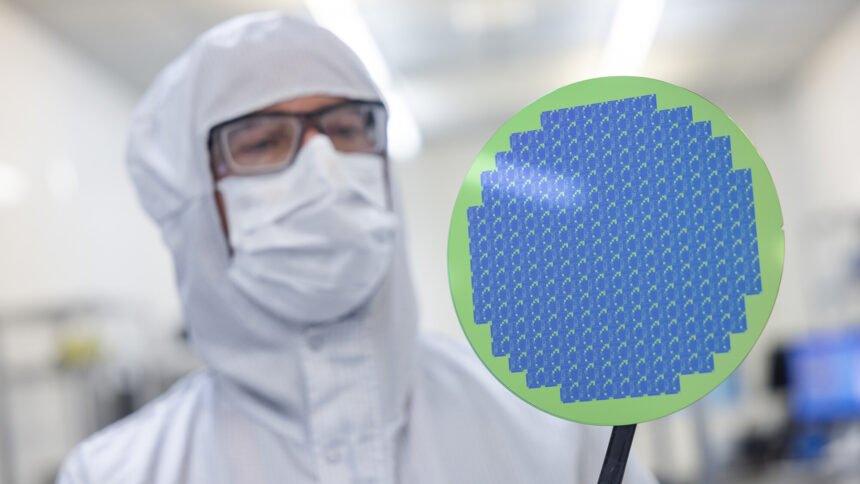
Finland is solidifying its position in the European chip industry and opening up new growth opportunities for businesses by contributing to European semiconducting pilot lines. The country’s expertise in specialised microelectronics, including RF, MEMS, integrated photonics, and quantum technology, is crucial for its long-term competitiveness. These advanced technologies are driving growth in the chip industry, with key trends such as 5G, AI, and automotive electronics leading the way. Finland’s chip ecosystem, encompassing semiconductors, photonics, and quantum technology, is supported by strategic collaborations and investments. By participating in European chip pilot lines, Finland aims to enhance its manufacturing capabilities, secure access to critical technology, and strengthen its position in the global market.
The chip industry is crucial for Finland’s long-term competitiveness as we require access to the latest technology and expertise to develop, manufacture, and harness critical technologies. Finland brings to the European chip industry solid expertise and experience in specialised microelectronics, including radio frequency (RF), micro-electro-mechanical systems (MEMS), integrated photonics, materials and process development, integration technologies, and superconducting quantum technology.
Chip technology truly represents deep technology, as its underlying principles and manufacturing environments are highly advanced. For example, the most complex chip patterning devices contain more than 40,000 components and have taken decades and billions of euros to develop. The eventual commercialisation of such devices is the culmination of countless visions, inventions, innovations, ambitions, working hours, and funding.
Driving growth: Key technologies and market trends
The chip industry’s expected growth is propelled by technologies such as 5G, artificial intelligence (AI), smartphones, computers, automotive electronics, electric and autonomous vehicles, and factory automation. This will drive a substantial increase in semiconductor chip production in the coming years.
The quantum technology market is anticipated to grow by double-digit percentages annually, and the photonics market is also expected to expand. The Nordic countries recognise that staying at the technological forefront requires strategic collaboration.
Building a resilient Finnish chip ecosystem
Significant national investment in the Finnish chip industry has enabled sectoral development and integration into European value chains. While small by global standards, Finland’s chip ecosystem is robust and resilient, comprising three main sectors: semiconductors, photonics, and quantum technology.
Industrial co-operation groups central to this landscape include the Semiconductor Branch Group at Technology Industries of Finland (semiconductors), Photonics Finland (photonics), and InnovationQ (quantum technology). Despite their distinctions, these groups share many similarities. Many ecosystem companies are involved in developing, utilising, or selling chips, as well as the equipment and materials used in chip manufacturing.
A recent ‘Chips from the North’ growth strategy by the Semiconductor Branch Group highlights the Finnish semiconductor sector’s potential: revenue and employment could be tripled within a decade. This sector is vital for Finland’s overall competitiveness, underscoring the need for expertise in the development and application of critical technologies. European chip supply chains are also necessary to guarantee access to advanced chips. As suppliers are often based in Asia and America, shifting geopolitical circumstances are opening up new business and growth opportunities for Finnish companies.
Finland’s strengths in the semiconductor sector are centred on specialised microelectronics – RF technologies, new memory devices and materials, MEMS, power semiconductors, integrated photonics, quantum technologies, microfabrication integration technologies, as well as strong system-on-chip (SoC) design capabilities. These capabilities allow the development of increasingly complex manufacturing modules and new, miniaturised technological solutions. By leveraging these strengths, Finland is positioned to make a globally significant contribution to selected sectors. Currently, Finland and VTT are enhancing their specialised chip manufacturing capabilities through the support of the EU, the Ministry of Economic Affairs and Employment and Business Finland, via four Chips JU pilot lines: FAMES, APECS, NanoIC and PIXEurope. In addition, Tampere University is part of the WBG pilot line. Furthermore, VTT also co-ordinates the superconducting pilot SUPREME and is part of all other quantum pilots.
These initiatives involve procuring new and upgrading existing manufacturing equipment to develop new fabrication capabilities at VTT in Espoo, Finland. This investment is expected to boost competitiveness and secure long-term access to critical technology, while embedding Finland more firmly within the European chip ecosystem. This, in turn, opens doors to pivotal negotiations and value chains, supporting Finnish companies’ growth in European and global markets.
New investments to VTT’s cleanroom facilities
The new equipment and processing capabilities will be based at VTT’s Micronova facilities and the forthcoming Kvanttinova hub in Otaniemi, Espoo. The new capabilities are in the core of the development of specialised chips, specifically for data storage and transfer applications – particularly those involving new memory technologies, RF, piezo-MEMS, integrated photonics, integration technology, and superconducting quantum technology.
Businesses and the broader ecosystem will have access to both new and upgraded processing capabilities, as well as existing VTT processing through VTT services in the shared Micronova cleanroom. These investments will allow businesses to develop new products and services, thereby driving growth in Finland. Simultaneously, Finnish companies can access European pilot line technologies through VTT, further strengthening Finland’s processing capabilities, including those related to European processor technologies.
Finnish participation in European Chips JU microelectronics pilot lines
In Microelectronics Chips JU pilot lines, VTT focuses on novel processes and devices for specialised microelectronics. In the FAMES pilot line, RF BAW filter processing is developed to support new telecommunication bands up to 15 GHz. VTT will also develop FeFET-based non-volatile memory technology that is compatible with monolithic integration with CMOS, as back-end-of-the-line or post-CMOS processing. Both technologies will be combined with FD-SOI chips fabricated by LETI. In the APECS pilot line, VTT develops integrated passive devices (IPD) technology for RF integration. This technology will be utilised for telecom applications to support BAW and RF transceiver packaging and integration. RF technology is also in VTT’s focus in the NanoIC pilot line, where VTT assesses the RF performance of the 2nm CMOS technology developed by IMEC.
PIXEurope: The Chips JU photonics pilot line
Photonics is another area in which Finland excels. Photonics Finland has played a key role in advancing the Finnish photonics ecosystem, and Finland possesses integrated photonics manufacturing technology at both VTT and the University of Tampere. The latter is involved in the Chips JU Wide Band Gap pilot line. With PIXEurope pilot line funding, VTT is investing in capabilities for fabricating more complex photonics chips and hybrid integration. Combined with the University of Tampere’s expertise in compound semiconductors, this enables a broad range of applications, from telecommunications to sensors. The Finnish Chip Competence Centre (FiCCC) assists companies in applying these new chip technologies in practical applications.
In the PIXEurope pilot line, VTT is focusing on further developing its 3µm thick SOI integrated photonics platform. The thick-SOI PIC platform at VTT provides a combination of low optical losses, dense integration and a broad wavelength range. As part of the PIXEurope pilot line, VTT invests in new equipment for processing SOI wafers at the Micronova cleanroom to improve the patterning resolution and surface smoothness of optical waveguide structures within the PICs, as well as integrate other materials on the SOI wafers to enable additional functionalities, such as fast light modulation and detection.
European quantum pilots
Finland has a long tradition of research and development in superconducting quantum technology, and is now home to global market leaders in this field.
However, quantum chip processing is still in its early stages and demands ongoing development to achieve reproducibility and reliability. European quantum pilots are being launched for this purpose. VTT is co-ordinating the European superconducting quantum technology pilot SUPREME and participating in the other quantum pilots, placing Finland at the forefront of global quantum technology development.
As quantum technology becomes increasingly important for new chips and applications, Finland’s involvement in European pilot lines is a significant national investment, reinforcing its reputation as a pioneer in specialised microelectronics and pilot line activities. This participation integrates Finland into the European chip supply chains, unlocking new business and growth prospects for Finnish companies and underpinning the competitiveness and growth of the national economy. In addition, the SUPREME leadership makes Finland a focal point for the development of European critical technologies.
In the SUPREME pilot, VTT develops scalable fabrication processes for superconducting quantum chips and Josephson junctions – the key building block of superconducting quantum systems. The development includes four different types of processes:
- Angle-evaporated junctions provide the best coherence junctions, but processing repeatability needs an improvement.
- Trilayer junctions provide good repeatability of fabrication, but improvement of coherence times is targeted.
- Superconducting 3D integration processes, including TSVs and flip chip, enable building of multi-chip modules with superconducting interfaces and integration.
- Hybrid processes support RF-optical integration through superconducting nanowire single photon detectors (SNSPDs).
Complementary strengths of the Nordic countries
The Finnish contribution to the European chips ecosystem is growing, strongly driven by VTT’s central position in the European pilot line ecosystem. Looking beyond Finland, the Nordic countries are well positioned to become major players in microelectronics, photonics, and quantum technology.
Together, they can contribute significantly to Europe’s self-sufficiency and competitiveness in critical technologies. The strengths of the Nordic countries are complementary, stemming from deep research traditions, high-quality education, and strong public-private co-operation. Leveraging these complementarities and expanding collective innovation and influence are essential for further growth.
It is vital for the Nordic countries to collaborate on developing and deploying new critical technologies, enabling Nordic businesses and economies to grow alongside emerging opportunities.
Authors
Piia Konstari, Director, Microfabrication Services, VTT
Pekka