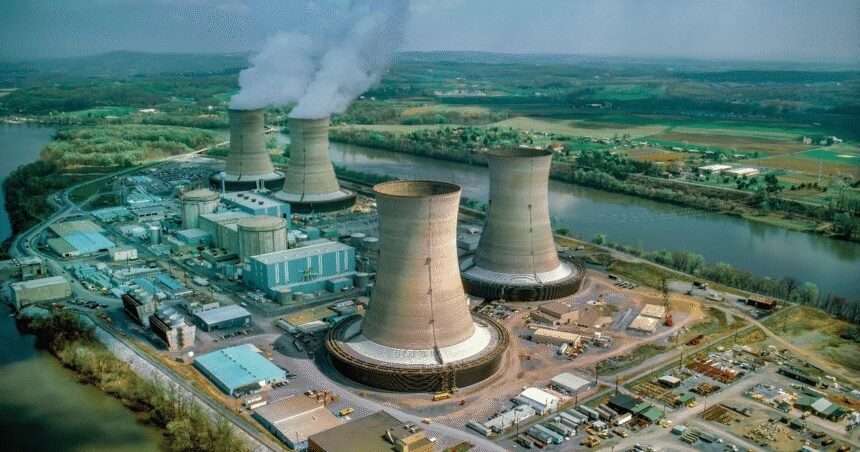
The demand for AI training and inference in data centers is driving a shift towards larger, more power-intensive facilities. This shift has led to a reevaluation of energy sources, with nuclear power emerging as a viable option for providing firm, carbon-free power to these data centers. Small modular reactors (SMRs) and microreactors are now being considered as near-term solutions to meet the power needs of gigawatt-scale data centers operating around the clock.
A recent webinar hosted by Duane Morris titled “What’s Watt: Nuclear Power and the Future of Data Center Construction” delved into the feasibility of nuclear power for data centers. Panelists from Kiewit Nuclear Solutions, Hadron Energy, and Duane Morris discussed how nuclear power aligns with the requirements of hyperscale AI operations and the shift towards direct power supply and behind-the-meter deployments by cloud and AI providers.
One of the key considerations when evaluating nuclear power for data centers is the scale and timeline of deployment. Microreactors, SMRs, and full-scale reactors offer different power output levels and deployment timelines. While microreactors could potentially reach the market in as little as 18 months, full-scale plants may take a decade or more to become operational. The maturity of the technology, licensing processes, site readiness, and supply chain factors all contribute to these timelines.
Despite the potential benefits of nuclear power, challenges remain in terms of safety, waste management, and public perception. The lack of a permanent geologic repository for nuclear waste in the US, coupled with concerns about high-profile accidents like Three Mile Island, Chernobyl, and Fukushima, have shaped public opinion on nuclear power. However, advancements in reactor designs and safety protocols have improved the industry’s track record and reduced the likelihood of incidents.
Community acceptance is another factor that could impact the deployment of nuclear power for data centers. While some communities may have concerns about living near nuclear plants, examples like the McGuire Nuclear Station in North Carolina demonstrate that coexistence is possible. Studies have even suggested that residents near nuclear plants may experience better air quality and overall well-being.
In conclusion, nuclear power is emerging as a realistic option for powering the next generation of data centers, particularly those with high energy demands for AI operations. While challenges related to safety, waste management, and public perception remain, advancements in technology and regulatory processes are making nuclear power an increasingly viable and attractive solution for meeting the power needs of data centers in the future.
The panel also discussed the intricacies of fuel logistics, highlighting the safe transportation of reactor fuel along designated routes over the years. Gibson emphasized that these established practices serve as a safety benchmark for Small Modular Reactors (SMRs) and microreactors as they transition from concept to actual implementation. “Consider this: Traditional plants have been operational for approximately 70 years, and fuel transportation has been ongoing for a significant period,” he explained.
The Challenges of Nuclear Energy
Within the realm of data centers, the allure of stable, eco-friendly power sources is undeniable. However, nuclear energy presents challenges that are not easily overcome, including the pace of licensing, execution risks, and long-term governance issues.
Regulatory Approval and Supervision
Obtaining regulatory approvals stands as a major obstacle. Williams highlighted potential changes in federal policies that could expedite the licensing process and mentioned proposals aimed at reforming the Nuclear Regulatory Commission (NRC) procedures. “The [Trump] administration has expressed intentions to streamline the Nuclear Regulatory Commission’s operations to reduce approval and licensing timelines from the historical three-year span to a more efficient six to eight months,” he stated.
Executive Order 14300, titled “Ordering the Reform of the Nuclear Regulatory Commission,” issued on May 23, 2025, mandates fixed decision deadlines once the implementing rules are finalized – a maximum of 18 months for new-reactor construction and operation applications and 12 months for license renewals. Claims of expedited approvals should be viewed as aspirational until corresponding rules are established and proven in practice.
Streamlining reviews without compromising thoroughness is a significant challenge, especially with the introduction of new designs and behind-the-meter installations that bring novel considerations related to location, security, and emergency planning.
Financial Implications and Project Delivery
Apart from licensing, establishing customer trust poses another challenge. Williams emphasized that early projects must demonstrate the ability to construct SMRs within a predictable budget and timeframe to secure business commitments.
Microreactors and SMRs aim to mitigate risks through factory production and standardized modules. However, successful, cost-effective initial projects are essential to validate this approach.
Regulation and Control
While not the primary focus of the panel, the United States’ track record with industrial hazards, such as PFA contamination and Superfund sites, serves as a cautionary example. With nuclear energy, safety implications are significant, and operational timelines span decades. Implementing robust safety measures, ensuring compliance, establishing clear liability, and transparent reporting are crucial for fostering public trust. Placing reactors near high-value data centers raises concerns regarding physical security, cybersecurity, insurance, and long-term waste management, which must be addressed proactively.
Williams emphasized the correlation between safety performance and market acceptance:
“Unless a major incident like Chernobyl or Three Mile Island occurs, we are likely to witness a thriving market. In twenty years, we may regret not pushing harder for nuclear power, given its increasing necessity,” he predicted. Conversely, skeptics argue that a single high-profile incident near a prominent data center could lead to significant obstacles, including local opposition, permitting delays, reduced insurance availability, and financing challenges.
Integration of Nuclear Energy by Hyperscalers
Hyperscale companies typically prefer gradual deployment strategies over large initial investments. Gibson suggested a potential adoption progression starting with a 10 MW microreactor for a single campus, scaling up to 50 MW, and eventually surpassing 300 MW as confidence grows. This phased approach minimizes risks while allowing operators to gain experience.
In the short term, Williams and Gibson anticipate a preference for light-water reactor designs in most deployments. Conversely, advanced designs requiring high-assay, low-enriched uranium (HALEU) are expected to remain limited until domestic production ramps up, as explained by Williams.
Promising Prospects, Demanding Requirements
The panel’s arguments are compelling: SMRs and microreactors are on track to play a crucial role in providing power for large-scale AI operations. However, achieving this goal necessitates flawless execution: timely and cost-effective initial projects, stringent regulatory approvals, robust safety and security measures, established supply chains, reliable fuel sources, and community support.
If all these elements align, on-site nuclear power could become a cornerstone of hyperscale power strategies. Conversely, in the absence of these factors – or in the event of a major incident near a key campus – the challenges could quickly outweigh the current optimism. Currently, nuclear power stands at the intersection of urgent demand and unforgiving constraints.
Title: The Art of Mindful Living: How to Cultivate a Balanced and Fulfilling Life
In today’s fast-paced world, it’s easy to get caught up in the hustle and bustle of daily life. From work deadlines to social obligations, it can feel like there’s always something demanding our attention. In the midst of this chaos, it’s important to take a step back and focus on cultivating a balanced and fulfilling life through the practice of mindfulness.
Mindfulness is the art of being fully present and engaged in the moment, without judgment. It involves paying attention to your thoughts, feelings, and surroundings with a sense of curiosity and openness. By practicing mindfulness, you can learn to live more intentionally and authentically, leading to a greater sense of well-being and happiness.
One of the key principles of mindfulness is to slow down and savor the present moment. This means taking the time to truly experience and appreciate the small pleasures in life, such as sipping a cup of tea or taking a leisurely walk in nature. By being fully present in these moments, you can cultivate a sense of gratitude and contentment that can help you navigate life’s ups and downs with grace and resilience.
Another important aspect of mindfulness is self-awareness. By tuning into your thoughts and emotions without judgment, you can gain valuable insights into your inner world and develop a greater understanding of yourself. This self-awareness can help you identify and break free from negative patterns of thinking and behavior, leading to a more balanced and harmonious life.
In addition to cultivating mindfulness in your daily life, it’s also important to practice self-care and self-compassion. This means taking the time to nurture your physical, emotional, and spiritual well-being through activities such as exercise, meditation, and spending time with loved ones. By treating yourself with kindness and compassion, you can create a strong foundation for a fulfilling and joyful life.
Ultimately, the art of mindful living is about finding balance and harmony in all aspects of your life. By practicing mindfulness, self-awareness, and self-care, you can cultivate a deep sense of peace and contentment that will sustain you through life’s challenges and triumphs. So take a deep breath, slow down, and embrace the present moment – you deserve to live a life that is rich, meaningful, and fulfilling.