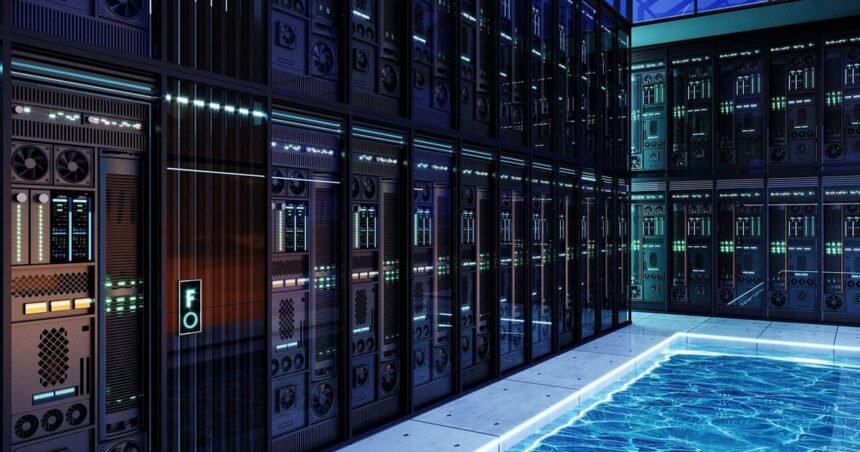
In the realm of data centers, the focus on operational costs has steered efficiency initiatives towards enhancing cooling systems. With nearly half of a facility’s energy consumption linked to heat rejection, optimizing how this heat is managed appears to be a direct route to improved performance.
Innovations in research and development have sparked a wave of significant advancements. Liquid cooling has transitioned from specialized applications to mainstream implementation as air cooling struggles to keep up with the thermal demands of modern AI accelerators. Direct-to-chip and immersion cooling have become essential to sustain higher rack densities while keeping energy consumption in check.
These innovative approaches reduce the power needed to dissipate heat from processors, allowing data centers to function at temperatures that would overwhelm traditional air-based systems.
Continued advancements in PUE are shifting the focus towards rethinking when cooling energy is utilized rather than just enhancing production efficiency. Thermal energy storage systems such as ice batteries store cooling capacity during low electricity demand periods and utilize it during peak hours, thereby reducing peak power consumption and overall operating expenses.
While the industry has made significant progress, these technologies highlight the limitations of a component-focused approach to efficiency. The Uptime Institute’s 2025 Global Data Center Survey indicates that average PUE enhancements are reaching a plateau, particularly in established facilities constrained by legacy designs. Operators have maximized gains from enhanced equipment efficiency and airflow management, making further reductions challenging without fundamental changes to facility design and power sources.
Future improvements in PUE will pivot away from better cooling equipment towards a broader perspective that encompasses how operators view PUE, cooling systems, and energy procurement. By integrating the entire energy chain of a data center, new efficiency opportunities can be unlocked. This comprehensive approach aims to reduce the reliance on mechanical cooling by repurposing energy that would otherwise go to waste.
Several emerging practices illustrate this paradigm shift. Free-cooling architectures leverage ambient conditions to reduce refrigeration usage when outdoor temperatures permit, lowering cooling energy consumption without complicating the heat exchange system. Waste heat reuse projects export low-grade heat into district heating networks, particularly in colder climates, ensuring that heat generated by digital infrastructure offsets energy consumption elsewhere.
Another example involves utilizing fuel-handling infrastructure to generate electricity and produce a cold exhaust stream through turboexpander generators. Data centers near pressure let-down stations can leverage this technology to offset cooling loads and generate power without additional fuel consumption, showcasing how energy flows within a site can be integrated into the cooling strategy.
As data centers adapt to AI demands, PUE will increasingly reflect architectural decisions alongside equipment requirements. A comprehensive PUE approach encourages designers to look beyond individual components and consider how energy flows through the facility can be harnessed to create an efficient cooling solution.