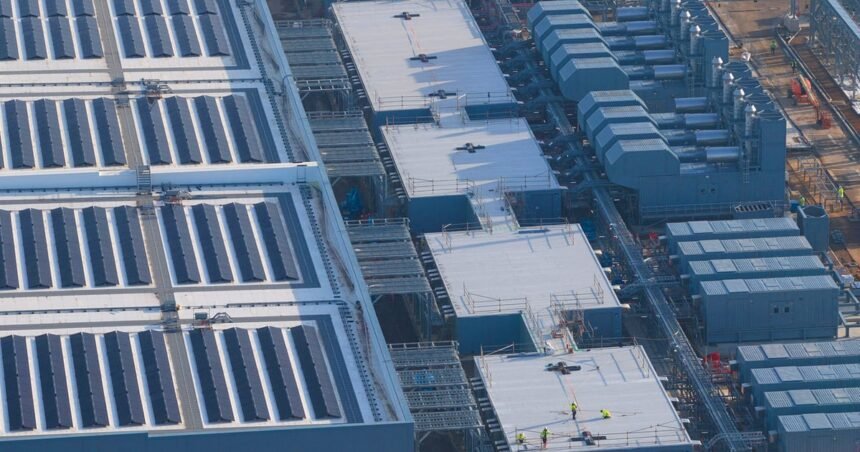
In its 2026 State of European Data Centers report, the European Data Centre Association (EUDCA) forecasts cumulative investment of €176 billion ($208 billion) between 2026 and 2031 but warns that future capacity growth will be constrained primarily by grid readiness rather than access to capital.
According to the report (registration required), Europe’s data center footprint is rapidly decentralizing beyond the traditional FLAP-D (Frankfurt, London, Amsterdam, Paris, and Dublin) hubs, as operators look to secure power, land and permitting capacity in secondary and emerging markets.
At the same time, the pace of development of AI-optimized data center facilities is accelerating, reflecting the infrastructure requirements of high-density, compute-intensive workloads.
Large-scale AI training is driving demand to regions with abundant renewable energy, while latency-sensitive AI inference is concentrating new capacity in metropolitan areas, reshaping facility design and location.
Operators are also deploying more advanced monitoring, automation and control systems – including digital twins, full-stack telemetry and workload-optimization tools – to improve resilience, efficiency and sustainability.
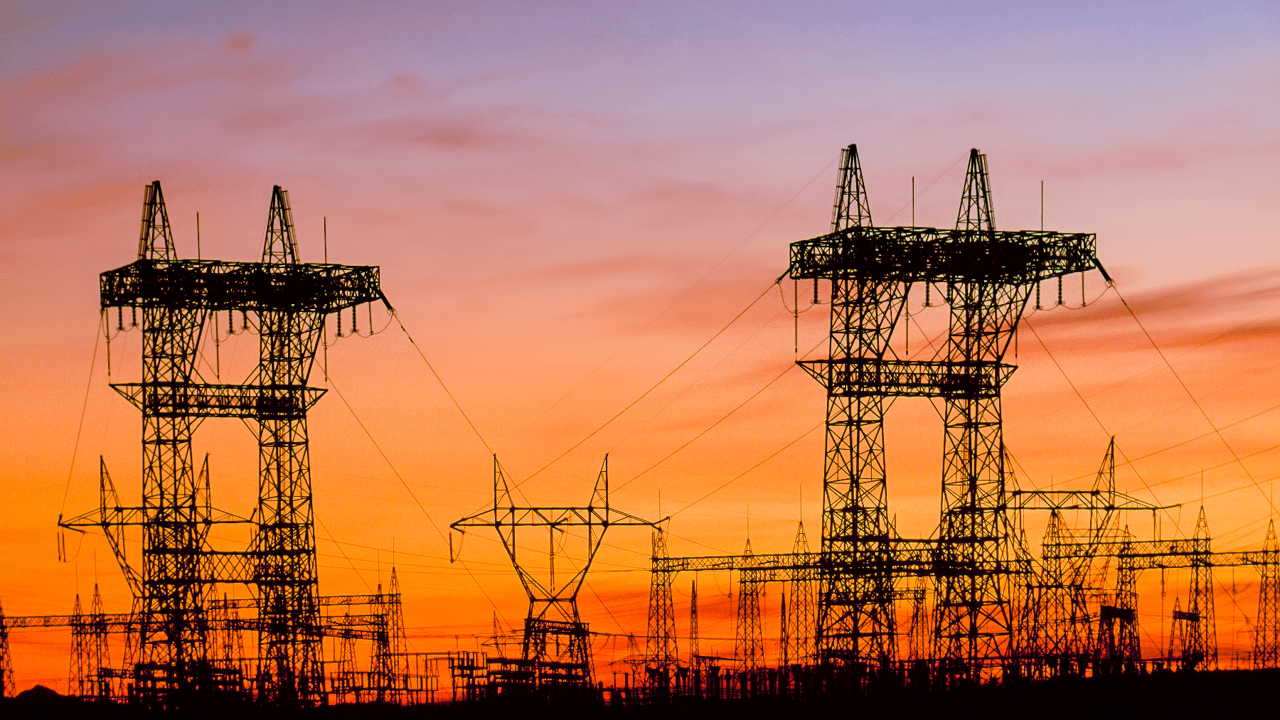
67% of European data center operators now cite access to power as their single greatest operational challenge. (Image: Alamy)
Growing Pressure on Energy Systems
AI is driving a fundamental shift in data center design and operations. Rack densities are increasing from traditional 8-12 kW to as high as 80 kW per rack for AI clusters, accelerating the adoption of liquid and hybrid cooling architectures.
The EUDCA report highlights growing pressure on national and regional energy systems as a defining structural challenge for the sector. Power availability and network reinforcement are now among the most significant gating factors for new projects and campus expansions across multiple European markets.
The report projects a 17% compound annual growth rate in IT power demand across Europe through 2031. Concurrently, 67% of data center operators now cite access to power as their single greatest operational challenge, down from 76% in the previous reporting period.
Despite those constraints, EUDCA’s findings point to continued progress on sustainability and regulatory alignment. The association estimates that 90% of the electricity consumed by European data centers now comes from renewable sources, underscoring how energy sourcing strategies have evolved alongside the industry’s rapid expansion.
In addition, 70% of operators say they already meet a standard of at least 75% renewable or hourly carbon-free energy. More than half (55%) of operators also report that they have already achieved their 2030 Water Usage Effectiveness (WUE) targets.

DayOne’s planned data center in Nurmijärvi, Finland, is strategically positioned to leverage the country’s renewable energy and robust digital infrastructure. (Image: DayOne)
Data Center Growth Model Evolves
The report signals a shift in Europe’s data center growth model, moving from capital deployment and real estate availability to being shaped by grid capacity, energy infrastructure planning, and national policies.
Despite continued growth, the EUDCA notes that the European data center sector faces multiple structural constraints, with energy access emerging as the primary limiting factor, particularly in major metropolitan markets.
Grid congestion, lengthy timelines for new power connections, complex permitting processes, geopolitical uncertainty and the rising energy demands of AI workloads are all contributing to tighter operating and expansion conditions.
Michael Winterson, Secretary General of the EUDCA, told DCN that addressing these challenges will require closer coordination among policymakers, transmission and distribution operators, regional authorities and data center operators.
He explained that energy systems have become a central operational challenge as renewable-heavy grids introduce greater variability.
“Some of the things that data center operators do fundamentally destabilize grids,” he said, noting that when facilities rapidly disconnect during minor grid disturbances, they can amplify wider system instability.
At the same time, operators must continue to protect digital services such as payments and healthcare systems.
“Our job is to protect the digital grid,” he said.
Rather than relying on new regulation, Winterson called for closer collaboration between governments and utilities.