Summary:
- RDHx systems are crucial for efficient rack-level cooling in hybrid data center architectures.
- The whitepaper discusses the importance of sensing redundancy, ASHRAE guidelines, and condensate management.
- Download the whitepaper for in-depth insights on RDHx deployment best practices.
Article:
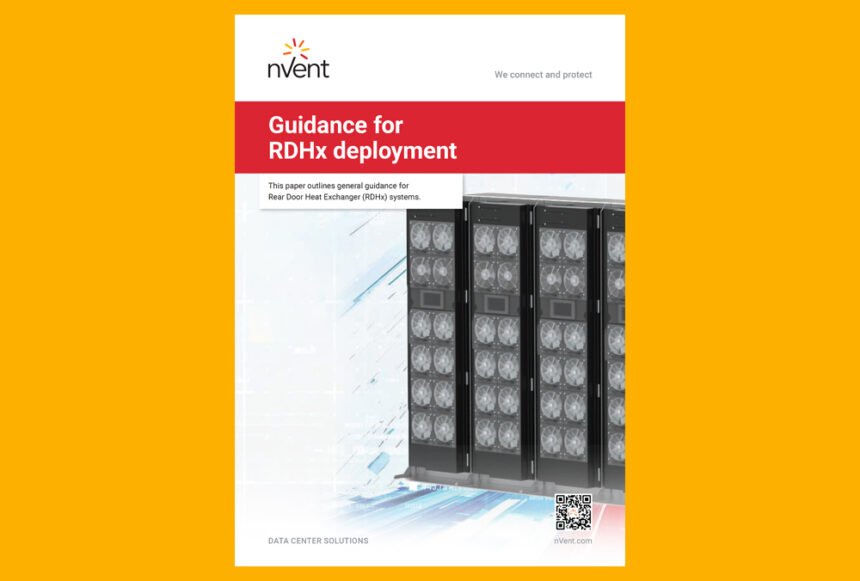
Rear Door Heat Exchanger (RDHx) systems play a vital role in ensuring efficient cooling in data centers that support hybrid architectures and direct-to-chip deployments. These systems act as a bridge technology, allowing for effective cooling without the need for a complete facility overhaul.The whitepaper delves into key aspects shaping the deployment of RDHx systems. It highlights the increasing significance of sensing redundancy and remote monitoring to enhance reliability in data center operations. Moreover, the document explores how ASHRAE guidelines, specifically W and S Class, are influencing water temperature strategies in data center cooling systems. Adhering to these guidelines is crucial for optimizing cooling efficiency while maintaining reliability.
Additionally, the whitepaper sheds light on the role of condensate and dew point management in ensuring safe and scalable deployment of RDHx systems. Proper management of condensate and dew points is essential to prevent issues such as water damage and system inefficiencies, ultimately contributing to a more reliable and efficient data center cooling infrastructure.
For a comprehensive understanding of RDHx deployment best practices and insights into optimizing data center cooling systems, interested readers can download the whitepaper. This resource provides valuable information for data center professionals looking to enhance the efficiency and reliability of their cooling infrastructure.