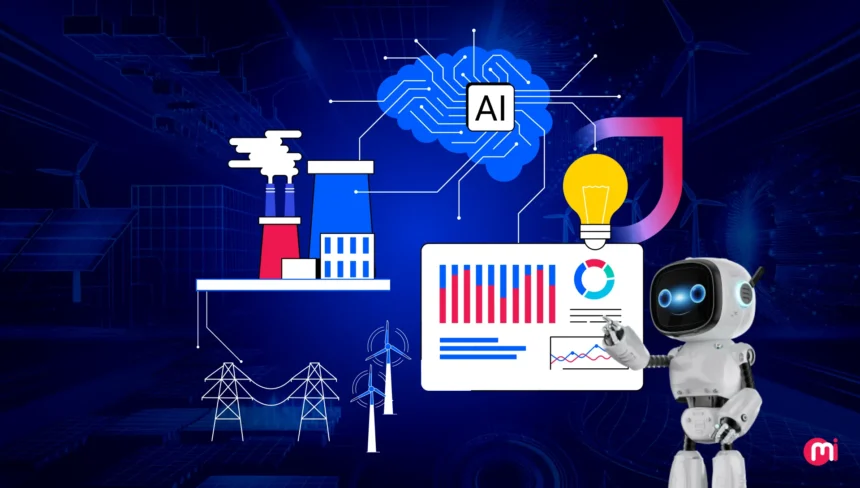
The energy market is undergoing a transformation with the integration of Artificial Intelligence (AI), projected to reach $58.66 billion by 2030. The growth of AI in this sector is driven by the various advantages it offers, from energy demand forecasting to smart grid optimization, leading to improved efficiency and significant cost savings.

This article delves into the impact of AI on energy management, exploring its applications, benefits, challenges, best practices, and future trends. It aims to provide a comprehensive understanding of how AI is reshaping the energy sector and how organizations can leverage it for optimal energy management.
AI in the energy sector is expected to revolutionize the industry, offering a wide range of benefits from improved efficiency to significant cost savings. This article explores the transformative power of AI in energy management, providing insights into its applications, challenges, and future prospects.
Key Takeaways
- AI in energy management involves applying AI technologies like machine learning and deep learning to automate energy systems.
- Applications of AI in energy management include demand forecasting, smart grid optimization, and predictive maintenance.
- Benefits of AI in energy management include improved efficiency, cost reduction, and support for renewable energy integration.
- Successful implementation of AI in energy management requires quality data and strategic planning.
- Future trends in AI for energy management include autonomous energy systems and AI-powered decentralized grids.