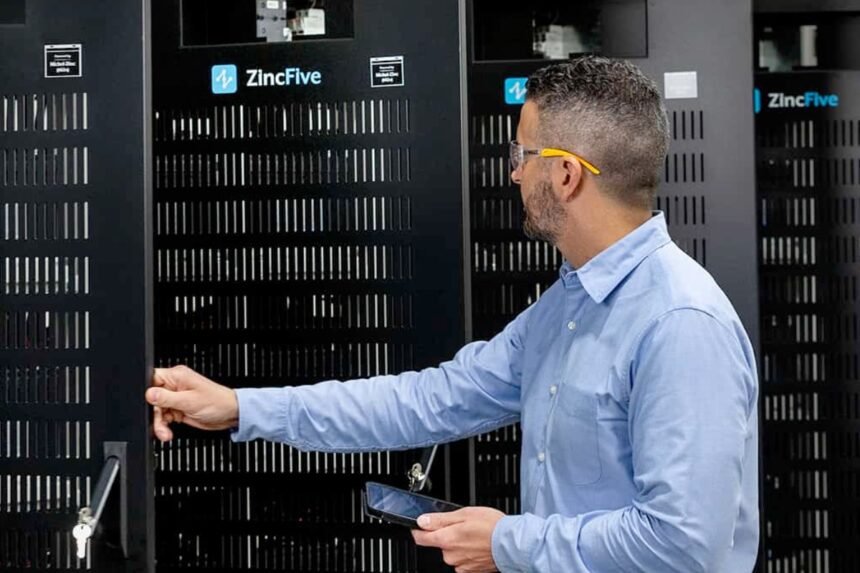
In today’s fast-paced world, Nabeel Mahmood asserts that the key to winning the AI race lies in chemistry, controls, and utility-grade planning, rather than just adding more servers incrementally.
The AI revolution is upon us, pushing the boundaries of our infrastructure as organizations strive to leverage generative AI, large language models, and machine learning at scale. The shift to AI isn’t just about changing what we compute; it’s about revolutionizing how we power, cool, and sustain the environments that house these cutting-edge workloads.
At a recent event, industry experts discussed the challenge of powering high-density environments for AI. It became evident that the industry is at a turning point, where the focus is not just on power, cooling, and cables, but on completely reimagining data center design from the ground up. Collaboration across disciplines is crucial as we prepare for a future where extreme power density is the new norm.
The transformation demanded by AI requires a new mindset towards infrastructure. From reevaluating power distribution and UPS systems to redesigning backup strategies and thermal solutions, every aspect of data center design must be rethought to accommodate the demands of high-density AI workloads. The future of infrastructure lies in intelligent systems thinking that spans across various layers and disciplines, enabling data centers to adapt and respond in real-time to the evolving needs of AI technologies.