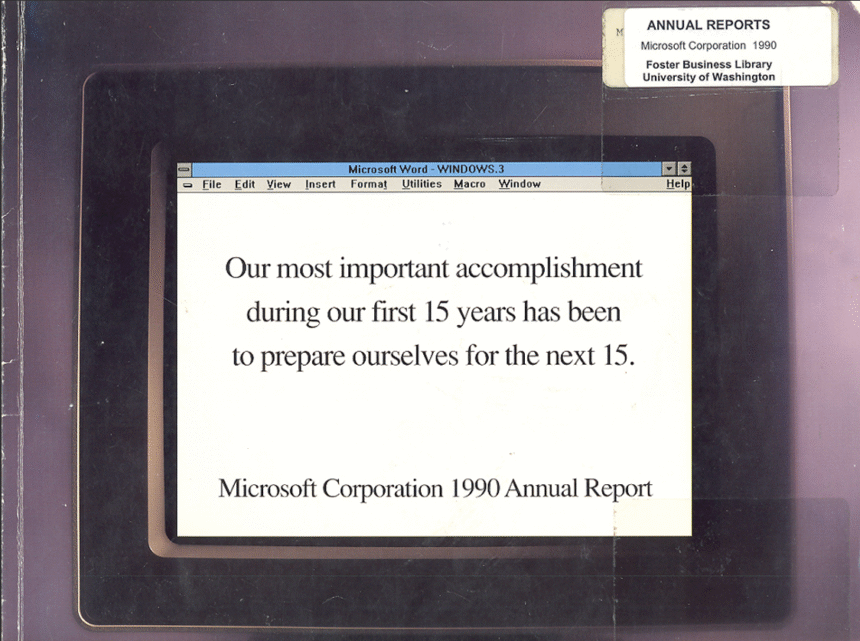
Microsoft’s 1990 annual report marked a pivotal moment for the company as it shifted from MS-DOS to Windows. The transition was likened to bringing a Porsche into a world of Model Ts, highlighting the significant leap in technology. However, the true breakthrough for Microsoft was not just the graphical interface but Windows’ ability to serve as a platform for third-party applications.
With the release of Windows 3.0 in 1990, developers found it easier to create and launch software, thanks to Microsoft’s specifications. This move allowed for a plethora of applications to thrive on the emerging Windows platform. Fast forward thirty-five years, and artificial intelligence (AI) is now the next frontier in technology. Microsoft aims to leverage Windows once again as the launching pad for AI agents.
Recently, Microsoft introduced a new framework called Agent Launchers, offering developers the ability to register agents directly with the operating system. These agents can be described through a manifest and seamlessly integrate with various Windows features, such as the taskbar and Microsoft Copilot. The vision is to create autonomous assistants that can perform tasks on behalf of users, from organizing files to scheduling conflicts.
Microsoft CEO Satya Nadella emphasized the need for engineering sophistication to harness the full potential of AI in the real world. This includes orchestrating multiple models, accounting for memory, and ensuring safe tool use. The goal is to create AI agents that operate more like the human brain, with deep learning capabilities.
While Google, Amazon, and startups like Vercept are also exploring AI agents, Microsoft’s focus on tightly integrating agents with the Windows operating system sets it apart. By making Windows the home for agents that serve individual users directly on their machines, Microsoft is positioning itself to compete in the evolving landscape of AI technology.
However, the shift to AI agents poses unique security risks, as agents must maintain context across apps, ask follow-up questions, and take actions on behalf of users. Microsoft has implemented a security framework to address these concerns, running agents in a contained workspace with limited access to user folders.
Despite the challenges, Microsoft’s Agent Launchers represent a strategic move to make Windows a hub for AI agents in a world where the PC competes with smartphones, browsers, and cloud platforms. In the enterprise space, Microsoft’s Azure and business-focused agents give the company a strong foothold in the AI market. As technology continues to evolve, Microsoft’s bet on AI agents could reshape the future of computing.