The Evolution of Glass Printing
For centuries, the art of glassmaking has relied on fire, sand, and meticulous craftsmanship. However, in today’s digital age, researchers are exploring 3D printing as a means to fabricate glass objects with intricate shapes and functionalities that were once unimaginable using traditional methods. The main challenge has been the dependence on chemical binders in nearly all glass-printing techniques, which have limited the possibilities and complicated the process.
Innovative Binder-Free Method
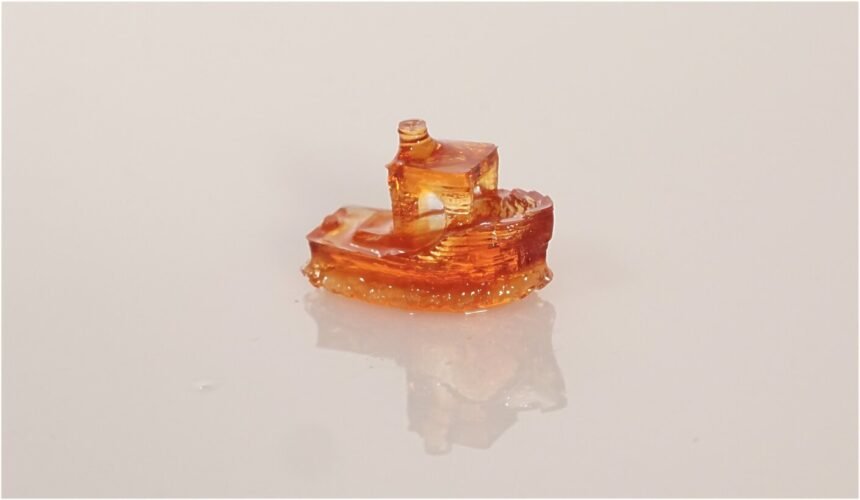
A research team at the Hebrew University of Jerusalem has successfully addressed this challenge by introducing a binder-free 3D printing method for silica glass. In a recent study published in Materials Today, scientists Amir Reisinger, Natanel Jarach, and Prof. Shlomo Magdassi have presented a novel approach that eliminates the use of organic additives, bypassing the energy-intensive and wasteful steps that have hindered glass 3D printing progress.
Unleashing Glass’s Potential
Glass plays a vital role in various technological applications, from fiber optics to microfluidic devices, owing to its transparency, durability, and chemical stability. The ability to 3D print glass components with customized geometries opens up new avenues for innovation in fields such as optics, biomedical engineering, and microfluidics. This breakthrough method not only streamlines the glass printing process but also enhances the performance and sustainability of the resulting products.
Advantages of the New Method
The key advances of this binder-free glass printing method include:
- Compatibility with standard digital light processing (DLP) printers
- Scalability to produce centimeter-scale silica objects
- Sustainability by avoiding high temperatures and chemical waste
- Creation of porous glass with moderate transparency at a significantly lower temperature
Future Applications
This innovative approach is poised to drive advancements in optics, biomedical engineering, and microfluidics by enabling the fabrication of custom glass components with intricate designs and superior performance. Prof. Magdassi emphasizes the transformative potential of this method, stating, “Glass 3D printing is entering a new era, making it cleaner and more versatile than ever before, paving the way for applications that will impact various aspects of modern life.”
More information: Amir Reisinger et al, Stereolithography-based 3D printing of silica with solutions without organic binders, Materials Today (2025). DOI: 10.1016/j.mattod.2025.08.026